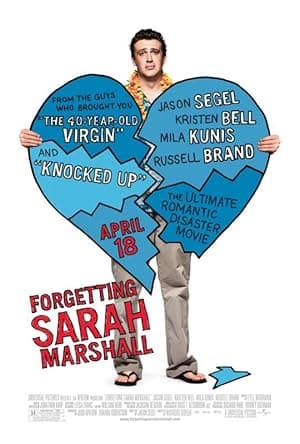
Forgetting Sarah Marshall
A breakup comedy that insists the messiest part is learning how to grow up.
Feature presentation
Forgetting Sarah Marshall feels like the sort of comfortable, slightly embarrassing movie you remember because it watches a man fall apart in public—and then gives him permission to put himself back together. Nicholas Stoller’s debut frames Jason Segel’s Peter Bretter as a very recognisable kind of loser: sensitive, stuck and composing his way through heartbreak. Then it moves him to a Hawaiian resort where the very thing he’s trying to escape turns up in the next sun lounger.
THE MOVIE
Peter Bretter is still the reason this movie works
Ask anyone what sticks about Forgetting Sarah Marshall and they’ll usually land on the same quadrant of the film: a man whose girlfriend dumps him, a Hawaiian holiday meant to heal, and the tiny, humiliating moments in between. The set-up is simple—you have Peter Bretter, a television composer whose long-term relationship fractures overnight—and the screenplay keeps returning to how that grief actually looks when it isn’t pretty.
What makes the situation a proper late-2000s comedy is how personal the wreckage is. Peter doesn’t just lose a partner; he loses the version of himself that thought he’d be fine. So off he goes to a resort to recover, and of course, Sarah and her new boyfriend turn up in the next suite. It’s an awkward, deliciously engineered collision that does the emotional heavy lifting for the film.
Nicholas Stoller directs Jason Segel’s script with that blend of daftness and feeling the Apatow crowd were known for, and the supporting players—Kristen Bell as Sarah, Mila Kunis as Rachel and Russell Brand as Aldous Snow—give the premise its comic and romantic counterweights. But it’s Peter’s particular, self-conscious grief that keeps the whole thing tethered to something recognisably human.
THE SETUP
The idea that sets Forgetting Sarah Marshall in motion
The engine is straightforward: Sarah dumps Peter, and instead of staying and sulking, he runs away to a Hawaiian resort. That flight is the movie’s literal attempt to hit reset.
But because the film rigs the premises in this particular, small-world way—Peter’s ex and her new boyfriend are staying at the same hotel—recovery becomes a game of repeated embarrassment rather than a single neat twist. Each awkward run-in nudges Peter’s feelings into clearer focus.
Alongside this public humiliation sits Peter’s private work: he’s writing a Dracula puppet rock-opera. The project gives us a window into what he cares about and where his adulthood has stalled; the show-within-the-film becomes a structural echo of his emotional arc.
So the set-up works because it’s economical: heartbreak sends the hero somewhere pretty, the place refuses to hide his problem, and his creative obsession provides a shape the emotional journey can follow.
THE CHARACTER
Why Peter Bretter matters
Peter Bretter matters because he’s not supposed to be effortlessly endearing. He’s insecure, a little pathetic at times, and addicted to the small comforts of a life that hasn’t quite started. That arrested development is the fuel for most of the film’s jokes and the reason the emotional beats land.
He’s also an artist—a television composer—so his private life and his work are tangled. The Dracula puppet musical isn’t just a gag; it’s a symptom of his need to make something that proves he exists beyond the relationship that just ended.
Peter’s family—particularly his stepbrother, who acts as an overprotective, confessional sounding board—keeps him honest and pushes the plot forward. Those domestic, slightly awkward interventions are what move him from sulking to taking action.
Finally, because Segel both wrote and plays Peter, the character reads as specific rather than generic: a bloke whose grief is theatrical and deeply, sometimes embarrassingly, personal.
THE PERFORMANCE
Why Jason Segel's performance matters
There’s a practical reason Segel’s presence feels central: he wrote Peter, so the role reads as an authorial self-portrait—flaws and all. Contemporary critics picked up on that and described his turn as gamely self-deprecating, the kind of performance that sets the film’s slightly embarrassed tone.
Being writer-star gives Segel license to make Peter a bit unbearable at times, because the film asks us to stay with him until he proves otherwise. The result is a performance that holds the movie’s balance between cringe and sympathy.
That balance—between being allowed to look ridiculous and still eliciting empathy—makes the whole thing watchable rather than simply awkward, which is exactly what the film needs to be.
UNDER THE SURFACE
Forgetting Sarah Marshall has more on its mind than the plot suggests
Yes, it’s a breakup comedy. But under the jokes sits a clearer concern with how men are allowed to be vulnerable. The film takes male immaturity seriously enough to show the discomfort and the necessity of getting past it.
There’s also a thread about celebrity versus private life: Sarah is a TV actress and her relationship to fame complicates Peter’s recovery. He’s coping not just with a breakup but with being discarded for a more public, flashier life.
Creative ambition plays through the Dracula puppet show—Peter’s work becomes a way of exploring whether making things can be a route to self-worth rather than a substitute for it.
Put together, those ideas keep the movie from being a string of set-pieces; they give its jokes a reason to exist beyond cheap laughs.
THE FILMMAKING
How Forgetting Sarah Marshall was put together
On a basic production level, Forgetting Sarah Marshall was an Apatow Productions movie with production design overseen by Jackson De Govia. That combination helps explain the film’s comfortable, lived-in comedy look: it’s a familiar production model executed with confidence.
Nicholas Stoller was directing a feature for the first time, and the film’s construction—sketchy comic set-pieces balanced by longer emotional threads—reflects a clear organising principle. The movie’s shape is less about flashy directing flourishes and more about choosing where to let scenes breathe.
All of that makes the film feel like a well-made piece of commercial comedy rather than an experiment; it knows what it is and leans into those choices.
PRACTICAL EFFECTS
The effects work that gives Forgetting Sarah Marshall its physical personality
The film’s oddball centrepiece is the Dracula puppet rock-opera, and those puppets weren’t digital: they were created with assistance from Jim Henson’s Creature Shop. That decision gives the finale a tactile, slightly ridiculous energy that a crude CGI substitute wouldn’t have matched.
Making the puppet sequence a real, physical thing matters because it lets the audience see Peter’s creative ambition in an actual object, not just in a tossed-off joke. The puppets anchor a risible spectacle to a genuine production craft, which helps the scene hit its intended mixture of comedy and sincerity.
PURE 00s
Forgetting Sarah Marshall could not belong to any other decade
This is very much an Apatow-era film: a late-2000s comedy that combines raunch with genuine sentiment and makes space for a regular ensemble of supporting comics. That production context shaped its tone—equal parts crude joke and heartfelt awkwardness.
It’s also part of a strand of movies from the mid/late 2000s that put men’s emotional immaturity on full display and then asked them to do the work of getting better. Forgetting Sarah Marshall fits that pattern neatly: the plot is predicated on a male protagonist who must grow up.
Released in 2008, the film’s success at the box office for its period shows there was an appetite for comedies that mixed sentiment and embarrassment in this way.
So while it wears its 00s DNA openly, the film’s central concerns—heartbreak, self-discovery and an uneasy relationship with celebrity—are what make it feel of its moment rather than merely nostalgic.
THE LEGACY
Why Forgetting Sarah Marshall still matters
Part of the film’s afterlife comes from what it left behind on-screen: a supporting character—Aldous Snow—who was robust enough to carry his own spin-off in Get Him to the Greek, a direct continuation that reunited key creative figures.
Another persistent memory is the puppet rock-opera. The climactic sequence is often mentioned when people talk about Jason Segel’s later fascination with puppetry and related projects; it’s a deliberately odd, attention-grabbing moment that keeps getting referenced.
Those two elements—an enlivening supporting turn and an unforgettable puppet sequence—are the neat artifacts the movie left in the cultural conversation, reminders of what it did differently within a crowded rom-com field.
THE VERDICT
Does Forgetting Sarah Marshall still hold up?
Short answer: yes—if you’re watching for the kind of rom-com that mixes proper cringe with actual heart. The film’s central mechanics are simple and durable: a breakup sends an insecure composer to Hawaii, where repeated, petty encounters force him to confront himself rather than hide from it.
The puppet rock-opera functions as more than a gag; it’s a tangible expression of Peter’s stalled ambition and gives the movie a weird, memorable finale. And because Aldous Snow exists as a larger-than-life foil whose behaviour complicates Peter’s recovery, the film gets to play both small—awkward conversations, adjoining rooms—and big—public humiliation and celebrity interference.
Nicholas Stoller’s direction, Jason Segel’s authorial stake in the material and a supporting cast that gives the set-pieces weight mean the film mostly does what it sets out to do. It’s 111 minutes that knowingly squints at its own embarrassment and, crucially, keeps believing a bit of earnestness will fix things.
So should you watch it now? If you’re after a rom-com that admits men can be vulnerable and that creative failure can be funny and instructive, this one still does the job. It’s not revisionist seriousness; it’s a comedy that trusts its messy centre—and in the end, that matters more than a tidy happy ending.
Share this movie
Keep watching
More movies from the 00s

2002
The Pianist
A quiet life unmade by war — and a pianist who refuses to stop listening.
Read the retrospective
→
2006
Blood Diamond
A mercenary, a fisherman and a pink diamond — and a film that still asks who pays for our jewellery.
Read the retrospective
→
2003
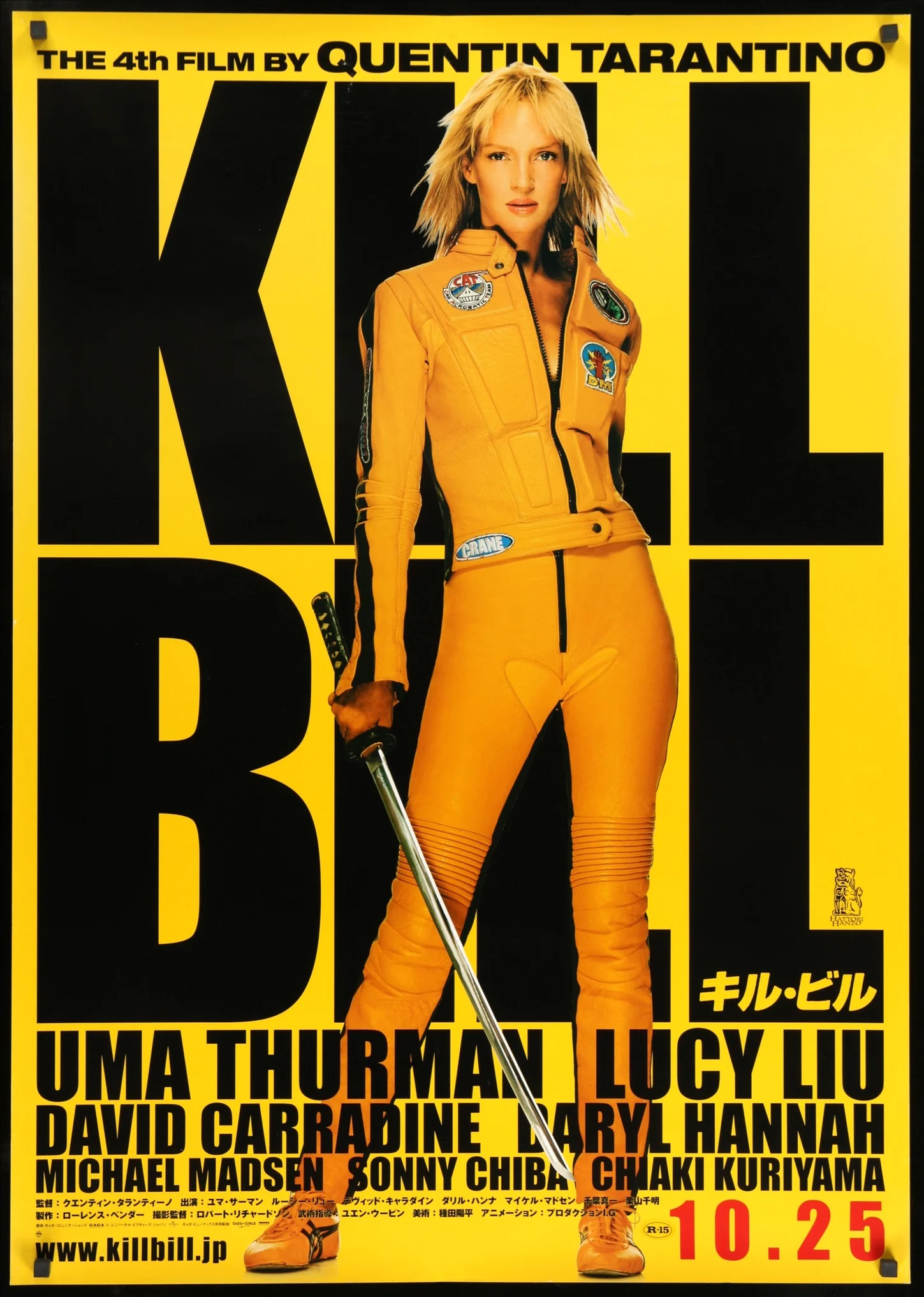
Kill Bill: Volume 1
A yellow jumpsuit, a long list of enemies and one woman who refuses to be finished.
Read the retrospective
→