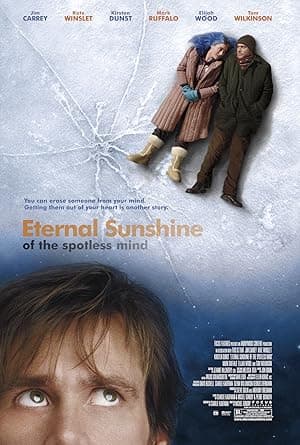
Eternal Sunshine of the Spotless Mind
A love story that keeps insisting you remember it — even when the film forgets for you.
Feature presentation
You can talk about Michel Gondry’s visual dazzle or Charlie Kaufman’s idea-driven screenplay, but the moment Eternal Sunshine of the Spotless Mind really grabs you is when Joel Barish refuses to let go. The film gives us a science-fiction trick — a clinic that erases memories — and then pitches it straight into the quiet, stubborn heart of one man. That tension between a neat premise and an awkwardly human refusal is why this 2004 film still feels alive.
THE MOVIE
Joel Barish is still the reason this movie works
Eternal Sunshine of the Spotless Mind hands you a neat, cold idea on a plate: a company that will wipe your memory of a relationship. But the movie’s pulse comes from the very ordinary person who won’t let that idea be tidy. Joel Barish finds out that Clementine has had their relationship removed, and he signs up to have the same memories taken away himself — which, of course, turns everything messier.
That inciting moment sends most of the drama inward. Joel is quietly introverted and emotionally reserved, and the whole film becomes about what he’s trying to keep when his past is literally being unstitched. Memory, here, isn’t just plot device; it’s how the movie asks who Joel is when the moments that made him start to slip away.
Michel Gondry directed the picture, and while people often point to the screenplay, it’s Joel’s tug-of-war with his own head that makes the film worth revisiting. Jim Carrey plays Joel opposite Kate Winslet’s Clementine, and their pairing — plus the film’s ambition — is why it still invites conversation.
THE SETUP
The idea that sets Eternal Sunshine of the Spotless Mind in motion
At its simplest: Joel learns that his ex, Clementine, had her memories of their relationship erased at Lacuna, Inc., and he decides to undergo the same procedure. The film doesn’t treat the clinic as a punchline — it’s the engine that rearranges the story.
Most of the argument then happens inside Joel’s head. The technicians target memories of Clementine in a sequence of deletions, and Joel resists as his recollections are methodically unearthed and taken away. He tries to hide pieces of her in the parts of his mind that remain.
The film deliberately refuses a straight chronology. A present-day timeline — anchored around Valentine’s Day — is intercut with those vanishing memories, so we watch the relationship backwards and meet its small failures and tendernesses out of order.
That mixture — a high-concept mechanism used to stage an intimate, inward conflict — is what keeps the premise interesting rather than merely clever.
THE CHARACTER
Why Joel Barish matters
Joel is the quiet centre that the movie keeps returning to. He isn’t built for grand gestures; he’s introverted and emotionally reserved, the sort of person who carries his losses inward. That makes his decision to submit to memory erasure oddly brave and recognisably human.
Because the film stages most of its action in Joel’s head, his reactions — small evasions, the things he tries to hide — become the real stakes. The story asks whether who we are is made of our memories, and Joel’s struggle gives that question a face you can sympathise with.
Jim Carrey plays Joel, and the casting choice matters because it sets audience expectations against the character’s temperament: the movie prefers a muted, inward life to a showy one. Joel’s domestic world — including his relationships with minor figures like his mother — helps keep the proceedings anchored when the memory sequences start to unpick reality.
Put simply: you care about how the erasure goes because the film has spent time making Joel someone worth caring about.
THE PERFORMANCE
Why Jim Carrey's performance matters
Contemporary attention around the film pointed squarely at the leads: Jim Carrey and Kate Winslet. The casting reads as a move against type for Carrey, which is part of why his role as Joel drew notice.
Reviews at the time singled out the chemistry between the two principals, and that pairing is essential — a lot of the film’s emotional risk depends on us buying their tangled history.
So the practical point is simple: the casting choices make the movie’s central argument feel plausible. The story asks you to follow an internal collapse; those casting decisions make you do it.
UNDER THE SURFACE
Eternal Sunshine of the Spotless Mind has more on its mind than the plot suggests
On the surface it’s a romance with a clever speculative hook. Underneath, the film is obsessed with memory and identity — asking whether who we are can survive the deliberate removal of what we remember.
It’s also a picture about love and loss. The erasure procedure is a kind of tidy answer to heartbreak, but the movie refuses tidy answers. The loss remains complicated, and the film keeps probing whether forgetting is relief or denial.
Forgiveness and regret thread through the story too. If you can wipe the person who hurt you, what happens to the lessons, the apologies and the grudges? The film frames these moral questions without delivering pat solutions.
Finally, there’s a caution about technology’s moral limits: Lacuna, Inc. is a practical mechanism for a philosophical problem, and the film uses it to ask whether some things should be left, messy and human, rather than mechanised away.
THE FILMMAKING
How Eternal Sunshine of the Spotless Mind was put together
Michel Gondry’s direction steers the film away from a glossy sci‑fi look and into something deliberately disorienting. He foregrounds in-camera approaches and a visual grammar that wants the audience to feel the collapse of memory rather than simply watch it explained.
Ellen Kuras served as director of photography and Valdís Óskarsdóttir as editor; critics noted how the film’s handheld, intimate look and the editing together create the sensation of memory fraying and slipping. That combination keeps the emotional content immediate when the story becomes structurally strange.
Production design plays its part too. Recurring domestic sets and props act as anchors through the memory sequences, giving viewers familiar footholds as the chronology is rearranged and parts of Joel’s past are removed.
All of these choices add up to a film that uses its craft to make a philosophical question feel lived-in rather than merely clever.
PRACTICAL EFFECTS
The effects work that gives Eternal Sunshine of the Spotless Mind its physical personality
The film mixed on-set practical work with postproduction digital processes. Visual-effects credits name Buzz Image Group and Custom Film Effects for tasks like digital compositing and matte painting, which helped stitch memory sequences together cleanly.
Credits also list special-effects coordinators and practical-effects personnel alongside the VFX teams. That points to a hybrid workflow where things happened in-camera when possible, and digital tools were used to extend or piece scenes together afterward.
The result is a feel that’s tactile rather than perfunctory: you can sense the film trying to keep its physical life intact even when it’s breaking up the chronology on purpose.
PURE 00s
Eternal Sunshine of the Spotless Mind could not belong to any other decade
This is very much an early‑2000s creature of indiewood: a mid‑budget, studio‑backed picture that bore the indie sensibility of its creators but was distributed widely by Focus Features. That position let it be both daring and discoverable.
The film also helped solidify Charlie Kaufman’s public profile in the 2000s as the writer associated with high-concept, psychologically centred screenplays. Eternal Sunshine sat neatly alongside other brainy, surreal works that audiences and critics kept talking about.
It was made and released at a particular moment — principal photography ran in early 2003 and the film opened in 2004 — when that blend of studio support and offbeat storytelling was commercially plausible in a way it might not be a decade earlier or later.
Awards attention, including an Academy Award for the screenplay and a Best Actress nomination for Kate Winslet, mark how the industry noticed that balance of inventiveness and emotional seriousness.
THE LEGACY
Why Eternal Sunshine of the Spotless Mind still matters
Part of the film’s afterlife is institutional: the screenplay by Kaufman, Gondry and Pierre Bismuth won the Academy Award for Best Original Screenplay, and Kate Winslet received a Best Actress nomination. Those honours kept the movie in critical circulation.
Beyond trophies, the film keeps turning up in critics’ lists and anniversary pieces and in academic discussions about memory and identity. People return to it when they want a popular film that takes the question of remembrance seriously.
The characters — Joel, Clementine, and the supporting network around them — give critics and viewers something to latch onto when talking about how the movie treats heartbreak, forgiveness and the ethics of technological fixes.
That combination of institutional recognition and ongoing critical conversation is why Eternal Sunshine remains a frequent point of reference when cinema wants to talk about memory, loss and how we stitch identity together.
THE VERDICT
Does Eternal Sunshine of the Spotless Mind still hold up?
Yes — and the reason isn’t just the premise. The film’s central conflict takes place inside Joel’s mind as his memories of Clementine are erased, and that inward focus keeps the emotion specific and risky rather than rhetorical. Watching him try to hide fragments of her gives the movie a suspense it earns.
The nonlinear presentation — the present-day timeline cut with earlier, targeted memories — remains a clever way to make us feel the rupture the characters are living through. The fictional Lacuna, Inc. and its mapped, electrode-based procedure give the screenplay a clear mechanism without turning the story into a how‑it‑works lecture.
Casting choices and contemporary reception also matter. Jim Carrey plays Joel, and critics at the time singled out him and Kate Winslet; Roger Ebert, for example, praised the film’s emotional core and noted Carrey’s more subdued turn compared with his earlier work. That attention helped the movie’s emotional beats land for audiences.
So if you’re wondering whether to watch it now: go for the way the film stages grief as an interior struggle, for the risky pairing of its leads, and for Michel Gondry’s direction that keeps the mechanics feeling lived-in. It’s a movie about forgetting that, in practice, is the opposite — it insists you remember why you loved it in the first place.
Share this movie
Keep watching
More movies from the 00s

2002
The Pianist
A quiet life unmade by war — and a pianist who refuses to stop listening.
Read the retrospective
→
2006
Blood Diamond
A mercenary, a fisherman and a pink diamond — and a film that still asks who pays for our jewellery.
Read the retrospective
→
2003
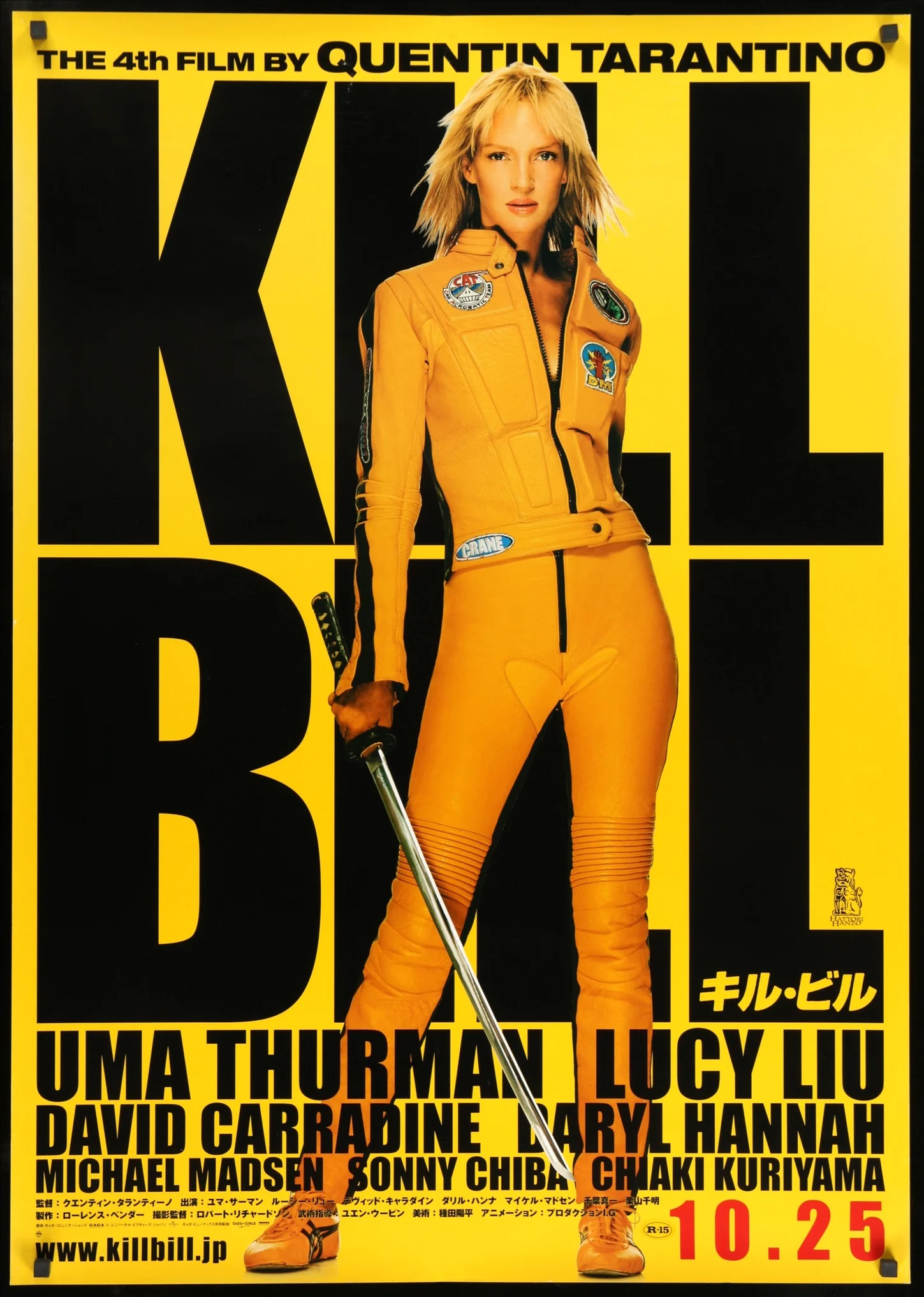
Kill Bill: Volume 1
A yellow jumpsuit, a long list of enemies and one woman who refuses to be finished.
Read the retrospective
→