Feature presentation
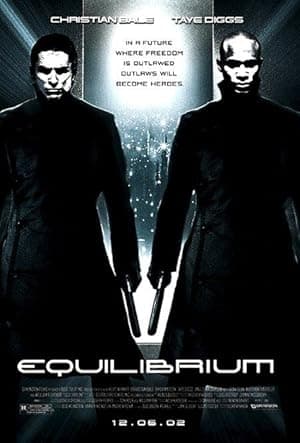
Equilibrium is the sort of film that arrives like a thump — loud, stylised and impossible to ignore. It’s remembered for its strange mix of philosophical nastiness, a protagonist who cracks open, and an action idea that refuses to behave.
THE MOVIE
John Preston is still the reason this movie works
Equilibrium greets you with a simple transaction: safety in exchange for feeling. In the future city of Libria, citizens take a daily dose of Prozium and swap the messy business of emotion for a regimented, peaceful order.
At the centre is John Preston, a high-ranking Grammaton Cleric whose job is literally to root out forbidden art and execute anyone who refuses the ban on feeling. The film rides on the tension of that instruction: a disciplined, obedient state agent beginning to notice what he’s destroying.
What lifts the whole thing out of bargain-basement dystopia is how the movie stages that slip. Contact with contraband music and artwork — and a missed dose of Prozium — is written as a crack in Preston’s armour. Around him, Kurt Wimmer layers a few memorable flourishes: a score that folds in classical cues and an invented combat idea called Gun Kata that gives the action a recognisable stamp.
THE SETUP
The idea that sets Equilibrium in motion
The film doesn’t hide its engine: Preston is an enforcement specialist whose work involves searching homes for contraband art, music and literature and dealing harshly with anyone who defies the ban. That clear, single-line duty makes him a perfect exemplar of the regime he serves.
The plot’s simple pivot is almost mechanical: Preston misses a dose of Prozium and encounters forbidden culture. That accidental interruption is what starts him seeing — and feeling — things he once destroyed without a second thought.
From there the central conflict is straightforward and effective: what happens when a devoted enforcer begins to sympathise with the people he once hunted? It’s a classic ‘insider turns’ setup, but one the film keeps tight rather than sprawling into moral fog.
And because Equilibrium wears its genre on its sleeve, it gives the regime a form of muscle: the stylised Gun Kata. The idea runs through the action sequences, making fight scenes as much about the system’s control as they are about spectacle.
THE CHARACTER
Why John Preston matters
John Preston matters because he’s a walking contradiction: sculpted to obey, but built from the materials that let him change. The screenplay gives him a role that’s both mechanical and human — the regime’s perfect instrument and, crucially, the point where the regime can be questioned.
He isn’t a revolutionary on page one. He’s an operational figure whose responsibilities are explicit: entering private spaces, seizing contraband and neutralising ‘sense offenders’. That clarity makes his change legible — and more interesting because it’s hard-earned rather than sudden.
Preston’s turn begins with missing a regulated dose and being exposed to art and music that the state forbids. It’s an economical device: a small physical lapse becomes a moral earthquake, and the film treats the consequences seriously rather than melodramatically.
Seen like this, Preston becomes the film’s hinge. The story needs a credible enforcer to make the contrast between order and feeling feel consequential; without him the regime is just a backdrop. With him, the movie becomes an argument staged from the inside out.
UNDER THE SURFACE
Equilibrium has more on its mind than the plot suggests
On the surface Equilibrium is an action-dystopia, but underneath it courts a handful of familiar and quite deliberate ideas: censorship, the policing of art, and the cost of outlawing feeling.
The film’s version of emotional control is pharmacological — Prozium enforces a dull sameness — which makes the story less about abstract repression and more about a practical mechanism that keeps the state humming. That specificity gives the film moral teeth.
At the centre of the argument is obedience versus moral autonomy. Preston’s journey frames the question plainly: if you remove feeling by force, do you also remove the capacity to judge and to refuse? The movie stages that as a conflict rather than a rhetorical point.
Finally, violence is never a neutral tool here; it’s the regime’s currency. The enforcement apparatus — legal, lethal, choreographed — is presented as a necessary element of control. The film asks the obvious but important follow-up: what are you willing to sacrifice for peace?
THE FILMMAKING
How Equilibrium was put together
Equilibrium’s sense of scale comes from mixing real architecture and constructed interiors. The production design leans on monumental civic spaces to sell Libria as a lived, public order rather than a stage set.
Credit for that blend of location and build goes to the production designer, and the movie doesn’t hide the union: on-location monuments sit alongside studio-crafted rooms to form a consistent civic language.
The editing and framing also push the film towards a rhythmic modern action style. Running in a widescreen ratio and edited to emphasise tightly choreographed action, the film treats movement and timing as part of its argument.
Dion Beebe’s work behind the camera and the production design choices combine to make Libria feel like a deliberate machine — which is exactly the film’s point. The look and the cutting support the story’s clockwork mentality.
PRACTICAL EFFECTS
The effects work that gives Equilibrium its physical personality
The film’s action feels physical because it is. The sequences rely heavily on choreographed stunt work and the movie’s invented Gun Kata rather than on obvious digital trickery.
That emphasis on choreography makes the fights readable: they’re about position, rhythm and consequence — the kind of carefully staged movement that reads well on a screen and sells the stakes.
The production’s commitment to shooting in large public and monumental spaces — plus constructed interiors — gives the action a tangible geography. When a sequence cuts from building to built set, you still believe in the space the actors move through.
In short: the film’s personality comes from things you can almost feel under your hands — stunts, choreography and locations — rather than from effects that shout, ‘we painted this later.’
PURE 00s
Equilibrium could not belong to any other decade
Released in 2002, Equilibrium arrived at a moment when Hollywood liked to marry high-concept sci‑fi with stylised action. That blend — idea plus set-piece — is very much an early‑00s gambit.
Part of what places it in the decade is a confident flirtation with cross-cultural action aesthetics: the film’s gun-based martial choreography sat neatly among other experiments that were borrowing from Hong Kong action and grafting it onto Western sci‑fi forms.
It also wore the decade’s distribution truths: despite its production resources and clear genre ambitions, it opened in a limited U.S. release and didn’t break out in the domestic box office.
So Equilibrium feels like a 2002 picture because of what it tried to do and how the industry treated it — an ambitious hybrid that the marketplace didn’t quite know what to do with at the time.
WATCHING IT NOW
What has aged — and what hasn't
At about 107 minutes the film keeps a compact pace. That brevity helps it feel watchable today: there’s very little excess ballast slowing the central idea.
The production carried mainstream backing — credited producers include Jan de Bont and Lucas Foster, with Dimension Films/Blue Tulip involved in distribution and production relationships — which explains why a relatively bold genre experiment was mounted at a reasonably high level of finish.
Those two facts combine into a practical point: Equilibrium still reads as a purposefully made genre picture rather than a rough sketch. Even if some elements age differently, the runtime and production footprint mean it remains straightforward to approach.
Put another way: it’s neither an exhausting epic nor a throwaway; its compactness and production scale make it an easy film to revisit and judge on its own terms.
THE LEGACY
Why Equilibrium still matters
Equilibrium didn’t make a big splash at the U.S. box office on first release, but it has found a steady life afterwards. Through home video and streaming it has developed a cult audience who keep coming back to its peculiar mix of ideas and action.
Part of what people still talk about is Gun Kata. The term and the visual idea have kept returning in discussions of action choreography, giving the film a shorthand presence in genre conversation.
That afterlife is specific: the movie didn’t become mainstream folklore, but it stuck around in the places where genre tastes live — fans, choreographers and critics who like to trace lineage in action design.
So its legacy is a niche durability: not ubiquitous, but persistent in the corners that care about how action can be made to mean something.
THE VERDICT
Does Equilibrium still hold up?
Yes — with a caveat. As a tight, idea-driven action‑sci‑fi from 2002, it delivers what it promises: a clear dystopian premise, a believable inside‑man who changes his mind, and action that’s crafted around a distinctive conceit.
The story’s engine (a city that outlawed feeling and enforces Prozium) and the inciting crack in Preston — missing a dose and encountering banned art — still make for a watchable moral puzzle rather than mere window dressing. Mary O’Brien’s role as a conduit to forbidden culture keeps his change grounded in human contact rather than abstract philosophy.
If you care about action choreography, Gun Kata is worth the ticket on its own; if you like compact dystopias, the film’s 107‑minute runtime and clear stakes make it an efficient experience. Roger Ebert noted that the film’s central idea and Christian Bale’s committed work keep it engaging, which is a fair short-hand for why the movie survives.
So should you watch it? If you’re curious about a 2000s attempt to fuse concept and choreography, or just want a brisk, thoughtful genre picture, Equilibrium still has teeth. It isn’t flawless, but it remains an interesting argument presented at full volume — and sometimes that’s exactly what a dystopia should be.
Share this movie
Keep watching
More movies from the 00s
2002
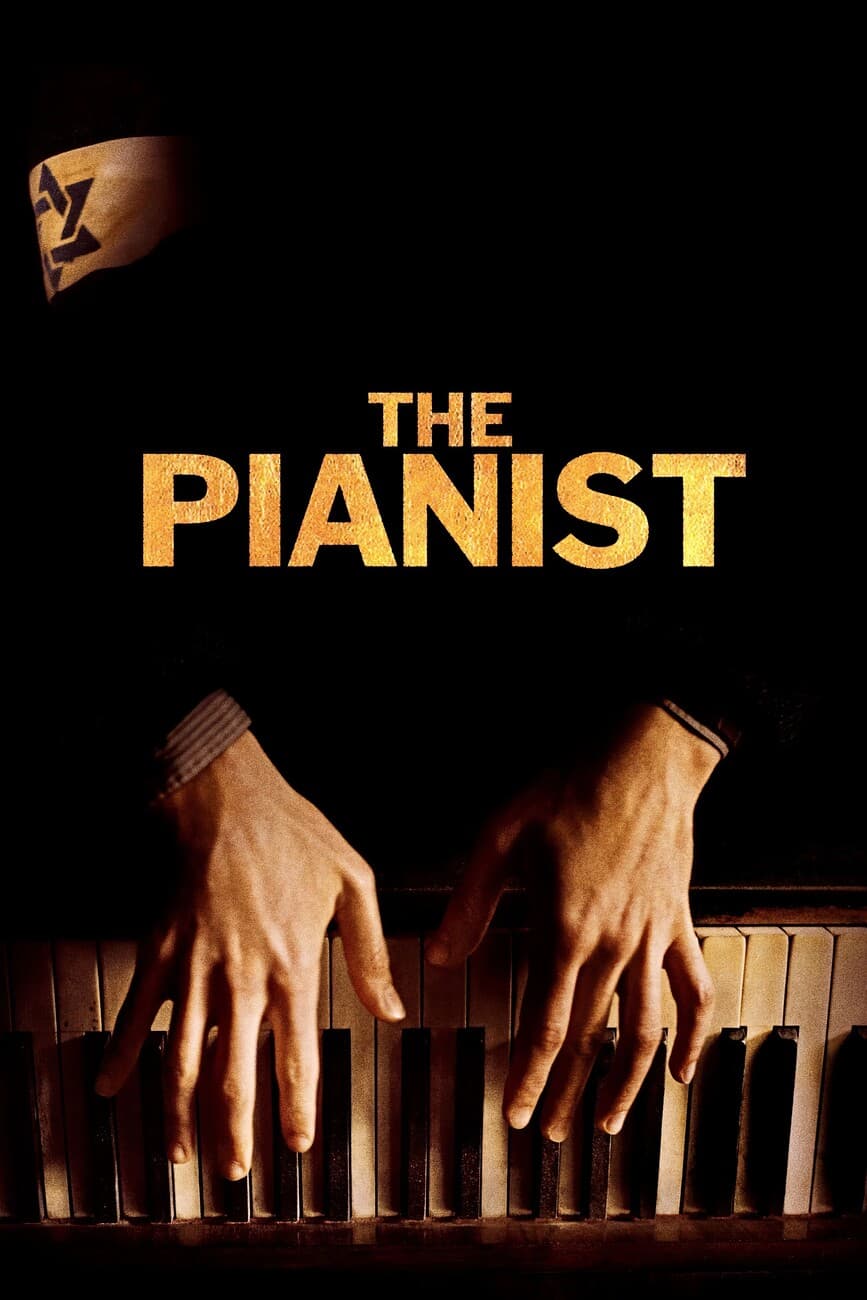
The Pianist
A quiet life unmade by war — and a pianist who refuses to stop listening.
Read the retrospective
→
2006
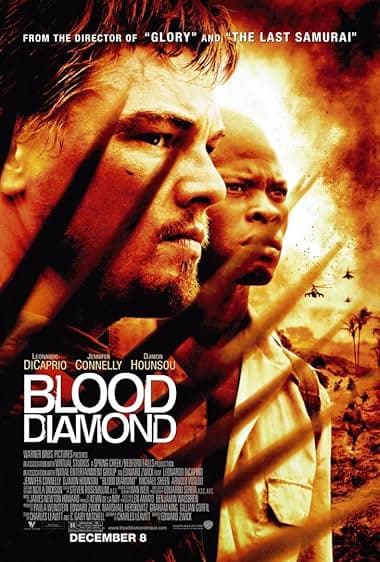
Blood Diamond
A mercenary, a fisherman and a pink diamond — and a film that still asks who pays for our jewellery.
Read the retrospective
→
2003
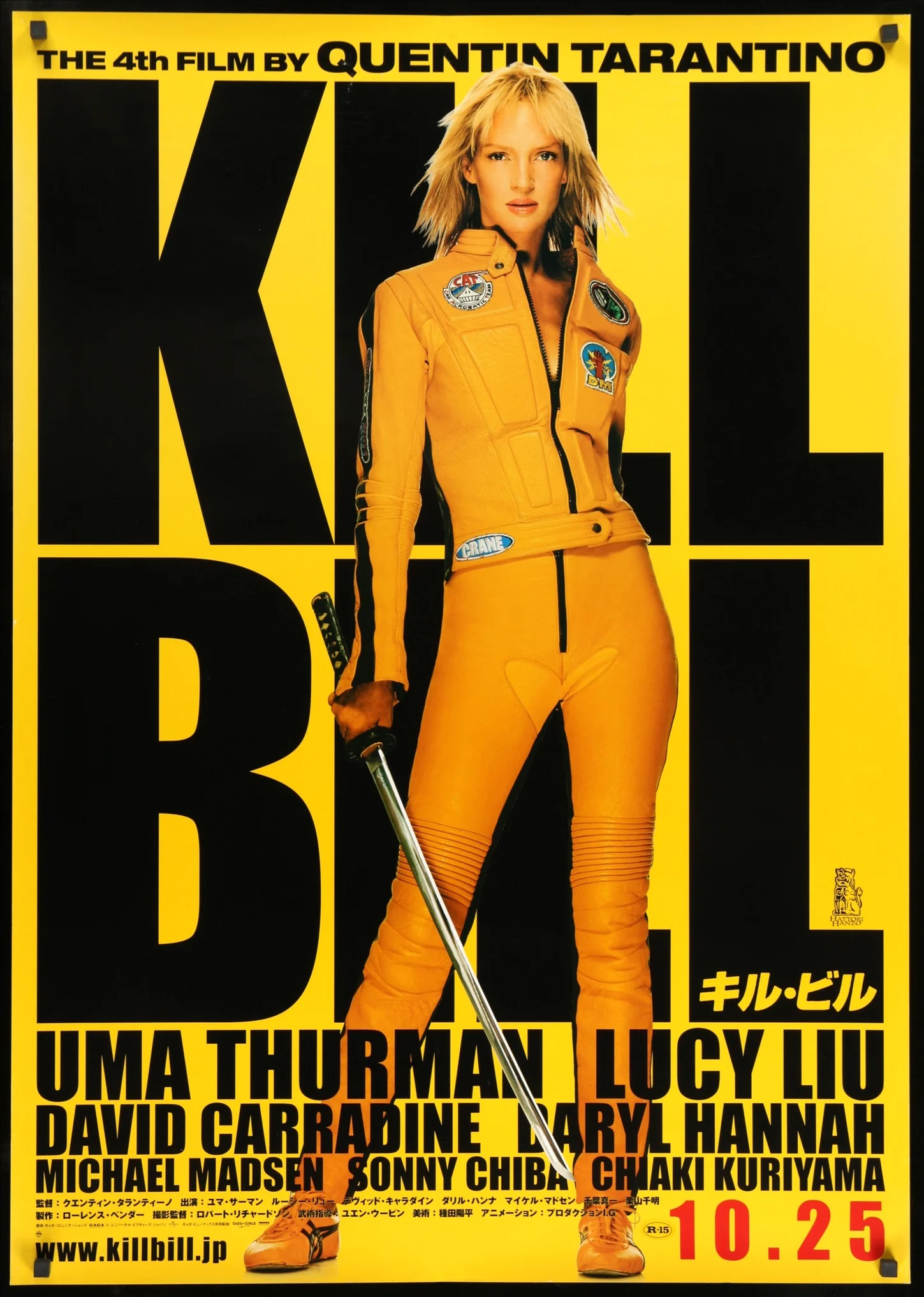
Kill Bill: Volume 1
A yellow jumpsuit, a long list of enemies and one woman who refuses to be finished.
Read the retrospective
→