
Déjà Vu
A grieving cop, a blurred time-window and a surveillance system that refuses to stay in its lane.
Feature presentation
Déjà Vu wears its gadgets and grief on its sleeve. Tony Scott's 2006 thriller hooks a procedural investigation to an odd little time-machine and keeps the stakes human by making one man — Douglas "Doug" Carlin — obsessively, recognisably determined to put a life back together.
THE MOVIE
Douglas "Doug" Carlin (ATF Special Agent) is still the reason this movie works
If you remember just one thing about Déjà Vu it will probably be Denzel Washington as Doug Carlin: an ATF agent who starts on a routine ferry-bombing case and ends up personally tangled in a woman’s life. That personal focus — Claire Kuchever’s story becoming the lens through which Doug hunts — is what turns a bomb-inquiry into something stubbornly human.
Around this grief-fuelled detective is a gadgetry heart. The team bring in a classified surveillance programme called 'Snow White' and at first it’s presented as a high-end way of reconstructing recent events from archived sensor data. The movie treats that surveillance as both tool and temptation.
And then there’s Tony Scott. He’s the director who gives the film its pulse: action-thriller momentum paired with a genuine willingness to let one man’s obsession carry the emotional weight. Put the two together — Washington’s single-minded agent and Scott’s propulsive direction — and you have the reason Déjà Vu still pulls people back.
THE SETUP
The idea that sets Déjà Vu in motion
The film begins with a very 00s blockbuster problem: a catastrophic ferry bombing in New Orleans that leaves investigators scrambling. Doug is assigned to the case and quickly fixates on Claire Kuchever, a woman whose suspicious death predates the blast and whose life provides the traces that might point to the bomber.
What shifts the movie from procedural to speculative is Snow White. The team initially uses it as a supercharged reconstruction tool — think of it as an ultra-comprehensive playback of recent events — but the question the plot lives on is whether that window can do more than just show the past.
That possible shift — from observation to interference — is the engine. The story arranges itself as part whodunnit, part science-fiction experiment: some scenes are straightforward detective work, others are reconnaissance through the Snow White window, and a later sequence attempts direct intervention in the past.
All of this was staged in and around New Orleans, where production even had to adapt after Hurricane Katrina. The city isn’t just a backdrop; the film’s practical staging and the scale of the opening set-piece come from filming on location and building large physical sequences.
THE CHARACTER
Why Douglas "Doug" Carlin (ATF Special Agent) matters
Doug isn’t an abstract action hero. He’s the person who makes the entire film feel like a rescue rather than a case file. The plot hands him Claire’s life as a set of clues, and he treats those clues like a promise he can’t walk away from.
That makes Doug interesting because his motivation is simple and stubborn: this job is personal. The movie often reduces the grand mechanics of time and surveillance down to the way Doug tracks someone he failed to save, which keeps the spectacle tethered to a human through-line.
The characters around him — Claire’s relationships, her father and the investigators in charge — are more than set dressing. They give Doug a reason to cross the line from observer to someone who wants to change what’s already happened.
Put another way: the Snow White machinery is the toy, but Doug is the child who refuses to stop playing until the broken thing is fixed.
THE PERFORMANCE
Why Denzel Washington's performance matters
Contemporary reviewers frequently pointed to the cast as one of Déjà Vu’s strengths, and the film definitely leans on its lead to hold together some risky ideas. Washington’s presence anchors the story: when the plot veers into speculative mechanics, the central performance keeps it human.
That casting choice matters because a film that asks you to accept a time-window will only carry emotional weight if the audience trusts the person doing the trying. The film’s critical responses at the time reflect that trust in the lead and the wider ensemble.
So the shorthand is straightforward: the movie needs a convincing, steady centre and critics thought the cast supplied one. That steadiness helps the audience care about choices the story forces Doug to make.
In short, the performance is the movie’s insurance policy — not proof the premise is airtight, but a reason to stay invested anyway.
UNDER THE SURFACE
Déjà Vu has more on its mind than the plot suggests
On the surface Déjà Vu is a time-bending thriller. Underneath it’s a film that keeps returning to surveillance: who watches, who decides what to watch, and whether watching is the same as intervening. Snow White is never neutral — its presence raises ethical questions about government observation that the characters have to live with.
Time and causality are the obvious speculative hooks. The movie asks what it would mean if our best technology could rewind us, and whether seeing the past gives you the right, or even the ability, to change it. That tension — between knowledge and action — is the story’s moral friction.
But grief sits beside gadgets. Doug’s obsession makes the technology personal: surveillance and time travel aren’t philosophical problems to him, they’re avenues to save a woman he’s come to care about. The film is therefore as much about a man clawing at loss as it is about a government programme.
Domestic terrorism and the ethical limits of technology hover in the background throughout. The bombing is the violent anchor, and the response — militarised, technical, frantic — forces the film to ask whether extraordinary tools justify extraordinary measures.
THE FILMMAKING
How Déjà Vu was put together
Tony Scott’s fingerprints are all over the film. He and editor Chris Lebenzon favour rapid cutting and multiple-camera coverage, especially in the opening ferry sequence, which gives the blast a multi-angle, breathlessly edited rush.
That sequence in particular was built to feel physical. The production used a real New Orleans ferry, staged and rigged with pyrotechnics, then captured it from numerous on-set angles — and later layered digital work on top. The aim was to blend practical spectacle with compositing for maximum immediacy.
Tonally, Déjà Vu sits with Scott’s late-career action-thrillers: bombast married to a sleek visual decisiveness. The director’s style turns procedural scenes into kinetic set-pieces and ensures even quieter investigative moments have a visual momentum.
So the filmmaking choice that defines the movie isn’t a single trick but a rhythm: fast, layered sequences that make you feel both the machinery of the investigation and the emotional hurry of Doug’s pursuit.
PRACTICAL EFFECTS
The effects work that gives Déjà Vu its physical personality
Déjà Vu leans on real, physical setups to sell its scale. The opening explosion used an actual New Orleans ferry that was rigged and detonated under controlled conditions; pyrotechnic teams staged timed detonations and applied safety measures to achieve on-camera destruction.
Underwater sequences took a similar approach: cars were placed in water and shot practically, then later composited with digital elements. That blend — real objects filmed under real conditions, finished with effects work — keeps the film’s big moments feeling tactile.
The result is a film that often reads as a practical-action movie dressed in sci-fi clothes. When the camera shows chaos, you can usually tell there was a physical element on set before the compositing came along.
That physicality matters because it gives weight to scenes where the stakes are supposed to be immediate and visceral — and when the plot asks you to care about a single life, that weight helps sell the urgency.
PURE 00s
Déjà Vu could not belong to any other decade
Déjà Vu arrived in 2006, a time when mainstream American cinema was preoccupied with surveillance, homeland security and the mechanics of domestic-threat response. The film sits in that cultural moment and uses those concerns as both plot fuel and moral question.
It also fits the mid-00s habit of pairing procedural beats with speculative devices: audiences were used to thrillers that mixed investigative detail with high-concept hooks. Déjà Vu’s Snow White premise is typical of that era’s appetite for tech-forward what-ifs.
There’s another small link to the period’s filmography: critics at the time noticed how Déjà Vu’s romantic and time-communication elements resonated with other 2006 movies that toyed with time in matters of the heart, so it felt timely in more than one way.
So whether you watch it now or remember it from cinemas back then, the film’s questions about watching, preventing and punishing reflect debates that were very much in the air during the 2000s.
THE LEGACY
Why Déjà Vu still matters
One reason Déjà Vu persists in conversation is practical: the screenplay’s spec sale was a big deal at the time and is still referenced when people talk about mid-2000s Hollywood spec economics. It’s part of the film’s origin story and explains some of the studio attention it received.
Another reason is where it sits in cinematic memory: critics tend to place it among 2000s surveillance-and-tech thrillers and within the catalogue of Tony Scott’s late-career action work. It’s often brought up when people trace how mainstream thrillers handled technology post-9/11.
On a character level, Doug Carlin’s single-mindedness and Claire Kuchever’s life-as-clues give viewers memorable anchors. Even if the premise divides opinion, those human pieces are why the film gets cited in conversations about Scott’s ability to blend spectacle with sentiment.
So Déjà Vu’s legacy is partly industrial — a headline-making script sale — and partly thematic, as a film that captures the era’s anxieties about watching, preventing and intervening in violent acts.
THE VERDICT
Does Déjà Vu still hold up?
Yes — with caveats. If you’re coming for slick action and a morally interested gadget, Déjà Vu still delivers. It stages a big, physical opening and uses a procedural structure — investigation, surveillance, reconnaissance through the Snow White window — to keep the plot moving.
Where it strains is when the film asks you to accept Snow White not just as a playback tool but as a device that can be used to change past events. That conceptual leap asks for suspension of disbelief, and contemporary critics noted it then; you’ll notice it now.
What helps the movie over that leap is Doug himself. Denzel Washington’s central role gives the story a human stake: his grief and obsession turn an abstract ethical problem into a personal mission. Critics at the time pointed to the cast as a reason the film works, and that still feels right.
So should you watch it? If you enjoy action-thrillers that tangle with surveillance and time in a way that privileges character over clean paradoxes, Déjà Vu is worth revisiting. It won’t convince the philosophical purist, but it will make you care — and, sometimes, that’s the point.
Share this movie
Keep watching
More movies from the 00s

2002
The Pianist
A quiet life unmade by war — and a pianist who refuses to stop listening.
Read the retrospective
→
2006
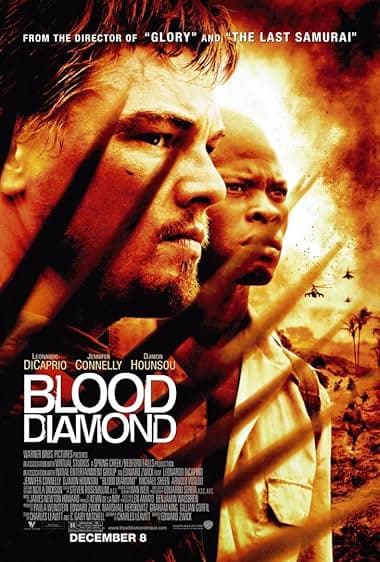
Blood Diamond
A mercenary, a fisherman and a pink diamond — and a film that still asks who pays for our jewellery.
Read the retrospective
→
2003
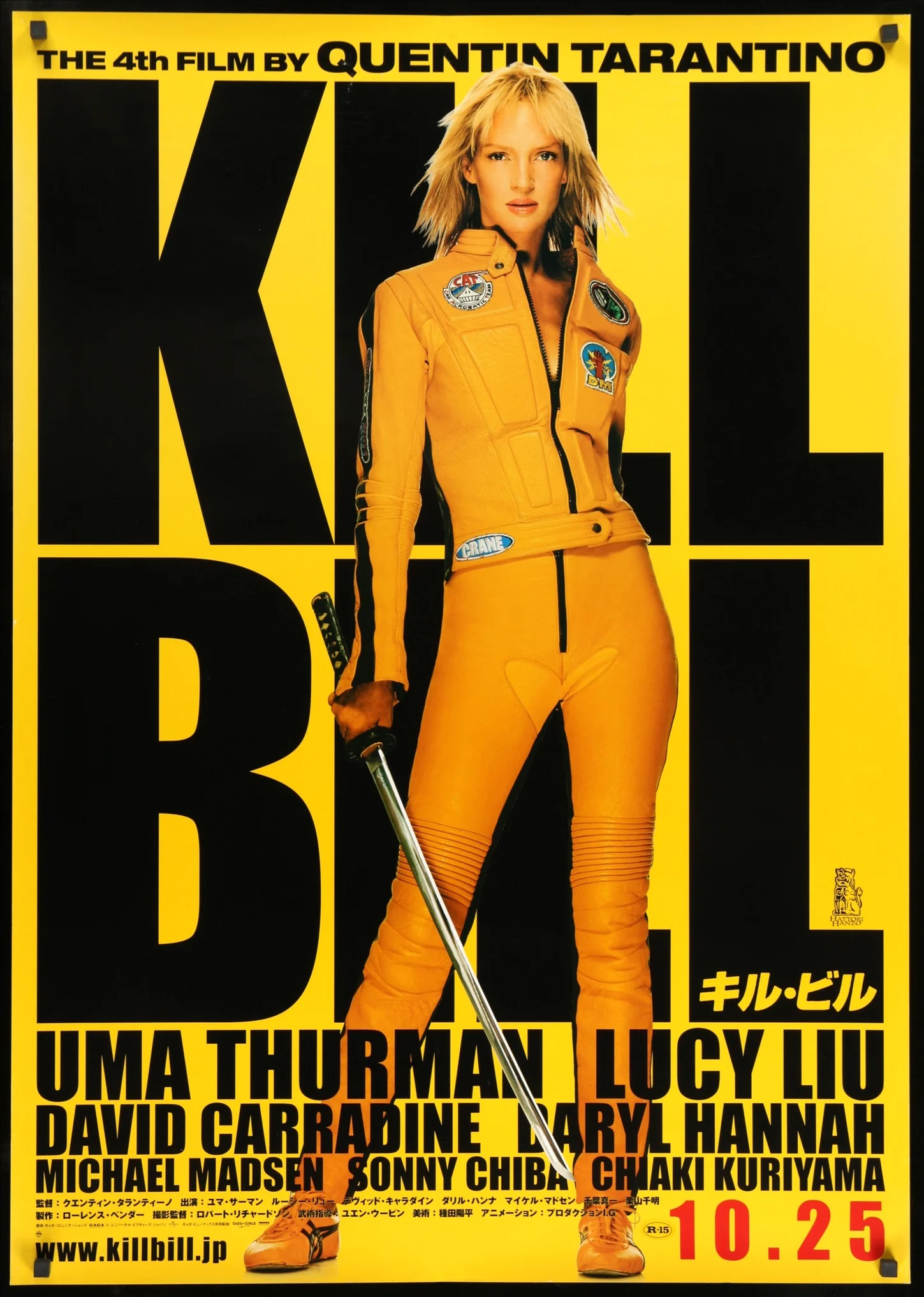
Kill Bill: Volume 1
A yellow jumpsuit, a long list of enemies and one woman who refuses to be finished.
Read the retrospective
→