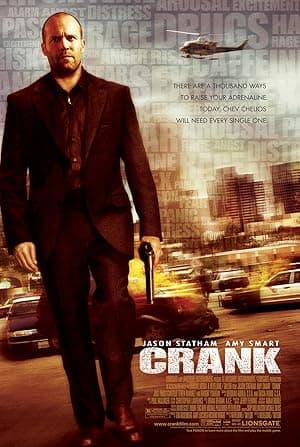
Crank
One hitman, a lethal slow-acting poison and an insistence that adrenaline is a way of life.
Feature presentation
Crank still lands like a shot — loud, unrelenting and entirely uninterested in subtlety. At its centre is Chev Chelios: an English hitman in Los Angeles who discovers he’s been dosed with a poison that only keeps him alive so long as his adrenaline stays sky-high. It’s a daft premise, deliberately simple, and that’s precisely what lets the film run flat-out for 88 minutes.
THE MOVIE
Chev Chelios is still the reason this movie works
There are films that feel like arguments and films that feel like adrenaline. Crank is the latter — a movie built around a single, showy proposition: Chev Chelios wakes up to discover he’s been injected with a slow-acting toxin that will finish him off the moment his heart rate drops.
That premise does two useful things. It gives the film a genuine ticking clock and it ties the plot to Chev’s whole personality: he’s not just a killer, he’s someone whose professional life and sense of self run on risk. The movie’s energy — its noise, choices and escalating stunts — all flow from that connective tissue.
It’s also the launching pad for Mark Neveldine and Brian Taylor’s first feature: a compact, 88-minute sprint that never tries to hide what it is. If you remember one thing about Crank, remember who it’s about. Everything else exists to keep him moving.
THE SETUP
The idea that sets Crank in motion
Keep it simple: Chev Chelios wakes up to a life-or-death problem. He’s been injected with a synthetic poison that will kill him if his adrenaline falls, and the perpetrators make sure he knows exactly who did it.
From there the movie organises itself around a single dramatic necessity — staying alive long enough to find the people responsible and either secure an antidote or get revenge. That frame is narrow by design, which keeps the film taut and immediate.
The consequence of that frame is a story mechanic that’s at once silly and brilliant: Chev must sustain an almost permanent state of high-risk behaviour — fights, speed, self-medication and more — because every quiet moment might be fatal.
There’s no sprawling conspiracy to untangle. It’s an hourish sprint: location-to-location, problem-to-problem, with each new stunt or confrontation answering the same urgent question — how do you keep a man moving?
THE CHARACTER
Why Chev Chelios matters
Chev is the engine. The plot is a simple machine; Chev is the rotating, combustible part that keeps it functioning. The film establishes him as an adrenaline-dependent professional assassin whose survival and sense of self are inseparable from danger.
That dependency matters because it turns survival into character. The poison doesn’t just threaten his life — it threatens the only way he knows how to be. The stakes are therefore both practical and personal.
There’s also something emotional tied into the urgency: Eve, Chev’s girlfriend, represents the life he’s supposedly heading toward when he retires. She’s the quiet counterpoint to everything Chev is being forced to do, and that contrast gives the danger weight beyond the spectacle.
And the people around him — informants like Kaylo, antagonists such as Ricky Verona — exist to push him into confrontations that test that identity. Chev isn’t just running from death; he’s running against the idea of a different life he may or may not want.
THE PERFORMANCE
Why Jason Statham's performance matters
Contemporary coverage made a straightforward point: a lot of Crank’s energy comes from the physicality Statham brings. He’s the man in motion and the film leans on that fact.
That’s not the same as an acting manifesto. It’s technical and functional — his presence and stunt work are the tools the film uses to sell the conceit that Chev must never stop.
Because the movie is essentially a physical idea, the casting works as a promise. You trust that the lead can carry the necessary pace — that the actor can be a believable vehicle for constant danger — and the film is constructed to show that off.
So when people say Statham “carries” the film, it’s a practical observation: his physical presence and the emphasis on stunt-driven sequences are central to how Crank keeps its pulse up.
UNDER THE SURFACE
Crank has more on its mind than the plot suggests
On the surface Crank is a revenge thriller: someone poisons a hitman and he has to make them pay. But the film nudges that basic shape into questions about what keeps a person living the life they do.
Adrenaline-dependence is both the literal premise and a metaphor here. The movie treats overstimulation as survival technique and aesthetic — excitement is not just a reaction, it’s a lifestyle that defines Chev.
That ties into the film’s look at masculinity and risk. Chev’s identity is wrapped up in danger; surviving by courting more danger is both heroic and performative. The revenge plot supplies the external force; the internal issue is whether that life is sustainable or even desired.
Finally, the film uses hyperstimulation — sensory excess, escalating gambits — to test these ideas. It doesn’t cosy them up. It runs them loud and fast, which is how the themes arrive: urgent, messy and difficult to ignore.
THE FILMMAKING
How Crank was put together
Crank is the first feature from Mark Neveldine and Brian Taylor, and that debut status matters. The film reads like the work of two filmmakers taking every technical trick they trusted and applying it at top volume.
Contemporary reports note the directors operated a large portion of the camera themselves and favoured an improvisational, high-energy approach across Los Angeles locations. That hands-on method gives the film a jittery, immediate feel.
There’s also a clear production choice to prioritise in-camera stunts and practical approaches rather than leaning on digital fixes. The decision shapes every set piece — the movie wants its danger to look physically present.
Put together, those choices explain why Crank feels like a lived-in sprint: the directing style, camera work and stunt-first mindset are all in service of keeping the audience in the same restless rhythm as Chev.
PRACTICAL EFFECTS
The effects work that gives Crank its physical personality
Journalism around the production made a point of the film’s preference for doing dangerous-looking effects in camera. That approach is audible in every showdown and stunt.
Part of that practical feel comes from reports that Jason Statham performed many of his own stunts, which feeds directly into the film’s sense of risk-on-reality.
Alongside the stunt work, production sources describe the use of handheld and high-speed camera techniques to create immediacy. The result is not polished invisibility but a deliberately visceral texture.
So when Crank feels like a boxing match rather than a slick ad, that’s by design: the practical choices and camera approach push the film toward an almost tactile kind of peril.
PURE 00s
Crank could not belong to any other decade
Crank’s arrival in 2006 feels very of its time because it came from a directing duo whose background was in high-energy commercials — a mid-00s pathway into feature filmmaking that prized kinetic style.
That commercial-rooted shorthand translates into a film that favours style as argument: movement, editing choices and audacious stunts become the way the story makes its case.
The movie’s tight runtime and straight-line narrative also reflect a 2000s appetite for compact, high-concept genre pieces that could be sold on a single, punchy idea.
And the fact it spawned a direct sequel three years later underlines that the directors turned this approach into a repeatable formula — a distinctly 00s commercial-to-feature pipeline at work.
THE LEGACY
Why Crank still matters
Part of Crank’s afterlife is simple: it was followed by Crank: High Voltage in 2009, which picked up the same character and continued the story.
Beyond that, the film helped establish Mark Neveldine and Brian Taylor’s reputation for aggressive, highly stylised action filmmaking. It’s a calling card — noisy, committed and unmistakable.
That reputation made the duo a known quantity for a certain kind of audience and studio conversation: filmmakers who would foreground kinetic energy and practical stunt work.
So Crank matters less as a quiet classic and more as an identifiable moment in a particular strand of 2000s action movies — a film that signposted a taste for excess as an aesthetic choice.
THE VERDICT
Does Crank still hold up?
Yes — if you’re up for what it is. Crank’s premise is deliberately narrow: an English hitman in Los Angeles has been poisoned and must keep his adrenaline up to survive, and the film never pretends to be more intricate than that.
What determines whether it still works for you is whether the central idea appeals. The movie builds a tight, near-real-time structure across Los Angeles locations and uses that structure to justify non-stop action — fights, driving and other risky business — because a lull equals death.
The film’s compact running time and the directors’ hands-on, stunt-forward approach help it avoid flabbiness. There’s no padding; it’s 88 minutes of the conceit being pushed to its limits. Contemporary coverage compared it to ticking-clock thrillers and noted its deliberately excessive, high-energy style, which is exactly the point.
So watch Crank if you want a compact, unapologetically loud action piece that wears its premise on its sleeve and trusts a physical lead to keep the engine running. If you prefer restraint and subtlety, it will feel like an assault. Both reactions are valid — the film simply asks you to choose which side you’re on.
Share this movie
Keep watching
More movies from the 00s

2002
The Pianist
A quiet life unmade by war — and a pianist who refuses to stop listening.
Read the retrospective
→
2006
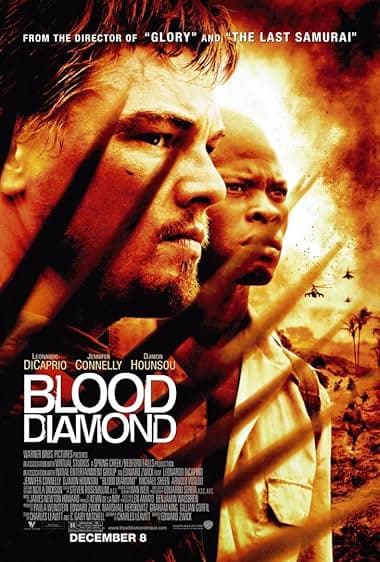
Blood Diamond
A mercenary, a fisherman and a pink diamond — and a film that still asks who pays for our jewellery.
Read the retrospective
→
2003
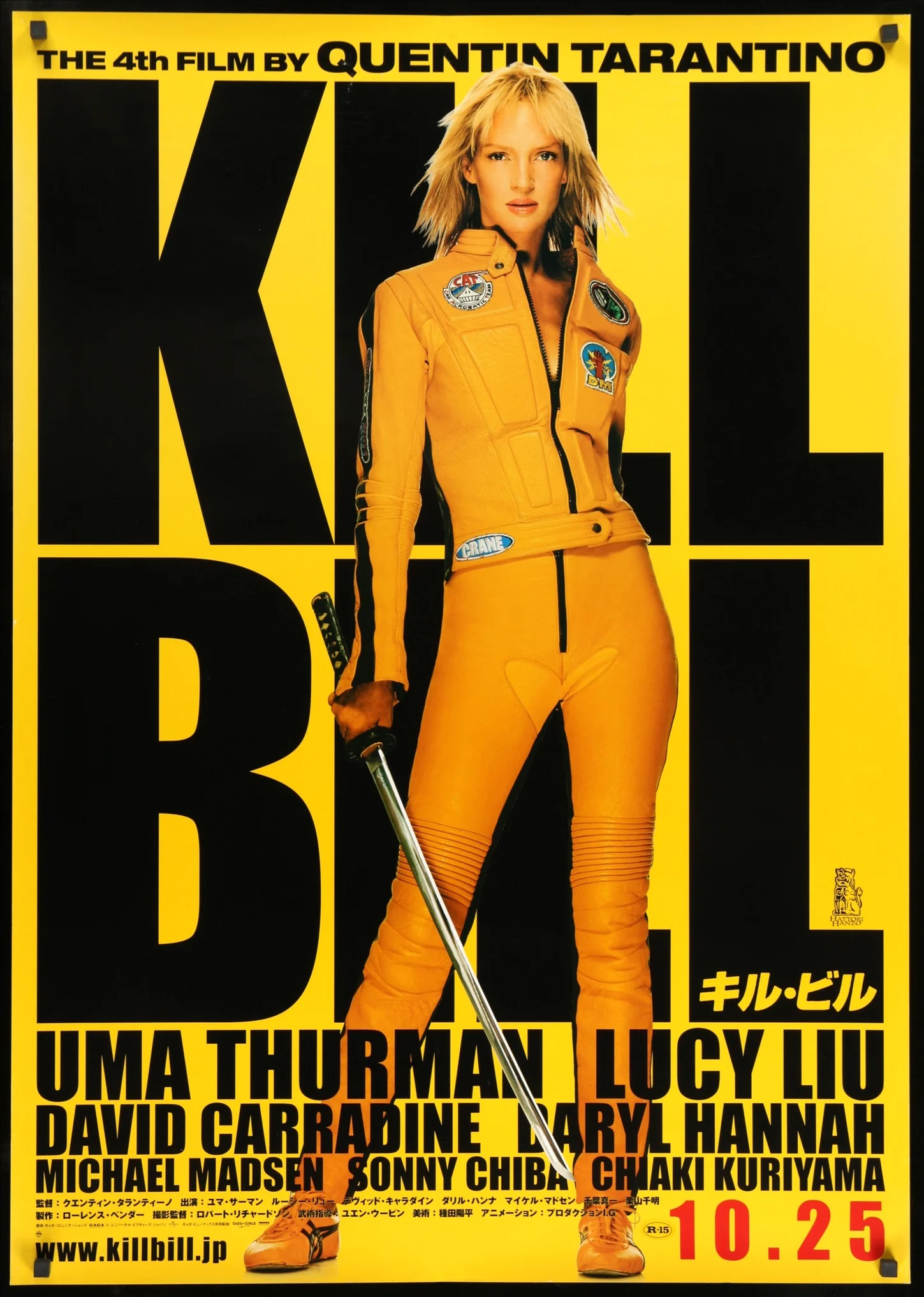
Kill Bill: Volume 1
A yellow jumpsuit, a long list of enemies and one woman who refuses to be finished.
Read the retrospective
→