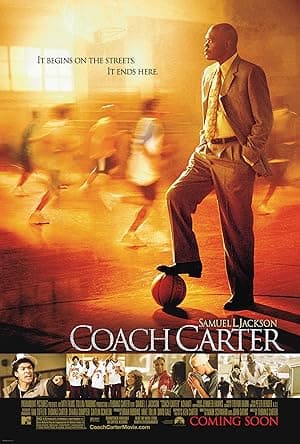
Coach Carter
A tough-love coach, a team on the line and a simple rule: lessons off the scoreboard matter as much as those on it.
Feature presentation
Remember the gym lockout? That single, stubborn refusal to put wins above classwork is Coach Carter’s opening move — and its stubbornness is the whole point. Thomas Carter’s 2005 drama turns a high-school court into a classroom about life choices, and never lets you forget which exam actually counts.
THE MOVIE
Coach Ken Carter is still the reason this movie works
If you can picture the moment a coach locks the gym and hands players a contract that ties playing time to grades, you’ve got the heart of Coach Carter. The film dramatizes the real-life season in Richmond where Ken Carter took that risk and refused to let a perfect record paper over failing schoolwork.
That decision — insisting that classroom standards come before trophies — is the inciting move that keeps the film ticking. It’s not a one-off stunt: team contracts, grade checks and a gym lockout are the plot’s repeating engines, and they force the film’s conflicts into public view.
And at the centre of it all is Coach Ken Carter himself. Thomas Carter’s 2005 drama presents him as a disciplinarian whose stated aim isn’t just wins but getting these young men to college and adulthood. With Samuel L. Jackson in the role, that idea has a very particular presence: firm, uncompromising and impossible to ignore.
THE SETUP
The idea that sets Coach Carter in motion
Think of the film as a season stretched around a single stubborn principle: academic accountability vs athletic success. Carter writes a team contract, checks grades and treats eligibility like a classroom rule — and when players don’t meet those standards, he makes the extreme call to lock the gym.
That binary — study or play — puts Carter at odds with what players, parents and the school board expect. The drama isn’t manufactured out of trick plays; it comes from real pressure: a team wanting to win, a community pushing for victory, and a coach refusing to let sports be an escape hatch.
The movie uses familiar sports scaffolding — preseason, training, games — but keeps returning to the contract and its consequences. Those mechanics do the heavy lifting: they escalate the stakes and make every decision public, personal and uncomfortably moral.
It’s a tidy premise for a coming-of-age story: a series of tests on and off the court that demand the players decide what they want from life, not just a scoreboard.
THE CHARACTER
Why Coach Ken Carter matters
Ken Carter is not an abstract symbol; he’s a coach with a program. The film makes his priority plain: this is about getting players into college and teaching them to be responsible adults, not just polishing a win–loss column.
That clarity gives every confrontation meaning. When Carter enforces the contract he is refusing expedient soft mercy. He is, by the film’s design, a disciplinarian who measures success in diplomas rather than trophies.
There’s also a private angle that complicates the public stance. Damien Carter is the coach’s son, and that father–son thread raises the stakes whenever team discipline bumps up against family loyalty.
All of which is to say: the story works because the coach is not vague. He’s deliberately specific about what he wants his team to become, and that specificity forces the rest of the film to react to him rather than to wander off into generic sports-movie territory.
THE PERFORMANCE
Why Samuel L. Jackson's performance matters
Contemporary responses singled out Samuel L. Jackson as the film’s anchor. Roger Ebert’s review, for example, praised Jackson’s confident, central turn and discussed how his forceful presence shaped the picture’s authority.
That’s useful because the movie asks us to accept a very uncompromising figure for long stretches. A coach who will lock players out of the gym needs to feel like someone who could actually do it — otherwise the moral argument collapses into melodrama.
Jackson’s casting supplies that plausibility. Whether you read the role as iron discipline or tough mentorship, the film depends on the audience buying the man at its centre.
In short: the film’s moral backbone is less persuasive if you don’t believe its coach. Contemporary critics pointed to Jackson as the reason viewers could believe him.
UNDER THE SURFACE
Coach Carter has more on its mind than the plot suggests
At surface level it’s a sports movie about a team and its season. Look beneath, and the film is mostly interested in how mentorship and discipline can be taught as educational practice. The classroom isn’t dismissible background noise; it’s centre stage.
That’s why the coming-of-age beats matter. Players aren’t just learning plays; they’re being asked to choose responsibility: do you want the immediate high of victory or the longer, harder path that might take you to college?
There’s also a community dimension. The conflict isn’t only between coach and players; it’s between different ideas of what success looks like for a neighbourhood. The film keeps sliding back to the fact that sports can be a ladder — but only if the rungs are secure.
Put plainly: Coach Carter uses basketball as a way to talk about choices, accountability and social mobility, not as an end in itself.
THE FILMMAKING
How Coach Carter was put together
Coach Carter is assembled like a mainstream mid‑2000s drama: names in the crew that signal a professional, experienced build. Sharone Meir is credited as director of photography, Peter Berger as editor and Carlos Barbosa as production designer.
Those credits are the scaffolding beneath the performances and the script. Listing them isn’t window‑dressing — it’s a reminder that the film is shaped by people whose jobs are to keep a real‑time, season-structured story coherent over 137 minutes.
When your story wants to switch from locker-room arguments to family moments to public hearings about a gym lockout, you need steady hands behind the camera, in the cutting room and on the set. The credits simply point to that craft.
Thomas Carter directs that team effort, and the result is a polished, formally reliable drama built to make its argument clearly and accessibly.
PURE 00s
Coach Carter could not belong to any other decade
Coach Carter sits squarely in a mid‑2000s moment when sports biopics and coach films doubled as social dramas. Produced by MTV Films and Tollin/Robbins, it joined a wave of movies that used athletics to stage arguments about community and education.
Its release in 2005 places it among films that cared about public, performative reckonings — the kind of story that wants a hearing, a press‑moment and sometimes a moral victory that isn’t measured in points.
Even the soundtrack rollout nods to the era: Trevor Rabin provided the score while a separate hip‑hop and R&B soundtrack arrived just before the film, a typical cross‑platform push of the time.
Put simply: Coach Carter is of the 00s because it wears the decade’s theatrical strategy on its sleeve — bold central performances, clear social stakes and an appetite for speaking to both cinema audiences and community conversations.
THE LEGACY
Why Coach Carter still matters
Coach Carter keeps turning up in lists about 2000s sports‑teacher and coach films because it puts academic outcomes at the centre of its drama. That emphasis — grades over glory — is the film’s distinctive afterlife.
Scholars and critics often point to it as an example of a sports picture that prioritises what happens off the court, which is why it gets cited in discussions about how cinema handles education and social mobility.
So its legacy isn’t about inventing a new sports formula. It’s about nudging the genre’s usual priorities: reminding viewers that sometimes the real victory is a diploma rather than a trophy.
THE VERDICT
Does Coach Carter still hold up?
Yes — but with a caveat. If you want a tight, cynical deconstruction of institutional failings, this isn’t the movie. If you want a clear, principled drama that stages a moral choice in public, it still delivers. The lockout and the contract remain the film’s smartest move: they keep debate focused and make the stakes visible.
Samuel L. Jackson’s presence helps because contemporary reviewers pointed to him as the central reason to buy the premise. The film asks you to accept a coach who will put principle before prize; the story only works if you believe he would do it, and Jackson gives the picture that credibility.
Narratively the film plays like a season‑long test: repeated grade checks, forfeiture threats and public arguments force characters to choose adulthood over immediate reward. That structure still feels purposeful rather than schematic.
So should you watch it now? If you’re after an earnest, well‑lined sports drama about mentorship, discipline and education, Coach Carter remains worth the time. It’s a film that wants to lecture you — and, crucially, to persuade you that the lecture matters.
Share this movie
Keep watching
More movies from the 00s

2002
The Pianist
A quiet life unmade by war — and a pianist who refuses to stop listening.
Read the retrospective
→
2006
Blood Diamond
A mercenary, a fisherman and a pink diamond — and a film that still asks who pays for our jewellery.
Read the retrospective
→
2003
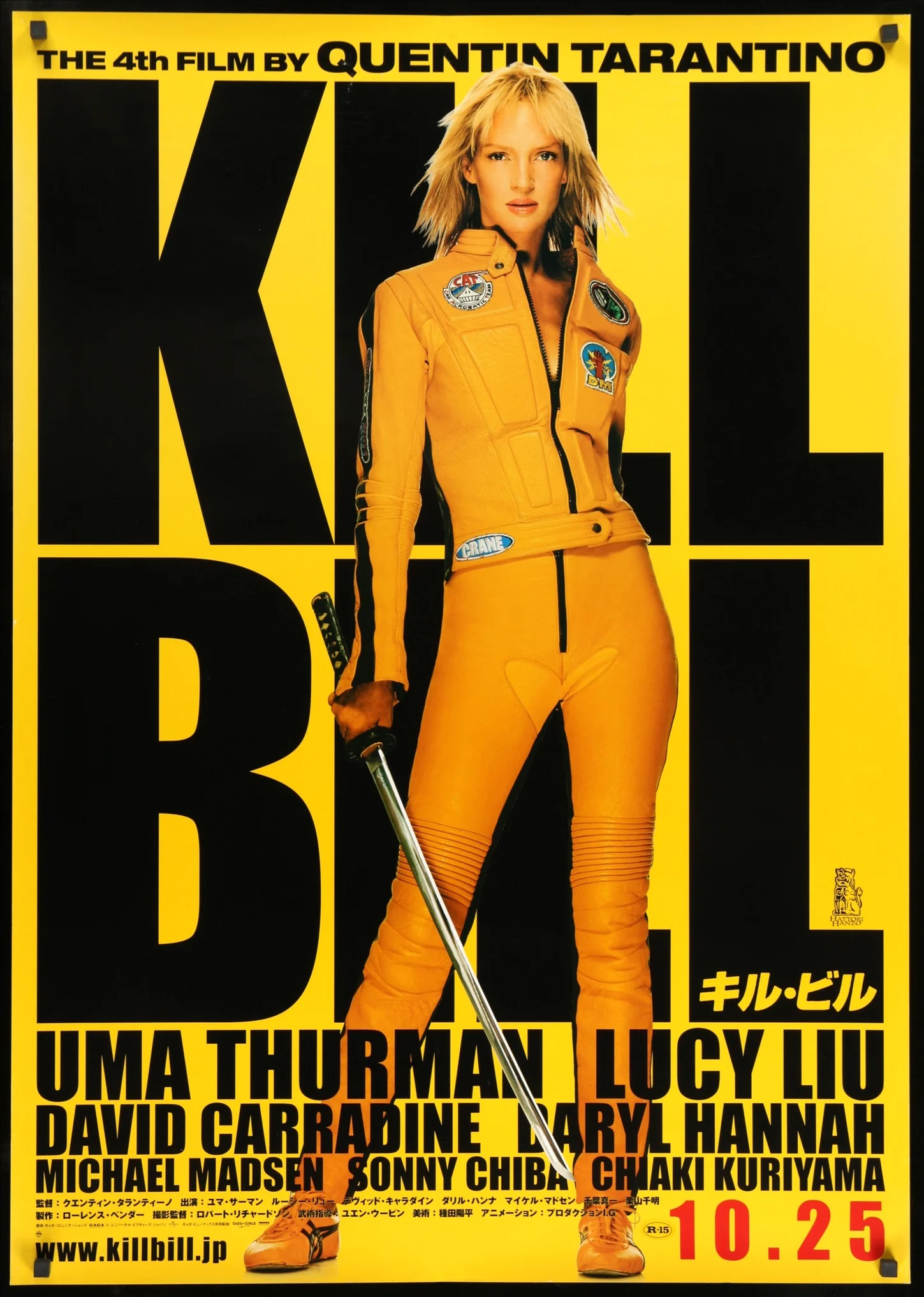
Kill Bill: Volume 1
A yellow jumpsuit, a long list of enemies and one woman who refuses to be finished.
Read the retrospective
→