
Feature presentation
Children of Men still lands like a shove. Alfonso Cuarón’s near-future Britain hands you a world stripped of children and then asks what happens when one is suddenly possible again. It’s a movie about who will protect hope when everything else has given up.
THE MOVIE
Theo Faron is still the reason this movie works
There’s a simple way to say what Children of Men does: it imagines Britain when nobody’s been born for almost twenty years and then pins the whole country’s future on one pregnancy. That basic, brutal premise—no children, no future—gives the film a constant, low-level urgency.
At the centre of that urgency is Theo Faron, a world-weary civil servant who has retreated from politics and emotion until a former partner asks him to help escort Kee, an undocumented refugee, because she is secretly pregnant. The plot sets up a tight moral question: who will stand between a fragile hope and a collapsing order?
Alfonso Cuarón directs with a steady, relentless focus. Across 109 minutes he builds a film that trades in long, immediate shots and a documentary-like feel, and he keeps us with Theo so the political spectacle never quite drowns the human story.
THE SETUP
The idea that sets Children of Men in motion
The movie’s engine is straightforward: Theo must get Kee — and the child she carries — out of harm’s way. That mission turns the film into a series of tense movements through a country that has learned to treat birth as either propaganda or a threat.
The story feels lived-in because it uses recognisable institutions as obstacles: detention centres, immigration enforcement and the media are all practical forces that shape how people move and make decisions.
Opposing those official structures is an underground resistance, and these different groups turn the journey into a series of set pieces: long urban escapes, improvised transports and at least one staged trip into a refugee holding centre.
Those mechanics keep the stakes concrete. The film never lets you forget that this is about getting from A to B while being hunted, negotiated with and watched — and that makes the emotional beats land harder when they arrive.
THE CHARACTER
Why Theo Faron matters
Theo isn’t an obvious hero. He’s a civil servant who’s checked out — the sort of person who knows how systems fail because he used to work inside them. That exhaustion is what makes him interesting: he’s not spectacular, he’s realistic.
The story deliberately starts with that apathy. When Julian, an ex-activist and an old flame, hands him the problem of Kee’s pregnancy, Theo has to choose to be dragged back into a world he’d left. That choice is what turns him into the film’s moral fulcrum.
Part of why Theo matters is how the movie uses smaller human anchors around him. Jasper, an older friend and former cartoonist, becomes a place to land — a temporary shelter that reminds Theo of quieter, softer possibilities.
Put simply: Theo gives the film a recognisable human scale. The politics and spectacle could have swallowed the story, but because we stay close to him, the moral questions feel personal rather than abstract.
THE PERFORMANCE
Why Michael Caine's performance matters
Jasper is the film’s small, steady hearth. He’s the person Theo can return to when the outside world is unbearable — a moral touchstone with a private history that softens the story.
Contemporary reviewers consistently pointed to Michael Caine’s turn as a notable supporting element. That attention mattered because Jasper isn’t a flashy role; he’s one of those parts that stabilises a film’s emotional temperature.
What Jasper provides the narrative is a quiet counterweight. While the movie runs through chase sequences and political set pieces, Jasper’s scenes allow the film to breathe and for Theo to register doubt, memory and grief.
Having a recognisable, grounded figure like Jasper in the middle of an otherwise relentless story stops the film sliding into nonstop spectacle; it gives the audience a human scale to measure the rest of the chaos against.
UNDER THE SURFACE
Children of Men has more on its mind than the plot suggests
On the surface it’s a thriller about getting from one place to another. Underneath, the film keeps nudging at harder questions: what does it mean to be responsible for the future when the future seems to have been cancelled?
Parenthood and human continuity are treated as both moral obligations and political problems. The pregnancy at the centre isn’t just a plot device — it forces characters to confront whether society deserves to continue.
The movie also stages a struggle between hope and despair. That opposition isn’t sentimental: hope is fragile and political, and despair is practical and organised, with institutions ready to contain or exploit either feeling.
Finally, the film is overtly interested in state power and surveillance, and it frames refugee movements as a central human crisis. Those elements keep the story urgent because the personal drama always sits next to clear social consequences.
THE FILMMAKING
How Children of Men was put together
A big part of the film’s personality comes from how those tense sequences are shot. Cuarón and his team committed to extended camera movement, using specialist rigs and vehicle modifications so the camera could move through tight spaces without cutting away.
Emmanuel Lubezki handled cinematography and the movie’s editing deliberately preserves long handheld and tracking coverage. That reportage-like approach gives the action a first‑person urgency: you feel swept along rather than politely shown the tricks.
The decision to lean on long, continuous coverage is more than showmanship. It means the viewer experiences disorientation and immediacy in real time, which matches the film’s political claustrophobia.
So when the film asks you to care about a single child or a tired man, the camera is doing the emotional work too — refusing to step back, refusing to look away.
PRACTICAL EFFECTS
The effects work that gives Children of Men its physical personality
The film’s most charged moment — the childbirth sequence — was achieved by mixing real-world techniques and digital work. Some shots used animatronic baby elements and prosthetics, while others relied on a computer-generated infant to maintain continuity through the long take.
That hybrid approach extends beyond the birth scene. Several extended action sequences were assembled from multiple practical and location takes and then invisibly blended with digital transitions so they read as continuous.
Visual-effects houses contributed compositing work to stitch those practical sections together. The aim was not to shout about the trickery but to make the motion read as one uninterrupted experience.
The result is a film that feels tactile. When the action moves through a cramped car or a crowded square, the physical props and prosthetics help sell the moment in a way that pure digital replacement would have made flatter.
PURE 00s
Children of Men could not belong to any other decade
Premiering in 2006, Children of Men arrived at a moment when British cinema was preoccupied with politics and security. It fitted into a mid‑2000s conversation about terrorism, migration and how states manage fear.
The film’s handheld, reportage-like look and the use of refugee-camp imagery tied it to real-world debates about migration and humanitarian crises that were very present in public life at the time.
Contemporary coverage and institutions like the BFI grouped it with other UK-set dystopias from that year, which shows how much the film was read as part of a cluster of politically engaged cinema rather than as an isolated spectacle.
That context matters because it explains why the film’s political gestures felt urgent then — and why those same gestures still resonate now when migration and surveillance remain headline issues.
THE LEGACY
Why Children of Men still matters
Technically the film earned recognition: it won awards for cinematography and production design and picked up Academy Award nominations in photography and editing categories. Those honours underline how seriously its craft was taken.
Its long single‑take action sequences have become reference points in later discussions about the long take. Filmmakers, critics and academics frequently return to those scenes when they want to talk about sustained camera work.
Institutions such as the British Film Institute regularly include Children of Men in essays and lists about key 21st‑century science‑fiction and dystopian films, which is one reason the film keeps circulating in film culture conversations.
Beyond the technical chatter, the characters — Theo, Kee, Julian and Jasper — give the film something more durable: a human story that anchors whatever reputation it acquires for bravura camerawork.
THE VERDICT
Does Children of Men still hold up?
Short answer: yes. Children of Men still works because it keeps its attention on people even as it stages large political questions. The central device — a world without children and then one child who might change everything — remains an immediate way to pose a moral dilemma.
Clive Owen’s Theo is the film’s anchor: a tired civil servant who begins apathetic and is pulled into action by personal ties and the discovery of Kee’s pregnancy. Because the camera follows him so intimately, the political spectacle never completely crowds out the human choice at the heart of the story.
Technically and narratively the film holds up. The long takes and documentary-like coverage still feel urgent rather than gimmicky, and the way action sequences are constructed from practical takes and invisible blends keeps the motion believable. Jasper’s quieter scenes also prevent the film from becoming a nonstop adrenaline machine.
If you’re asking whether it’s worth a rewatch or a first viewing now, watch it for the marriage of moral pressure and craft: a small, fragile hope inside a well-made, unblinking political thriller. It’s not merely a flashy exercise in camera bravado — it’s a human story that the filmmaking makes impossible to ignore.
Share this movie
Keep watching
More movies from the 00s

2002
The Pianist
A quiet life unmade by war — and a pianist who refuses to stop listening.
Read the retrospective
→
2006
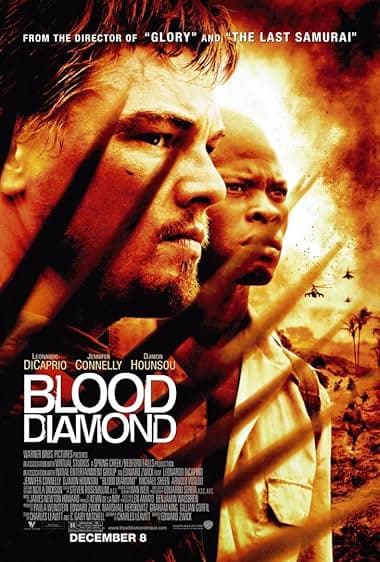
Blood Diamond
A mercenary, a fisherman and a pink diamond — and a film that still asks who pays for our jewellery.
Read the retrospective
→
2003
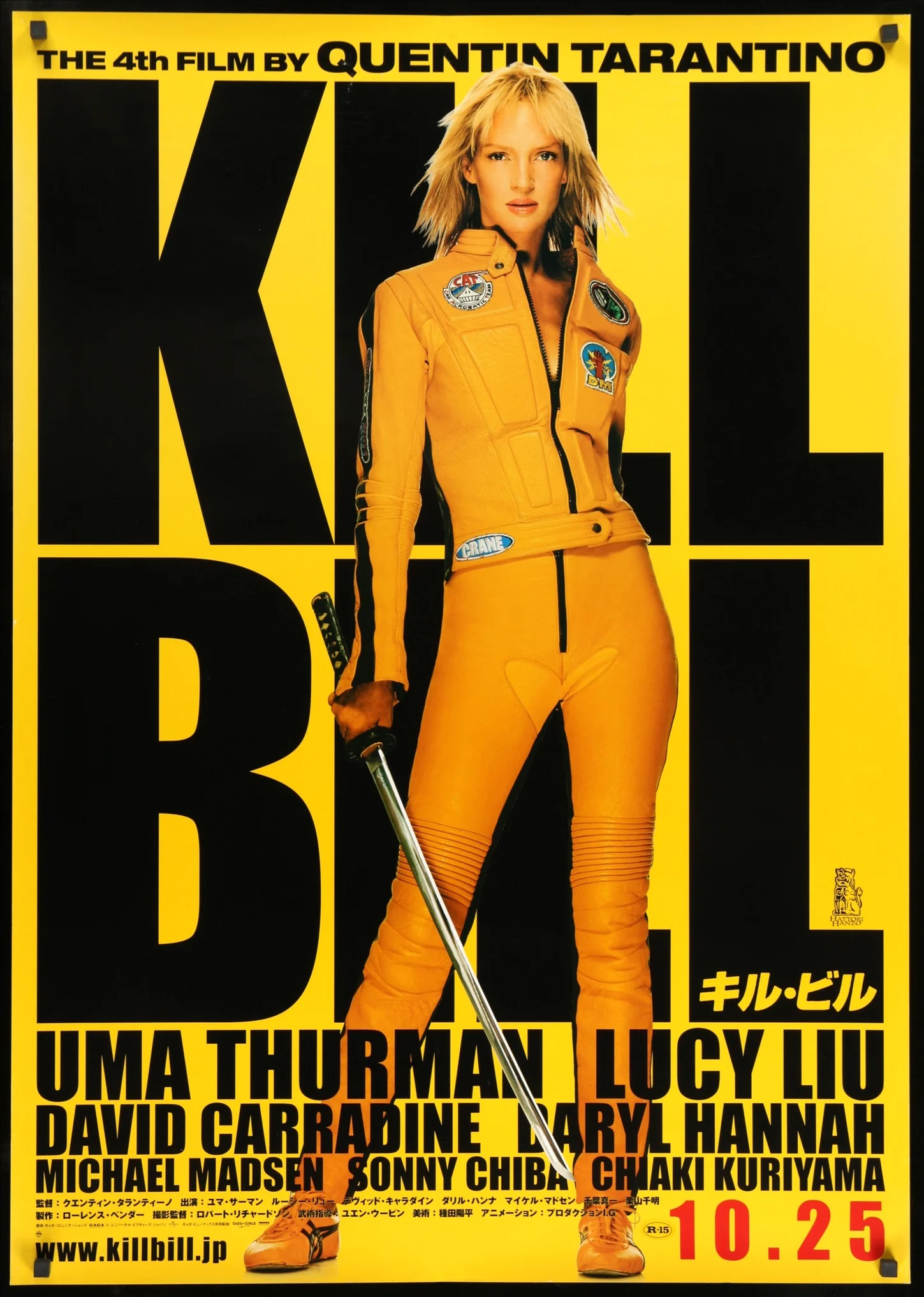
Kill Bill: Volume 1
A yellow jumpsuit, a long list of enemies and one woman who refuses to be finished.
Read the retrospective
→