Feature presentation
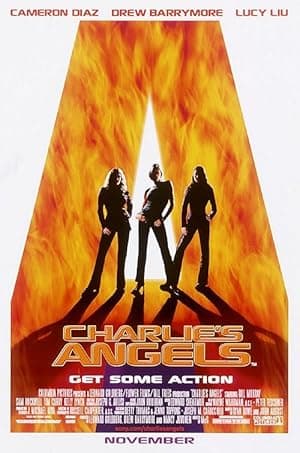
Charlie’s Angels isn't subtle. It’s not trying to be. What it wants to be — loud, fast, glamorous and frequently ridiculous — it mostly is. Revisit it and you'll find a film carried by its central energy: Cameron Diaz's Natalie Cook, a trio that actually feels like a team, and a gleeful commitment to style over subtlety.
THE MOVIE
Natalie Cook is still the reason this movie works
Charlie’s Angels is, at heart, three private investigators — Natalie, Dylan and Alex — who take orders from an unseen Charlie and treat every mission like a high-stakes dress rehearsal. That setup gives the film permission to be performative: costumes, disguises and big entrances are part of the job.
The movie’s personality rests on one simple engine. Natalie Cook (played by Cameron Diaz) is the effervescent, action-oriented member of the trio: the one who gets stuck into the physical business of the job. When the film needs momentum, it gives Natalie a running start and lets her go.
All of this arrives packaged in McG’s debut feature — a film that favours gloss, fast tempos and visual showmanship. It’s 98 minutes of machined energy; you either want more plot or you want to keep watching the next stunt.
THE SETUP
The idea that sets Charlie's Angels in motion
The plot that propels everything is neatly straightforward: the Angels investigate the apparent kidnapping of software developer Eric Knox and the theft of his voice-recognition technology. It’s the kind of premise that promises gadgets, corporate skulduggery and secret rooms — and the film delivers on those beats without clogging the engine.
Where the movie prefers action to exposition, its mechanics are clear: covert infiltration, disguises, gadgets and close-quarters fighting rather than a lot of gunplay. Those choices keep the tone light and kinetic; it’s less about detective work and more about theatrical problem-solving.
There’s also a running thread about finding and protecting Charlie, which gives the Angels a domestic mission — their boss is never seen, but he’s a constant presence that justifies their loyalty and the team’s sense of purpose.
All of which means the setup works because it’s economical. It gives the film a reason to leap from one set-piece to the next while keeping the trio’s dynamic in focus.
THE CHARACTER
Why Natalie Cook matters
Natalie Cook is written and played as the team’s physical spark. She’s the one who’s happiest when the plan requires running, climbing or punching — the living demonstration that this is as much action movie as comedy.
That effervescence gives the film its cheer. While the other Angels have their own beats and jokes, Natalie is the personality you hear first: immediate, open and unguarded in a way that lets the movie befriend the audience quickly.
More practically, she’s the group’s blunt instrument — the person who can slot into a fight or a stunt and keep things moving. In a movie built from showy moments, having a character who naturally fits that engine is invaluable.
So when people remember Charlie’s Angels as a fun, workmanlike piece of crowd-pleasing cinema, a lot of that trace goes back to Natalie and what she brings to the team dynamic.
THE PERFORMANCE
Why Cameron Diaz's performance matters
Contemporary critics frequently singled out Cameron Diaz as one of the film’s reliable pleasures. The reporting around the film noted that her screen presence — an energetic, magnetic sort of confidence — was a consistently mentioned element.
That matters because Charlie’s Angels trades in spectacle: when a lead can hold the camera’s attention even as the set and costume departments get louder, the spectacle feels anchored. In this case, the attention often fell on Diaz, and the film benefited.
Put simply: the movie needs someone who can sell its tone, and the contemporary response made clear Diaz’s presence was an outstanding element in achieving that.
UNDER THE SURFACE
Charlie's Angels has more on its mind than the plot suggests
Underneath the stunts and the one-liners, the film keeps returning to a few simple ideas. Chief among them is female teamwork: the Angels operate as a unit, trusting one another’s strengths and covering each other’s weaknesses, which gives even the lighter scenes a shape and coherence.
Closely tied to that is the performance of identity. Disguises and false personas are routine — part of the job — which lets the movie have fun with who its characters are pretending to be and how that performance reflects their real selves.
There’s also a thread about surveillance and privacy running through the plot. The stolen voice-recognition software and the corporate ambitions surrounding it turn the film’s flashy gadgets into something a little darker — a reminder that the same tools used for spectacle can threaten ordinary people’s privacy.
And finally, style is itself a theme: the movie foregrounds spectacle. It’s interested in how clothes, entrances and showmanship do investigative work, which keeps the film from ever pretending to be something sober.
THE FILMMAKING
How Charlie's Angels was put together
McG arrived here as a first-time feature director and he brought a music-video sense of rhythm: quick cuts, a high-tempo visual pulse and an appetite for striking frames. That approach keeps the film bouncing along even when the plotting takes a back seat.
The photography supports that approach. With Russell Carpenter credited as director of photography, the picture favours a polished, high-gloss look — everything feels turned up and finished, which suits the film’s love of showmanship.
Between the editing pace and the camera’s sheen, the filmmaking choices make Charlie’s Angels an object of style as much as narrative. It’s a deliberate choice: if you’re going to foreground spectacle, you might as well make it slick.
PRACTICAL EFFECTS
The effects work that gives Charlie's Angels its physical personality
The film’s action is built around close combat and wire-assisted movement rather than shoot-outs. That decision changes the tone: fights are choreographed, balletic and built to be watched rather than merely functional.
The production brought in martial-arts specialists and a noted expert, Cheung-Yan Yuen, to guide the actors’ training. That background shows in the way sequences are put together — they’re designed to look practiced.
Stunt coordination credits include Vic Armstrong and Andy Armstrong, and the production materials document extensive wire stunts and the actors performing many physical moves themselves. The result is a programme of action that favours craft and the spectacle of physical daring.
PURE 00s
Charlie's Angels could not belong to any other decade
The film arrived in 2000 as part of a wave of glossy adaptations that turned older television shows into big-screen spectacle. Its DNA — familiar characters given a modern, high-gloss cinematic sheen — is very much a product of that moment.
McG’s feature debut is also a marker of the era: directors who cut their teeth making music-video–style images were moving into mainstream studio filmmaking, and Charlie’s Angels wears that transition openly.
Even the commercial packaging felt of its time. The movie was tied to a prominent commercial soundtrack release in October 2000, a strategy that reinforced the film’s pop-cultural presence during release.
Finally, the decision to continue the story with the same principal cast for a direct sequel a few years later fits the early-2000s model of making tentpole franchises from recognisable properties.
THE LEGACY
Why Charlie's Angels still matters
One obvious legacy is literal: the 2000 film launched a film series, with Charlie’s Angels: Full Throttle (2003) returning the same three leads. That continuation kept the characters in circulation.
The movie also sits inside the broader Charlie’s Angels franchise and has been referenced by later entries, including the 2019 film — it’s part of an ongoing conversation about how to translate the property into new eras.
At the time of release the soundtrack single 'Independent Women Part I' by Destiny’s Child and the film’s commercial visibility helped the picture register in pop culture. The music and marketing made it feel as much like a pop moment as a movie release.
THE VERDICT
Does Charlie's Angels still hold up?
If you sit down expecting a tightly plotted espionage thriller you will leave disappointed. The film’s pleasures are elsewhere: it’s built on spectacle, on the chemistry of three women working as a team, and on the kind of noisy, kinetic staging that McG favours.
The story — an investigation into a missing developer and the theft of voice-recognition software that links into broader satellite surveillance — gives the film occasional teeth, but the main engine is covert infiltration, disguises, electronic espionage and hand-to-hand combat rather than slow detective work. That mix still delivers a satisfying evening if you enjoy polished action and theatrical set-pieces.
Cameron Diaz’s Natalie remains the movie’s heartbeat; contemporary responses pointed to her screen presence as a standout, and it’s hard to imagine the picture working without that energy. The production’s martial-arts focus and wire-assisted stunts, plus a high-gloss visual approach, mean the film looks and moves like a 2000-era action-comedy given permission to be loud.
So should you watch it now? Yes — if you want a brisk, stylish piece of crowd-pleasing cinema that prioritises team dynamics and spectacle over subtlety. It’s not subtle. But it rarely pretends to be. And when it hits its stride, Natalie and the other Angels make it fun company.
Share this movie
Keep watching
More movies from the 00s
2002
The Pianist
A quiet life unmade by war — and a pianist who refuses to stop listening.
Read the retrospective
→
2006
Blood Diamond
A mercenary, a fisherman and a pink diamond — and a film that still asks who pays for our jewellery.
Read the retrospective
→
2003
Kill Bill: Volume 1
A yellow jumpsuit, a long list of enemies and one woman who refuses to be finished.
Read the retrospective
→