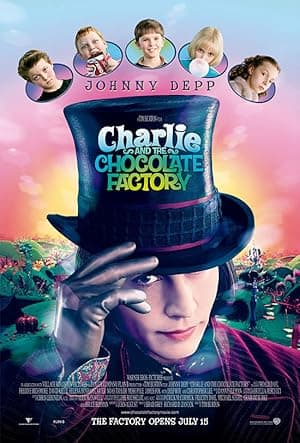
Charlie and the Chocolate Factory
An eccentric chocolatier, a grubby golden ticket and a movie that still tastes of Tim Burton’s particular weirdness.
Feature presentation
There are few opening lines in family films as neat as the moment a poor boy discovers a golden ticket. Charlie’s find sets a simple engine in motion: five children, one day inside Willy Wonka’s factory, and a guided tour that turns childhood appetites into moral set pieces. Tim Burton’s 2005 take rewires that premise with a darker edge and a very peculiar Willy Wonka, which is why people keep returning to it.
THE MOVIE
Willy Wonka is still the reason this movie works
Charlie and the Chocolate Factory is the kind of story you can describe in a single sentence: a poor boy finds one of five golden tickets and gets to see what nobody else ever sees — the inner life of Willy Wonka’s secret factory. That tidy summary hides what the film actually enjoys: spectacle, moral cartoons and a cranky adult world pressed up against childhood wonder.
Tim Burton’s 2005 version keeps the book’s episodic factory rooms and uses them as a sequence of showpieces that expose each child’s vice. At the centre of it sits Charlie Bucket — the poor, family-first figure the story asks us to root for — which gives the film an emotional anchor even as the set pieces get stranger.
And then there’s Willy Wonka. Played here by Johnny Depp, he’s the eccentric inventor who opens his factory for a single day and shepherds those five children through a series of moral consequences. It’s a family film that prefers to be a little bit odd about what childhood and innocence really mean.
THE SETUP
The idea that sets Charlie and the Chocolate Factory in motion
At face value the film’s engine is simple: a famously reclusive chocolatier opens his doors, five lucky children step inside and each room becomes a short, moralised spectacle. Those episodic factory pieces are the movie’s bread and butter — bright, strange tableaux that map vice to consequence.
What the 2005 adaptation does differently is add an extended childhood for Willy Wonka. The film gives him a backstory — an estrangement from his dentist father — and uses that history to explain why he’s searching for an heir rather than simply being a capricious showman.
That extra connective tissue shifts the film away from being only a fantastical tour and toward a more personal story about legacy. The factory rooms still delight and punish in turn, but now they help a larger narrative about who should inherit Wonka’s empire.
It’s a neat balancing act on paper: keep Dahl’s set pieces (they’re too good to lose) and use new material to make the adult characters matter in a way the book doesn’t always insist on.
THE CHARACTER
Why Willy Wonka matters
Willy Wonka in this film is not simply a merry chocolate-maker. He’s presented as an eccentric, reclusive inventor whose odd public persona conceals a wounded childhood and a clear motive for choosing an heir. That layering gives the character gravity the novel and earlier film only hint at.
The added backstory — most notably the estrangement from his father — reframes Wonka’s behaviour. He becomes less of a trickster god and more of a damaged man conducting an elaborate audition for someone to take over his life’s work.
Casting details matter here only as identifiers: Johnny Depp plays the part, and Christopher Lee appears as Dr. Wilbur Wonka, the father whose presence is central to the added family scenes. The character’s strangeness, then, is both performance choice and story requirement.
So Wonka matters because he’s the film’s cranky axis. The factory’s theatrics revolve around him, and the new material insists his private history shapes the public monster — or, depending on how you see it, the public showman.
THE PERFORMANCE
Why Johnny Depp's performance matters
There’s a tidy piece of evidence that the performance mattered to people at the time: Johnny Depp received a Golden Globe nomination for his turn as Willy Wonka. Industry recognition like that points to a portrayal that was noticed and debated beyond casual audience chatter.
The nomination is useful shorthand: it tells you Depp’s Wonka was a prominent ingredient in how the film was received, not background texture. Whether that attention is praise, puzzlement or a mixture of both depends on who you ask.
In practical terms, the nomination helps explain why the role became a talking point — it wasn’t just part of the scenery. The performance had a profile, and that profile influenced how viewers measured the film’s tone.
So if you’re revisiting the movie to see what everyone argued about, the Golden Globe nod explains why people were arguing.
UNDER THE SURFACE
Charlie and the Chocolate Factory has more on its mind than the plot suggests
On the surface the film is a morality play: childish vices are shown in luminous tableaux and then punished. That punishment-of-vice structure is the clearest thematic engine — it’s how the story keeps moving from one imaginative set piece to the next.
Beneath that, the film is about childhood and innocence pressed against adult corruption. Charlie stands as the gentle counterpoint to the other kids’ appetites; his decency is meant to feel purposeful, almost corrective, in a world that rewards greed and spectacle.
Another running idea is parental authority and psychological damage. The decision to give Wonka a specific, fraught relationship with his father turns family history into motive; parent-child dynamics no longer sit on the sidelines, they drive choices.
Finally, there’s legacy and succession. By turning the factory tour into a form of audition, the film asks: who deserves to inherit a strange, powerful thing? That question gives the fantasy a practical, adult problem to chew on.
THE FILMMAKING
How Charlie and the Chocolate Factory was put together
Tim Burton directs with a recognisable, heavily stylised approach. The film favours theatrical tableaux and production-design flourishes over naturalistic scenes, which keeps the factory feeling like a stage show as much as a physical space.
That stage quality was built on big cinematic shoulders: Philippe Rousselot is credited as cinematographer and Alex McDowell as production designer, names attached to the movie’s large-scale sets and visual motifs. Those choices make the factory read as deliberately crafted spectacle.
There’s a practical trick that contributes to the effect: all on-screen Oompa-Loompas were portrayed on set by a single actor, Deep Roy, and multiplied through costume and camera techniques. That keeps the Oompa-Loompas feeling like a coherent presence rather than anonymous background.
So the film’s identity comes from a mix of directorly taste and physical production choices — a Burton-shaped fantasy built around big, stage-like set pieces.
PRACTICAL EFFECTS
The effects work that gives Charlie and the Chocolate Factory its physical personality
A big part of the movie’s charm is its physicality: the production actually built large sets, including a manufactured chocolate river and waterfall, to give the factory interior real weight on camera.
Those tangible constructions were combined with post-production work — a blend of practical and visual techniques — so the factory feels both handcrafted and cinematic in the same breath.
The film also used trained live animals and practical props in sequences such as the squirrel-picking scene, with digital augmentation added later where necessary. That mix keeps many of the moments feeling immediately tactile.
And, as noted earlier, Deep Roy appears on camera multiple times and is multiplied through costume and camera methods to produce the Oompa-Loompa crowds — another example of practical performance augmented by technique.
PURE 00s
Charlie and the Chocolate Factory could not belong to any other decade
The film is very much a mid-2000s studio picture: a high-profile, well-funded adaptation of a classic children’s book, framed as a widescreen summer event rather than a small, quiet family movie.
That placement mattered commercially and creatively. The Burton–Depp pairing put a recognisable director-and-star team at the centre of a major Warner Bros. tentpole in 2005, which shaped choices about tone and scale.
The film’s mix of darker edges and family-friendly marketing reflects an early-00s appetite for family movies that would court both older children and adults nostalgic for the source material. It’s a family film that wasn’t afraid to be a little grown-up about its themes.
Released in 2005, this Charlie sits between faithful adaptation and show-stopping reinterpretation: it keeps Dahl’s episodic factory rooms but layers on backstory and theatrical spectacle in a way that feels of the period.
WATCHING IT NOW
What has aged — and what hasn't
Rewatching the film today, the single clearest point of contention is the decision to give Willy Wonka a specific childhood and a father. Modern commentary still flags that added backstory as a tonal choice that divides viewers; some like the clarity it provides, others miss the character’s original ambiguity.
As a family film, many of its choices remain straightforward: the factory tour still functions as a crisp sequence of imaginative rooms that map appetites to consequences, and those scenes retain their playful theatricality.
Where it feels more dated is in how insistently the movie ties up adult questions — legacy, inheritance, parental wounds — that earlier versions treated more elliptically. That extra explanation is the element people argue about now.
If you enjoy a family film that isn’t scared to be slightly dark and to explain itself, it still has pleasures. If you prefer your Dahl with more mystery, the backstory is likely to remain a sticking point.
THE LEGACY
Why Charlie and the Chocolate Factory still matters
One obvious reason the film remains talked about is that it was a major commercial success worldwide, and for many viewers it’s the early-21st-century adaptation of Dahl they first encountered on a big screen.
Industry recognition also kept the film visible: nominations across costume design, music and Johnny Depp’s lead performance signalled that it was not just a family entertainment but a production with craft ambitions.
Beyond awards and money, the movie’s look and the Burton–Depp collaboration became shorthand in conversations about 2000s mainstream fantasy filmmaking. The production design and the pairing itself show up often when people talk about how that decade staged large, stylised family pictures.
So its legacy is practical: a commercially prominent, recognised and frequently cited take on Dahl that helped define a particular flavour of studio-backed fantasy in the 2000s.
THE VERDICT
Does Charlie and the Chocolate Factory still hold up?
Short answer: yes — if you go for theatrical, slightly dark family cinema and don’t expect a faithful, unaltered revival of the book’s ambiguity. The film keeps the book’s irresistible factory-tour set pieces and uses them as a moral parade: each child’s vice is on display and the consequences play out in showy rooms and musical moments.
At the same time, the movie adds an explicit emotional throughline. John August’s screenplay keeps the episodic spectacle but expands scenes about Wonka’s past and motives — an estrangement from his dentist father — turning the factory into an audition for a successor rather than only a place of wonder.
That extra clarity won’t please everyone. Contemporary critics noted that Johnny Depp’s eccentric, polarising Willy Wonka dominates the film’s tone, and viewers today remain split about whether the added backstory improves or diminishes the puzzle of the character. Grandpa Joe’s enthusiasm and his past factory connection are foregrounded too, so the family angle gets a lot of screen time.
If you want a family film that is built as an event — big production design, physical sets like a manufactured chocolate river and a clear moral architecture — it’s still worth a watch. If you’d rather keep Dahl’s Wonka mysterious, prepare to argue with the film. Either way, it’s one of those movies where the question isn’t whether it’s faithful to the book, but whether you enjoy the particular kind of weird Burton chose to serve with your chocolate.
Share this movie
Keep watching
More movies from the 00s
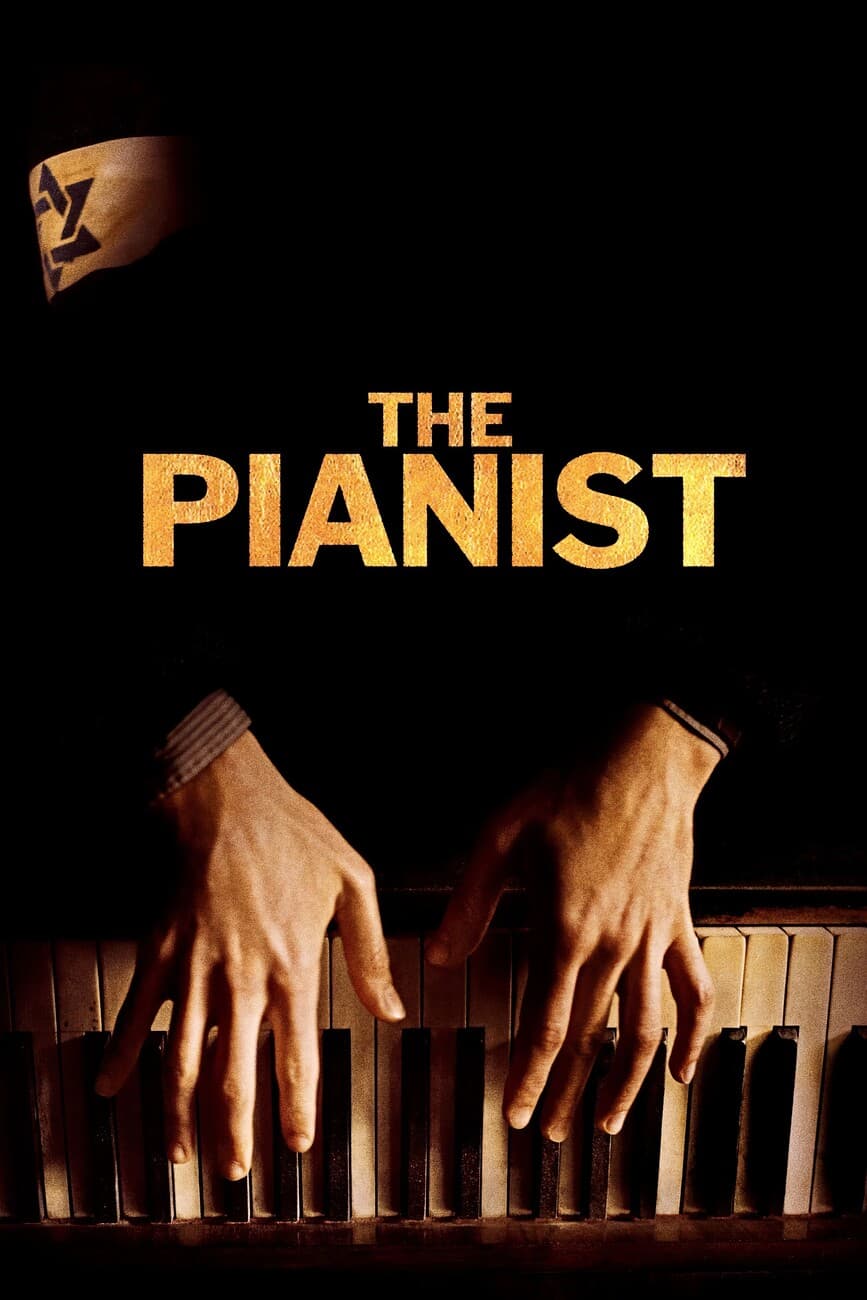
2002
The Pianist
A quiet life unmade by war — and a pianist who refuses to stop listening.
Read the retrospective
→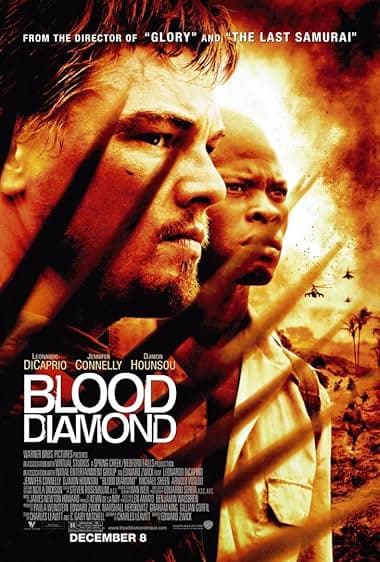
2006
Blood Diamond
A mercenary, a fisherman and a pink diamond — and a film that still asks who pays for our jewellery.
Read the retrospective
→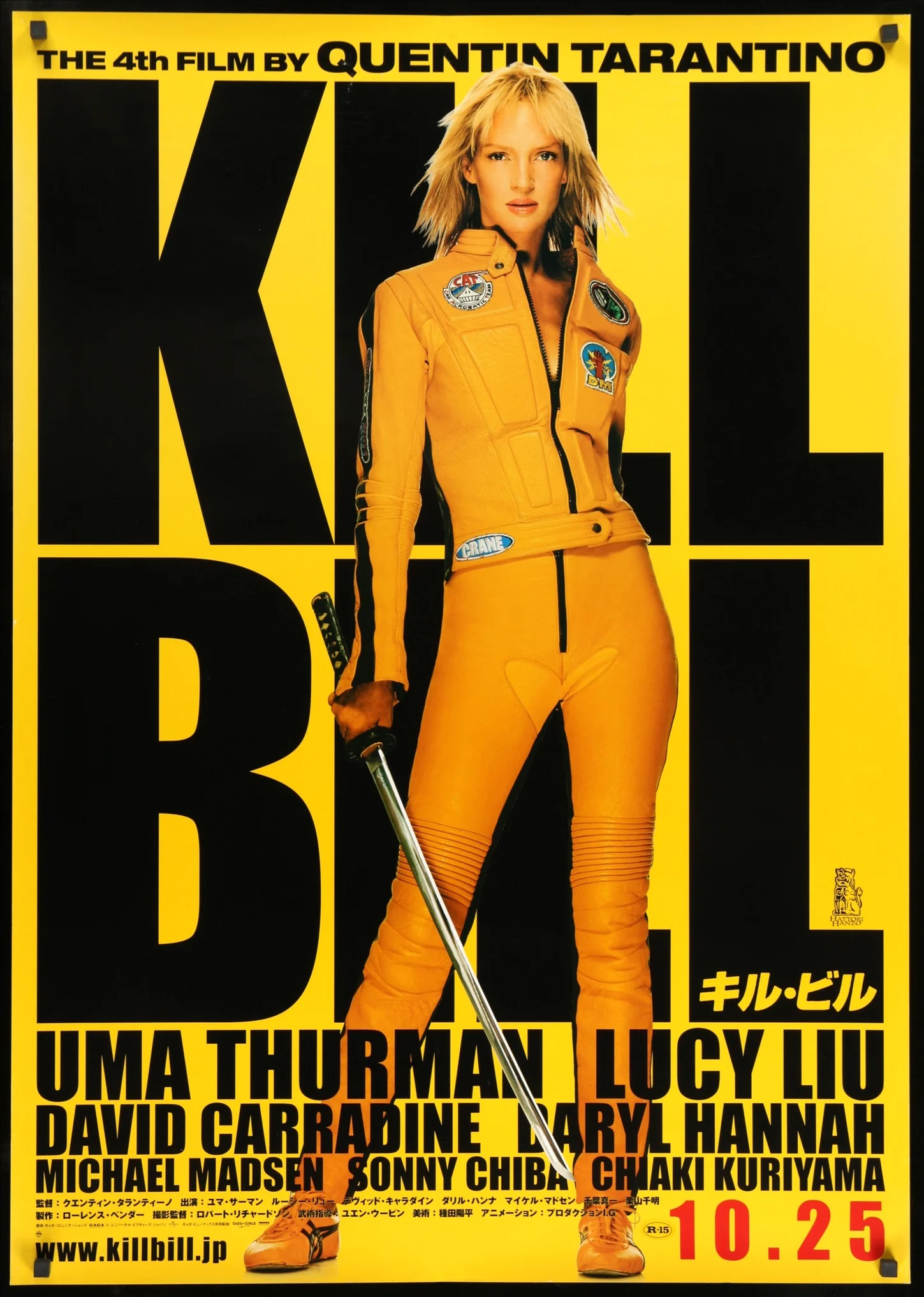
2003
Kill Bill: Volume 1
A yellow jumpsuit, a long list of enemies and one woman who refuses to be finished.
Read the retrospective
→