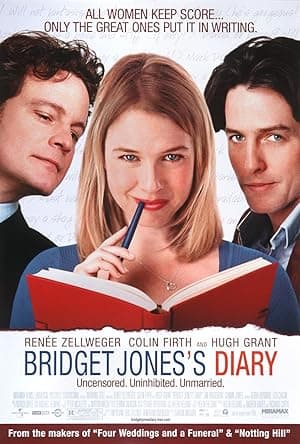
Bridget Jones's Diary
A diary, a love triangle and the awkward courage to be yourself.
Feature presentation
You know the opening trick: a woman makes a New Year’s resolution and writes everything down. Bridget Jones's Diary turns that small, private decision—keep a record, get a grip—into a funny, awkward 97-minute argument about being thirty-something and not having it all together. Sharon Maguire directs, and the diary device keeps the film oddly intimate even when Bridget is spectacularly public about her mistakes.
THE MOVIE
Bridget Jones is still the reason this movie works
It’s tempting to reduce Bridget Jones's Diary to a rom-com checklist: meet-cute, miscommunication, a choice between two very different men. But the movie’s heartbeat is smaller and stranger than that—a 32-year-old woman deciding, as a New Year’s resolution, to start keeping a diary so she might actually steer her life somewhere she wants it to go.
That decision isn’t just backstory. The diary is the structural trick that lets us live inside Bridget’s head: onscreen excerpts and voice-over give us a running commentary that often disagrees with what we see in public. It’s how the film turns private anxieties into comic momentum.
So when people still talk about Bridget Jones, it’s not only about plot or pairings. It’s about a character written and staged to be self-conscious, frequently self-sabotaging and unavoidably human—someone whose inner commentary keeps the whole thing honest even when the outside world is making a spectacle.
THE SETUP
The idea that sets Bridget Jones's Diary in motion
At its simplest: Bridget is thirty-two, single and trying to take some control. The diary is her plan—log resolutions, log failures, try again. That neat conceit gives the film a steady centre and a reason for all the petty, humiliating episodes that follow.
Rather than a scene-by-scene moral calculus, the screenplay leans on miscommunications, workplace friction and set-piece embarrassments to escalate the stakes. The diary entries and voice-over keep supplying us with Bridget’s private take while the world keeps insisting on the public version.
Key public humiliations—an awkward moment at a publishing launch and later trouble at a country-house event—aren’t just comic episodes. They’re the motor that pushes Bridget to make decisions, and they underline the gulf between how she sees herself and how others see her.
THE CHARACTER
Why Bridget Jones matters
Bridget Jones matters because she is a recognisably messy person with clear private desires and questionable public habits. The script stages her as someone who sabotages herself more often than not, and the diary device insists we take her inner life seriously even when she looks ridiculous.
Her immediate world—parents who fuss, friends who are effectively an urban family—grounds the film in a social pressure that’s both comic and real. Those relationships do a lot of the heavy lifting: family arranges introductions and measures success in the old-fashioned ways, while friends provide the comic counterpoint and practical support Bridget needs.
That balance is what keeps the movie more than a series of gags. Bridget’s private voice and her circle of confidants make her feel like an actual person trying to figure things out, not a plot puppet moving between romantic options.
UNDER THE SURFACE
Bridget Jones's Diary has more on its mind than the plot suggests
Beneath the rom-com machinery, the film is quietly fixated on singlehood and the social pressure around it—the idea that being thirty-something and unattached is somehow a problem to be solved. The diary is Bridget’s way of responding to that pressure: an attempt to measure herself against an external idea of success.
Closely related is the film’s obsession with self-improvement and self-image. The resolution to keep a diary is pitched as a project—change your habits, track your failures, try again—and that project mentality drives a lot of Bridget’s choices and anxieties.
The private/public split matters too. The movie stages repeated public embarrassments against Bridget’s interior commentary, so we’re always aware of what she’s thinking while everyone else is watching her trip up. That gap between inner truth and outer spectacle is a recurring emotional source.
And yes, there’s a structural choice at play in the romance itself: a tension between charm and stability. The two male figures represent different paths, and the film leans on that opposition to give Bridget’s decisions some real consequence. The screenplay also knowingly plays with Pride and Prejudice, which frames some of those comparisons.
THE FILMMAKING
How Bridget Jones's Diary was put together
If you want a quick way to understand the film’s craft, look at the credits. The production lists Stuart Dryburgh as director of photography, Martin Walsh as editor and Gemma Jackson on production design—names that point to a professional, unobtrusive approach to making a glossy, accessible romantic comedy.
That professional shorthand matters because the movie’s tone relies on clarity: the diary inserts and voice-over need to sit cleanly against the public scenes, and editing and design choices are the technical work that makes those shifts feel natural rather than gimmicky.
In short, the filmmaking team supplies a steady, reliable backbone so the script and characters can do the heavy emotional lifting without the production ever calling attention to itself.
PURE 00s
Bridget Jones's Diary could not belong to any other decade
This is very much an early-2000s creature. It arrived at a moment when British romantic comedies—often produced by Working Title in partnership with international distributors—were finding large audiences beyond the UK, and Bridget sits squarely in that wave.
The film’s mix of contemporary urban single-life anxieties with overt nods to Jane Austen reflects a broader cultural interest around the turn of the millennium: modernising classic romantic narratives to make them speak to present-day readers and viewers.
That timing also explains why the film felt like both an intimate city chronicle and a deliberately exportable comedy. It plays like something rooted in a specific social moment while using familiar literary frames to broaden its reach.
THE LEGACY
Why Bridget Jones's Diary still matters
Part of the film’s afterlife is obvious: it began a series. The immediate sequel in 2004 continued Bridget’s story and signalled that the character had more to give on screen.
There’s also a career note worth mentioning. Renée Zellweger received major industry recognition for the role, including an Academy Award nomination for Best Actress, which helped the film register beyond the usual rom-com conversation.
Finally, the movie helped consolidate a particular phase for Working Title, elevating the studio’s international rom-com output in the early 2000s and making Bridget feel like part of a recognizable house style rather than a one-off.
THE VERDICT
Does Bridget Jones's Diary still hold up?
Yes—if what you want is a rom-com with a clear organising gimmick and an honestly uncomfortable heroine. The diary device keeps the film intimately anchored while the central dramatic engine—a triangle between Bridget, the roguish Daniel Cleaver and the reserved Mark Darcy—gives purpose to the public embarrassments and miscommunications.
Those embarrassments matter: the launch and country-house episodes are not throwaway jokes but repeating beats that force Bridget into choices. The film uses them to make the difference between charm and stability feel like a real decision rather than another rom-com cliché.
If you enjoy the film’s specific pleasures—its private voice, the urban group of friends who act as an extended family, and the way the screenplay riffs knowingly on Pride and Prejudice—then it remains enjoyable. It’s 97 minutes that keep things moving and intentionally foregrounds the contrast between Bridget’s interior honesty and her exterior mess.
So should you watch it? Absolutely, especially if you like romantic comedies that are as interested in singlehood, self-improvement and the spectacle of embarrassment as they are in the final coupling. Bridget’s diary does the heavy lifting here: it turns small, everyday failures into something both funny and oddly sympathetic.
Share this movie
Keep watching
More movies from the 00s

2002
The Pianist
A quiet life unmade by war — and a pianist who refuses to stop listening.
Read the retrospective
→
2006
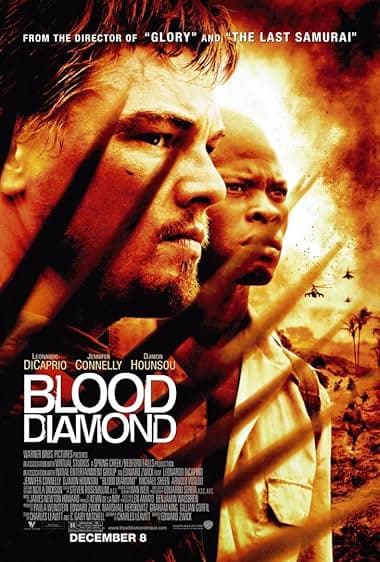
Blood Diamond
A mercenary, a fisherman and a pink diamond — and a film that still asks who pays for our jewellery.
Read the retrospective
→
2003
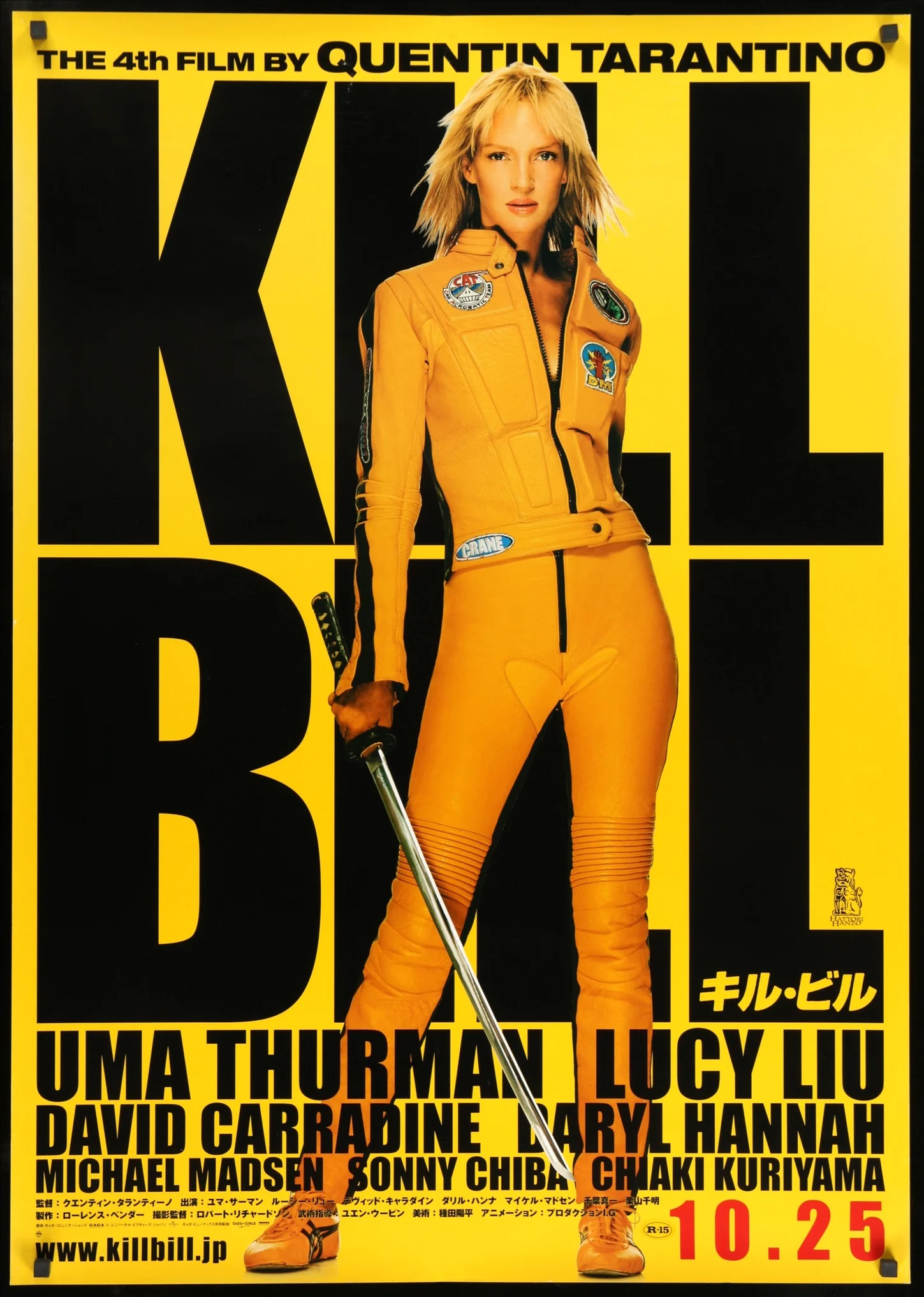
Kill Bill: Volume 1
A yellow jumpsuit, a long list of enemies and one woman who refuses to be finished.
Read the retrospective
→