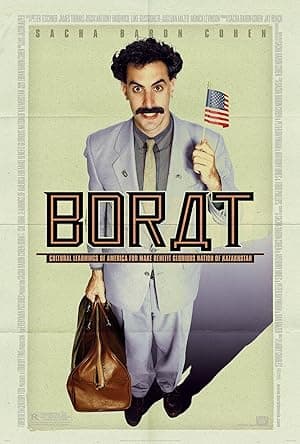
Borat
A rude, brilliant undercover tour of America — with Pamela Anderson as Borat’s North Star.
Feature presentation
Borat arrives like a cultural grenade: a supposedly naive Kazakh TV reporter wandering the United States, asking terrible questions and watching what happens. It’s part prank, part road movie and part social stress test — all tied together by one loud, awkward character and a clear aim to expose prejudice and obsession.
THE MOVIE
Borat Sagdiyev is still the reason this movie works
What keeps people talking about Borat is simple: the film gives us a single, highly specific personality and then lets that personality loose on America. Borat Sagdiyev is framed as a Kazakh television journalist on a mission to record 'cultural learnings' — and that declared purpose is the excuse for every awkward, explosive encounter.
The movie starts with Borat’s supposed documentary aim, then turns that aim into something stranger: a cross-country journey driven by an obsession with Pamela Anderson that becomes both plot and punchline. That route — from mock-documentary premise to an almost fairy-tale pursuit of celebrity — is what gives the film forward motion.
Larry Charles directed a tight, 84-minute feature that mixes staged set pieces with improvised, hidden-camera moments; Sacha Baron Cohen plays Borat and Ken Davitian appears as Azamat, his on-screen partner. The blend of parody and real-world provocation is the shorthand the film uses to pry open social attitudes.
THE SETUP
The idea that sets Borat in motion
At base, Borat is a simple shape: a mock-documentary premise that lets a fictional foreign correspondent wander the United States while the camera captures real reactions. The early footage establishes Borat’s mission to collect cultural lessons for Kazakhstan and sets the tone for confrontations that follow.
That stated mission gets complicated fast. Rather than staying a straight documentary exercise, Borat’s journey becomes a cross-country trip with a clear obsession — he’s fixated on Pamela Anderson and that fixation gives the film a crooked narrative spine.
The obsession isn’t just a gag. It provides a motive for Borat to push into environments and conversations where his behaviour will provoke people, and it gives the movie a through-line beyond a sequence of unrelated pranks.
Because that through-line ends in an audacious attempt to locate and marry Pamela Anderson, the film feels like a road movie with a comedic, deliberately outrageous destination.
THE CHARACTER
Why Borat Sagdiyev matters
Borat Sagdiyev is the film’s engine because he’s sharply drawn and unyielding in his purpose. Presented as a self-important, naive foreign correspondent, his declared goal—to report American life back home—lets him ask questions and behave in ways most people wouldn’t dare.
That naivety is a tool as much as a trait: it gives the film permission to push awkwardness into everyday spaces and to watch how real people respond when confronted with an extreme outsider.
Sacha Baron Cohen brought the character to the feature, developing Borat from earlier TV work; he’s joined on the road by Ken Davitian’s Azamat, who functions as a practical and comic companion in several set pieces, and by recurring performers such as Luenell in staged scenes.
Borat’s specificity — an exaggerated, debatable persona rather than a bland everyman — is why the movie can aim low and reach for something sharper at the same time.
THE PERFORMANCE
Why Sacha Baron Cohen's performance matters
Industry recognition tells you something worth noting: Sacha Baron Cohen’s work as Borat earned him a Golden Globe for Best Actor in a musical or comedy.
That award is a formal nod to the unusual challenge the role presents — carrying a feature-length film while remaining in character across scripted and unscripted encounters.
Put simply: the role required committing to a persona for the whole run-time in a way mainstream awards bodies rarely reward for this kind of comedy.
So even if you disagree with the methods, the industry attention is a reminder that the performance was taken seriously beyond late-night chatter.
UNDER THE SURFACE
Borat has more on its mind than the plot suggests
On the surface Borat is a series of humiliations and pratfalls. Underneath, the film is organised around a few tight ideas: it’s satirical about prejudice, testing how people respond to provocations.
It also plays with performance versus reality — a constructed character is set against real people and the tension between acted persona and genuine reaction is where the film finds its sharpest moments.
There’s a running concern with celebrity and obsession too: Borat’s pursuit of Pamela Anderson is played for laughs but it also points at how fame functions as an object of desire and a lever for ridiculous behaviour.
Finally, the whole project is essentially a hidden-camera social experiment: staged sequences sit beside opportunistic, improvised encounters designed to reveal attitudes more than to tell a tidy story.
THE FILMMAKING
How Borat was put together
Borat’s texture comes from a deliberate split in approach: a small core cast handles the scripted scenes while the rest of the film relies on hidden-camera encounters with non-actors.
That mix lets the movie feel both staged and accidental — the scripted moments provide shape and recurring characters, while the improvised interactions bring unpredictability.
The production moved opportunistically, shooting across multiple U.S. states to place the character into different communities and situations rather than building a closed set-piece world.
That hybrid method — part staged comedy, part social experiment — is the film’s signature production choice and the reason it reads as something other than a conventional satire.
PURE 00s
Borat could not belong to any other decade
Released in 2006, Borat arrived into a cultural moment that was still grappling with questions of national identity and security in post‑9/11 America; that climate made its provocations feel particularly pointed to contemporaries.
Because those national conversations were live, the film’s blunt method of exposing prejudice and discomfort read as more than cheap shock — it landed inside an ongoing debate about what counted as patriotic or acceptable speech.
It’s also notable that Borat crossed an unusual boundary for its form: critics and industry groups paid attention, giving the screenplay nominations and a Golden Globe win, which isn’t common for shock-led mockumentaries.
So the film belongs to the 2000s not just by date but because its tone and ambitions match an era wrestling with culture, media spectacle and what happens when character and reality collide.
WATCHING IT NOW
What has aged — and what hasn't
Watching Borat today you can still see how precisely the setup works: a fictional persona forcing real reactions. Coverage of the film’s afterlife often separates admiration for that commitment from unease about the fallout for people who didn’t sign up to be part of a comedy.
A related point is the film’s portrayal of Kazakhstan, which has been a continuing subject in conversations about the movie’s ethics and impact — people tend to praise the method while feeling uncomfortable about some of its consequences.
The character itself lived on: the title later returned for a follow-up feature in 2020 and the film’s approach continued to be linked to Cohen’s earlier comedy work from television.
So what ages unevenly: the structural idea and many of the direct shocks still land, while the ethical questions around how those shocks were achieved remain a prominent part of its modern reception.
THE LEGACY
Why Borat still matters
Borat mattered on release because it reached a wide audience and proved that a shock-comedy mockumentary could break into mainstream attention; commercially it did well enough to establish a franchise that returned in 2020.
The industry took the film seriously as well: Sacha Baron Cohen won a Golden Globe and the screenplay earned an Academy Award nomination and Writers Guild recognition, signals that its risky blend of improvisation and structure registered beyond mere novelty.
Part of its afterlife is simply that it kept the central character moving: Borat remained a unit of comedy that filmmakers and audiences could return to, rather than a one-off sketch stretched feature-length.
That combination — commercial reach, awards-room curiosity and a character you could imagine revisiting — explains why people still refer to the film when discussing boundary-pushing comedy.
THE VERDICT
Does Borat still hold up?
Yes — but with a rider. As a piece of daring, uncomfortable comedy it still has force: the film’s structure mixes a handful of scripted set pieces with improvisations that put a constructed persona into real situations and see what emerges.
That setup — a self-important, naive foreign correspondent travelling the U.S. with his producer, Azamat — still produces surprising moments and, for many viewers, sharp satire of prejudice and obsession.
At the same time, modern viewers should watch with awareness: the methods that make the movie effective are the same methods that raise questions about the consequences for unwitting participants and about how Kazakhstan was depicted.
If you want to see a bold, concise example of the mockumentary and hidden-camera form, and you can live with the ethical discomfort it invites, Borat remains worth watching; it’s 84 minutes of a singular comedic experiment that leaves you laughing and thinking in almost equal measure.
Share this movie
Keep watching
More movies from the 00s

2002
The Pianist
A quiet life unmade by war — and a pianist who refuses to stop listening.
Read the retrospective
→
2006
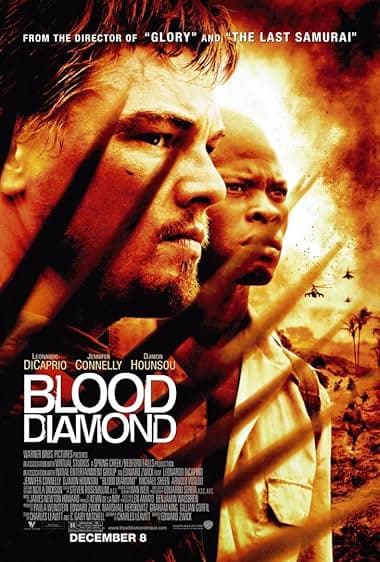
Blood Diamond
A mercenary, a fisherman and a pink diamond — and a film that still asks who pays for our jewellery.
Read the retrospective
→
2003
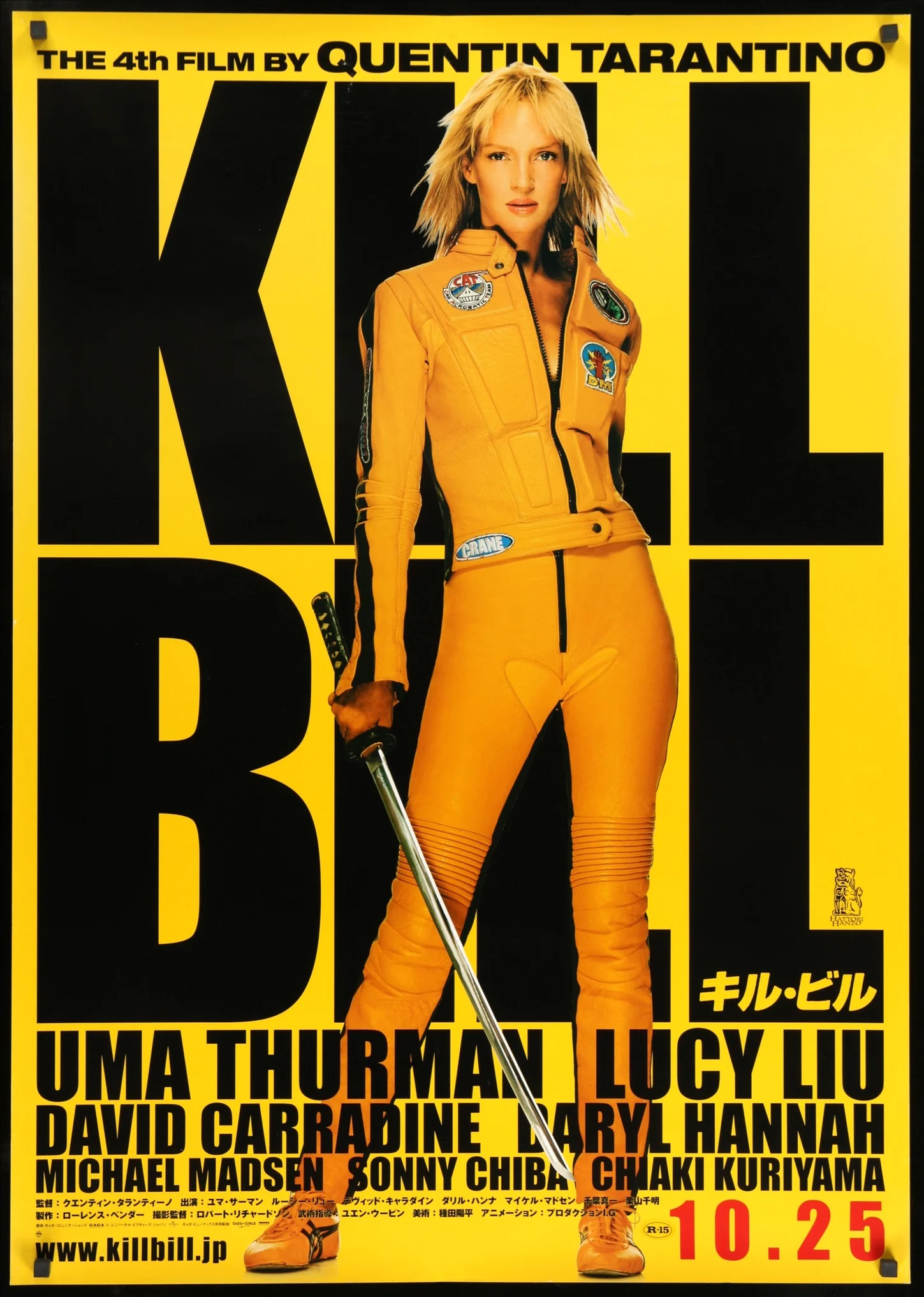
Kill Bill: Volume 1
A yellow jumpsuit, a long list of enemies and one woman who refuses to be finished.
Read the retrospective
→