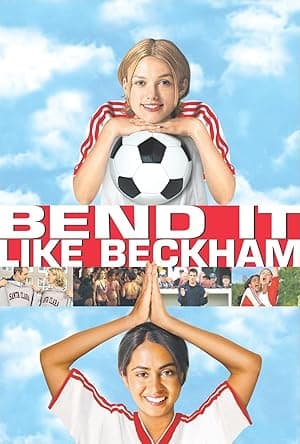
Feature presentation
You remember the sight of a girl in trainers stealing onto a pitch like it’s the only honest thing in the room. That’s Jesminder ‘Jess’ Kaur Bhamra: British‑Indian, impatient for a life that looks nothing like her parents’ plan, and obsessed with David Beckham in a way that makes her ambitions feel both absurd and inevitable. Gurinder Chadha’s 2002 comedy turns that single hunger into a crowd-pleasing argument about family, identity and why women might just be the future of the game.
THE MOVIE
Jesminder 'Jess' Kaur Bhamra is still the reason this movie works
There are plenty of reasons people return to Bend It Like Beckham — its warm comic engine, the way football scenes cheer without being macho, and Gurinder Chadha’s knack for balancing jokes with family friction. But at the centre of it all is Jess: an eighteen‑year‑old British‑Indian Sikh from Hounslow who idolises David Beckham and simply wants to play organised football, even when her parents don’t approve.
The film gives that appetite a shape. When Jules Paxton recruits Jess to join the Hounslow Harriers, it’s not just the start of a team friendship: it’s the specific moment the story sets its stakes — Jess’s desire for independence versus the expectations stacked on her by family and culture.
That setup lets the film do two things at once. It’s a coming‑of‑age rom‑com that can cheer on a perfect free kick, and it’s a picture about cultural hybridity — young people learning to stitch together a British adolescence with diasporic family obligations. Put bluntly: the movie works because Jess insists on being more than the role she’s offered.
THE SETUP
The idea that sets Bend It Like Beckham in motion
The film’s engine is simple and elegant: Jess is invited to join a local women’s team, the Hounslow Harriers, and she keeps that life hidden from her family. It’s a lie built of small acts — sneaking off to training, turning up for matches — which makes every public game a potential detonator for private trouble.
That dramatic tension is tightened when a scout offers Jess and Jules scholarships to study in the United States. Suddenly the consequences are no longer hypothetical: a transnational opportunity appears, and it forces choices about what counts as loyalty and what counts as ambition.
Matches play a clever double role. They’re sports scenes — tackles, goals, celebration — but they’re also social moments that change the characters’ lives. The Harriers’ fixtures, including an overseas trip to Hamburg, are where friendships get tested and where family secrets are exposed.
There’s also a clear reason the family pushback feels credible. The screenplay ties Mr Bhamra’s protectiveness to his own experience of being excluded from an English cricket club because of anti‑Indian sentiment, which helps explain why he’s wary of Jess stepping into the public sphere of sport.
THE CHARACTER
Why Jesminder 'Jess' Kaur Bhamra matters
Jess is not a masterpiece of subtlety — she’s blunt, hungry and impatient — but that makes her memorable. The movie hands her an obsession (Beckham, of course) and lets it do the heavy lifting: her fandom becomes shorthand for wanting a life where she chooses the rules.
She isn’t acting alone. Jules is an ambitious teammate whose career hopes and closeness to Jess open up questions about belonging and loyalty, while friends like Tony actively help Jess by manufacturing the kind of permission her family won’t give her.
What matters is how Jess negotiates the most common collision young people face: family obligation versus individual ambition. That’s the pressure the film sets on her shoulders and the reason the story keeps returning to the small compromises and defiant choices she makes.
There are softer textures too: the movie allows Jess’s friendship with Jules to carry faint sapphic undertones, which deepens the emotional stakes beyond simple team camaraderie. It’s the mix of public ambition and private confusion that keeps Jess interesting.
THE PERFORMANCE
Why Keira Knightley's performance matters
Contemporary reviews singled out Keira Knightley alongside Parminder Nagra as part of the film’s engine — critics noted their energy and the way their chemistry helped carry the tone between comedy and feeling.
That matters because the film’s emotional trust is built on their partnership. Jules isn’t just a foil; she’s the teammate whose ambitions make Jess’s choices sharper and more urgent.
Knightley’s presence gives Jules a clear function in the story: the friend who pushes, who wants a professional career, and who complicates what it means to be loyal. That dynamic is the film’s most interesting friendship beat.
Put simply: contemporary response treated Knightley as one half of a duo whose spark kept the film moving, and that spark still marks how we remember the characters together.
UNDER THE SURFACE
Bend It Like Beckham has more on its mind than the plot suggests
On paper it’s a sports rom‑com, but beneath the goals and flirtations the film is interested in cultural hybridity: how a British youth identity and diasporic family expectations commingle and collide.
Gender and femininity are threaded through every choice. The simple act of girls playing football challenges who gets to be visible in public life, and the film treats that visibility as political — however cheerily.
The family versus ambition argument is the story’s constant hum. Jess’s fight to play is the same fight many young people face when they want a life that doesn’t match a parent’s script; Bend It Like Beckham stages that as both comedy and serious negotiation.
Finally, sport here is presented as mobility — not just upward social movement but the chance to travel, to study abroad, to rewrite what a future can look like. It’s a hopeful idea dressed in cleated boots.
PURE 00s
Bend It Like Beckham could not belong to any other decade
Dropped into cinemas in 2002, the film arrived during an early‑2000s wave of modestly budgeted comedies about immigrant families finding a foothold in public life. It fits that moment because it mixes intimate family scenes with the broader social conversation of the time.
The movie also leans on two very 00s things: the growing public profile of women’s football and the celebrity of David Beckham as a cultural touchstone. Jess’s Beckham obsession is precisely the kind of pop‑culture shorthand that made early‑2000s stories feel immediate.
Its release pattern — UK premiere in April 2002 and a limited U.S. rollout the following spring — reflects how British films of that era often relied on word‑of‑mouth and niche audiences to travel across the Atlantic.
Even its small‑scale international beats — matches that take characters to Hamburg — show a decade thinking transnationally without needing blockbuster budgets to do it.
WATCHING IT NOW
What has aged — and what hasn't
A lot of the film’s central business holds up because the tensions it stages remain current: diasporic family expectations, the visibility of women’s football, and the idea of sport as a route to opportunity are all still relevant in conversations today.
People have also returned to the film with different eyes. Modern queer readings — particularly of Jess and Jules’s closeness — have become more visible in retrospectives and fan discussion, adding an extra layer to scenes that used to be read simply as friendship.
The Mr Bhamra subplot, rooted in his past exclusion from an English cricket club because of anti‑Indian sentiment, still gives the family’s resistance weight rather than reducing it to comic timidity. That grounding helps prevent the film from stereotyping parental concern.
In short: its emotional questions about choice and belonging age better than any single joke or football moment, which is why it still prompts conversation rather than just nostalgic chuckles.
THE LEGACY
Why Bend It Like Beckham still matters
The story has lived beyond the screen: in 2015 it was adapted into a stage musical in London’s West End and later toured internationally, which shows the narrative has theatrical legs as well as cinematic ones.
More recently, the filmmaker confirmed that a follow‑up was in development as of July 2025, with ideas being discussed for either film or television formats — a sign that the characters and their questions are still considered worth revisiting.
Those afterlives don’t prove cultural dominance, but they do demonstrate that the film’s mix of family comedy, sport and identity continues to find new audiences and formats.
THE VERDICT
Does Bend It Like Beckham still hold up?
Yes — mostly. If you care about a film that stages clear, human stakes around choice, identity and the small rebellions that change a life, this still lands. Jess’s want — to play football despite her parents’ reluctance — is straightforward and persuasive, and the way the plot escalates (she hides her football, a scout appears, a scholarship offer arrives) gives the film a propulsion that never feels like filler.
The parental resistance is also sensibly grounded. The script explicitly ties Mr Bhamra’s refusal to let Jess play to his own experience of racial exclusion, which means his protectiveness reads as fear with a history, not mere prejudice. That rooting keeps family confrontations from collapsing into caricature.
Beyond the family argument, the friendships hold. Jules’s professional drive and the network of allies — like Tony, who fabricates an engagement to help Jess — remind us that choice rarely arrives without help from unexpected places. Those interpersonal moves still feel believable and satisfying.
So watch it for Jess and the people who orbit her. It’s a warm, funny, sometimes pointed film that still asks the right questions: who gets to be seen, and who gets to choose their life? If you want answers delivered with a smile and a well‑timed free kick, this one still does the job.
Share this movie
Keep watching
More movies from the 00s

2002
The Pianist
A quiet life unmade by war — and a pianist who refuses to stop listening.
Read the retrospective
→
2006
Blood Diamond
A mercenary, a fisherman and a pink diamond — and a film that still asks who pays for our jewellery.
Read the retrospective
→
2003
Kill Bill: Volume 1
A yellow jumpsuit, a long list of enemies and one woman who refuses to be finished.
Read the retrospective
→