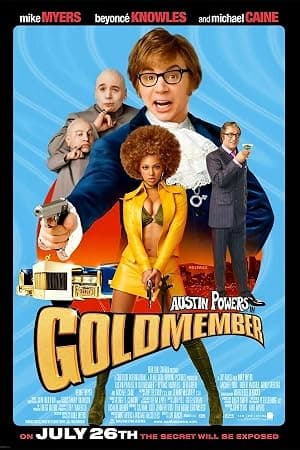
Austin Powers in Goldmember
Four Mike Myers characters, a disco-era caper and one very 2002 kind of nostalgia trip.
Feature presentation
Austin Powers in Goldmember is the kind of sequel that doubles down: more gags, more disguises, more cameos, and a plot that shuttles our shagadelic hero into 1975 to fetch his kidnapped dad. It's loud, grubby, oddly affectionate about the era it lampoons, and unabashedly built around a single comedian doing several extreme personalities.
THE MOVIE
Austin Powers / Dr. Evil / Goldmember / Fat Bastard is still the reason this movie works
There’s a very simple engine under Goldmember: Mike Myers plays almost everyone you remember from the series, and the film’s personality spins out from that madness. That multiple-character conceit — Austin, his arch-nemesis, a grotesque fat-suit caricature and a new, gold-obsessed villain — gives the movie permission to be frantic, silly and sometimes gross, and it keeps returning the audience to what it enjoys most.
Around those central faces Jay Roach stages a disco-era rescue: Austin is yanked back to 1975 after his father is kidnapped, and the villains team up with time travel and a tractor-beam-like scheme that threatens global security. So the film is at once a spy spoof, a family story about rescuing a dad, and a pastiche of a particular decade’s excesses.
It’s also very much 2002 in its instincts: Beyoncé turns up as Austin’s 1970s ally, the movie opens with a cheeky film-within-a-film poke at Hollywood spectacle, and the whole thing runs briskly — ninety-four minutes of gag-heavy, cameo-laced parody that knows exactly the audience it’s servicing.
THE SETUP
The idea that sets Austin Powers in Goldmember in motion
Goldmember’s engine is straightforward: Austin’s family life gets pulled into the spy-versus-villain business. His father, Nigel, is taken as part of a time-travel plot, and Austin has to drop into the 1970s to sort the mess out.
That shift to 1975 isn’t just a costume change. Much of the film’s action lives in disco-era locations and the caper plays like a loving, silly send-up of the period’s genre films — the espionage tropes are still there, but refracted through platform shoes and bell-bottom jokes.
Along the way Austin picks up an ally in Foxxy Cleopatra, an undercover 1970s operative who helps him navigate the era and its set pieces. Her presence channels the film’s blaxploitation pastiche while giving Austin someone to bounce off in the disco scenes.
And if you’ve seen the earlier films, you’ll recognise the structure: Goldmember is the third instalment that simply keeps the established characters and turns the dial on parody and cameo comedy.
THE CHARACTER
Why Austin Powers / Dr. Evil / Goldmember / Fat Bastard matters
The film is organised around Mike Myers turning up in different skins. That’s not a novelty gag; it’s the whole point. By having one performer embody Austin, Dr. Evil, Fat Bastard and Goldmember the movie builds a chaotic family resemblance between hero and villain — absurd variations on the same comic DNA.
Goldmember leans into an obsession with gold and a set of odd, bodily tics that the script treats as deliberately gross, while Fat Bastard functions as the franchise’s blunt, bodily joke. Both characters exist to take comic risks the straight-faced Austin couldn’t carry alone.
Austin himself remains the perennial 1960s throwback, which gives his 1970s detour a permanent fish-out-of-water awkwardness — and a reason to be comedic rather than heroic. His mission to rescue an estranged father folds the series’ humour into a simple family beat: rescue, reconcile, and keep mugging for laughs.
And of course the villain play continues to feed the series’ recurring dynamic: Dr. Evil is still about overblown schemes and performative villainy, including a fraught, performative relationship with his son that the film keeps returning to for jokes and a little pathos.
THE PERFORMANCE
Why Mike Myers's performance matters
Contemporary reactions pointed straight at Myers’ multiple-role turn as the movie’s comedy engine. Reviewers noted that the film rides on the upkeep of those characters — the prosthetics, the accents, the choices that make each one recognisably distinct.
That attention to character work is not incidental. The repeated sight of Myers in different guises gives the film a throughline: even when the jokes wobble, the audience returns to the next transformation and the next punchline.
The prosthetic and fat-suit elements are woven into that strategy; they’re not decorative, they’re structural. If the movie is a platform for big, broad gags, Myers is the act that keeps stepping up to it.
So whether you love him or roll your eyes at the excess, the film’s shape depends on him. Contemporary reviews made that the central point: Goldmember’s laughs are mostly his to deliver.
UNDER THE SURFACE
Austin Powers in Goldmember has more on its mind than the plot suggests
On the surface Goldmember is a spy parody: Bond-isms get exaggerated until they snap. But underneath that spoofing there’s a deliberate nostalgia trip to the 1970s — not neutral nostalgia, but a stylised pastiche that borrows from disco culture and blaxploitation motifs.
The film also likes poking at Hollywood itself. It opens with a movie-within-a-movie sequence and keeps folding in celebrity cameos, which turns the franchise’s self-awareness into an explicit bit of satire about spectacle and star power.
Family themes thread through the silliness too. The rescue of Nigel Powers and the performative parent-child bits inside the villain-plot give the film a tidy emotional spine amid the gags.
So while Goldmember’s first ambition is to be funny, it layers those jokes over a few durable ideas: era-specific pastiche, a barber’s-cut of Hollywood satire, and a cartoonish take on family dynamics.
THE FILMMAKING
How Austin Powers in Goldmember was put together
When the story sends Austin into 1975 the production supports the joke by deliberately recreating that decade’s production-design and costume shapes. The film leans on those visuals to make the time-travel sections feel like their own, recognisably different world.
Behind that work are the credited craftsmen: a director of photography, editors and a production designer who together knit the period sections into a coherent parody. Those choices keep the humour anchored; the 1970s look is not just a gag, it’s the stage the jokes perform on.
The result is a film that changes gear between glossy Hollywood satire at the opening and a full-on period pastiche in the middle. The shifts are part of the design: different beats get different textures.
So even when the comedy is broad, the filmmaking choices make those broad jokes land on a concrete, period-flavoured stage.
PRACTICAL EFFECTS
The effects work that gives Austin Powers in Goldmember its physical personality
A big part of Goldmember’s physical personality is prosthetic and makeup work. The credits reflect that: specific designers and studios are named for the Goldmember look and for Fat Bastard’s design.
Those makeup choices are practical and deliberate: Myers appears under extensive prosthetics and in a fat suit for several characters, which is central to how the film differentiates his comic identities.
The prosthetics don’t exist to astonish; they exist to be funny. They’re an obvious, visible tool the movie uses to sell its jokes and to make repeated character transformations feel tangible.
So a chunk of the film’s production energy goes on bodies and faces — on making Myers look like a set of different, extreme cartoon versions of himself.
PURE 00s
Austin Powers in Goldmember could not belong to any other decade
Goldmember is very much a product of the early 2000s. It arrived in the summer of 2002 as the third instalment of a commercially successful trilogy, timed to be a big summer draw and framed as a crowd-pleasing sequel.
The film’s casting and soundtrack choices underline that decade’s marketing instincts: the movie features pop acts and cross-promotion with mainstream stars — Beyoncé’s presence and song tie-ins are a clear example of that early-00s pop-Hollywood crossover.
Those moves were part of a larger strategy at the time: use music and celebrity to extend a comedy’s reach beyond the core audience. Goldmember wears that strategy on its sleeve.
So while the film parodies the 1970s, its business decisions and pop tie-ins — very 2002 — help place it firmly in its own era.
THE LEGACY
Why Austin Powers in Goldmember still matters
Part of Goldmember’s afterlife is simply continuity: it kept the franchise’s taste for celebrity cameos and musical tie-ins, which is how many viewers first encountered it.
It also landed big on opening weekend, finishing as a major commercial success for the series — a fact that keeps it in conversations about summer sequels from that period.
For better or worse, the film became shorthand for the series’ late-game approach: more spectacle, more guest stars, and a confidence that the central comic conceit could carry an entire movie.
So it matters as the crowd-pleasing capstone of a popular trilogy, and as a clear example of early-2000s blockbuster comedy economics.
THE VERDICT
Does Austin Powers in Goldmember still hold up?
Short answer: yes — if you’re there for the gag density, the era pastiche and Mike Myers playing into the deep end. The film is built around the premise that Austin winds up in 1975 to rescue his father, and most sequences exist to exploit that setup for disco-era jokes and set-piece comedy.
If your patience for cameo-heavy, gross-out and broad parody is thin, Goldmember will feel uneven. Contemporary responses noted precisely that mix: a high-gag, cameo-stuffed sequel that leans hard on prosthetics and repeated character bits to keep momentum.
Where it still works is when the film commits to its two chief pleasures — the movie-within-a-movie Hollywood poke and Myers’ multi-character machinery. Teaming Austin with Foxxy Cleopatra for the disco infiltration gives the movie a jaunty, focused strand amid the chaos, and the villainous duo’s time-travel plot supplies enough ridiculous stakes to keep things moving.
So watch it if you want a fast, silly, very 2002 comedy that trades in affectionate parody and big costume jokes. It isn’t subtle, and it isn’t for everyone — but as a closing note to the trilogy it delivers precisely what it set out to do: lots of laughs, a touch of nostalgia, and Mike Myers in four different outfits.
Share this movie
Keep watching
More movies from the 00s

2002
The Pianist
A quiet life unmade by war — and a pianist who refuses to stop listening.
Read the retrospective
→
2006
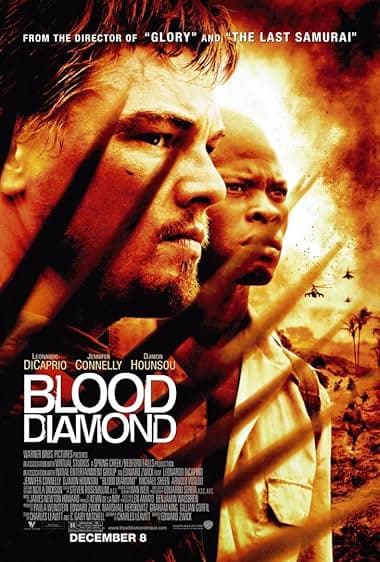
Blood Diamond
A mercenary, a fisherman and a pink diamond — and a film that still asks who pays for our jewellery.
Read the retrospective
→
2003
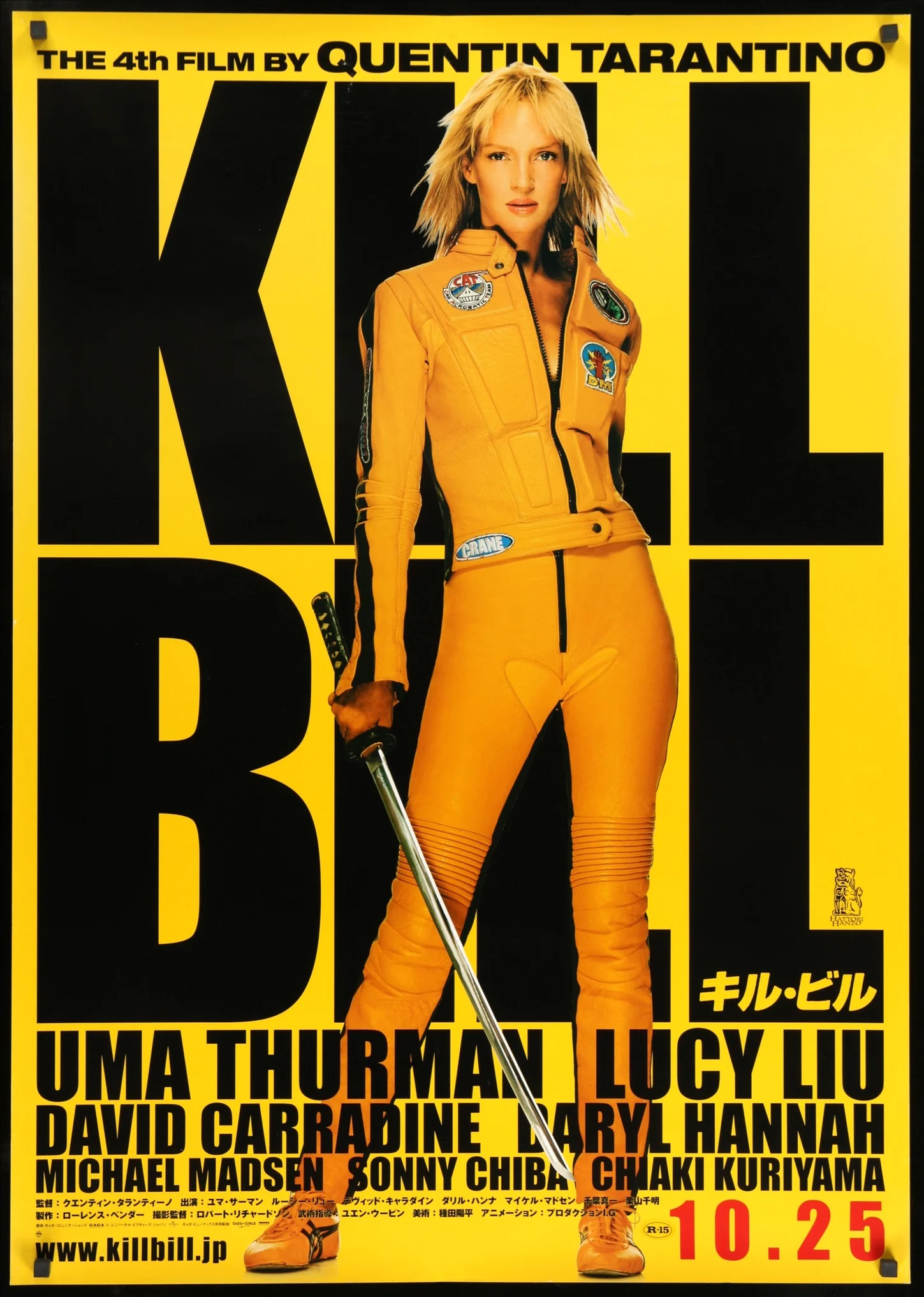
Kill Bill: Volume 1
A yellow jumpsuit, a long list of enemies and one woman who refuses to be finished.
Read the retrospective
→