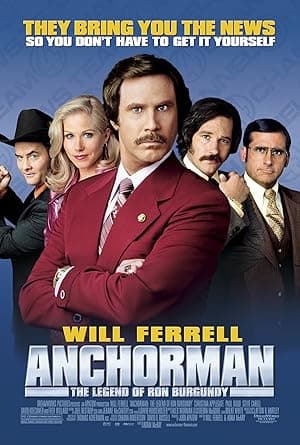
Anchorman: The Legend of Ron Burgundy
A bald-faced celebration of bluster, television nonsense and one very large ego.
Feature presentation
Anchorman: The Legend of Ron Burgundy still lands because its centre is a single, absurd personality — a pompous local anchorman whose world is upended when a serious woman arrives to do the job he thinks belongs to him. Adam McKay and Will Ferrell set up a comedy that is annoyingly tidy about what happens when ego meets progress, and they do it by keeping the jokes pointed and the newsroom petty. If you’ve not seen it, think sharp satire dressed as daft male camaraderie; if you have, it’s worth revisiting to watch how that collision plays out.
THE MOVIE
Ron Burgundy is still the reason this movie works
Most comedies live or die by one thing: someone you can’t look away from. Anchorman: The Legend of Ron Burgundy built itself around that gamble. The film sets Ron Burgundy up at the top of a local San Diego news team and then quietly asks what happens when that top spot is threatened.
That threat is Veronica Corningstone, the ambitious reporter who arrives and gradually earns a place beside Ron on the desk. The collision is simple — his complacent, status-driven ego versus someone who’s quietly doing the job properly — and the movie mines that for both broad laughs and pointed satire of 1970s broadcast television’s happy-talk culture.
It helps that the whole thing is tightly staged: Adam McKay made his feature directorial debut here, Will Ferrell plays Ron, and the ensemble around him means the film never needs to slow down to explain itself. It’s a comedy focused on one loud centre, and most of the film’s pleasures come from watching that centre wobble.
THE SETUP
The idea that sets Anchorman: The Legend of Ron Burgundy in motion
At its most basic, the film posits a newsroom built on male approval and ego — Ron is the top-rated anchorman at KVWN Channel 4, comfortable in his celebrity until a confident female reporter arrives and starts to displace him. That one change is the engine: promotions, bruised pride and on-air tension follow.
What keeps the story moving is escalation. Ron’s fragile authority is undercut off-camera and on; the script strings together a series of public embarrassments that force him into increasingly ludicrous situations. There’s deliberate piling-on: sabotaged teleprompter moments, a chaotic brawl between rival stations, and a big rescue sequence that serves as the set-piece climax.
Those beats aren’t there to make a tidy moral point so much as to show how a fragile ego behaves when it’s losing status. The set-up works because it’s both simple to explain and flexible enough to let the ensemble roam.
THE CHARACTER
Why Ron Burgundy matters
Ron Burgundy is the movie’s gravitational pull. He’s comfortable, complacent and built on male peer approval — exactly the kind of person who will be flummoxed when the ground shifts. That makes him an ideal comic target: his confidence is big, his foundations small.
Because the film is tightly focused on him, every joke that lands or backfires traces back to his mixture of status anxiety and denial. He isn’t a mystery to solve; he’s a behaviour pattern to watch — and the film keeps returning to how his friendships and loyalties both prop up and expose that pattern.
You don’t need character complexity to enjoy that. Ron matters because the movie gives him room to be spectacularly wrong and then lets the consequences play out. It’s a neat engine: put all the showy bluster in one place, then watch what happens when someone arrives who refuses to play along.
THE PERFORMANCE
Why Will Ferrell's performance matters
Contemporary reception pointed squarely at Will Ferrell as a central reason the film felt alive and endlessly repeatable. Reviews and aggregations singled out his work as shaping much of the movie’s comic identity and quotability.
That matters because the film leans on a single, outsized personality; if the centre didn’t read, the rest would lose focus. Instead, the way the character is carried gives the script somewhere to go — and gives the other players something loud and specific to react to.
Put simply: with so much of the movie riding on one figure, having him recognised by critics as the engine of its humour was not just pleasant praise — it’s evidence the film's design paid off.
UNDER THE SURFACE
Anchorman: The Legend of Ron Burgundy has more on its mind than the plot suggests
Scratch past the fart jokes and the buddy-banter and the movie is interested in a few sharper ideas. First: newsroom sexism. The central disturbance — a woman joining a male-dominated news desk — forces the film’s male characters to reveal how much of their authority came from exclusion rather than skill.
Second, masculinity and ego. Ron’s behaviour is a study in status maintenance: he’s not so much defending talent as the idea of being number one. When that idea is threatened, the film delights in showing how performative and brittle that masculinity can be.
Then there’s the satire of broadcast journalism itself. The movie lampoons the ‘happy-talk’ era of local TV — the preening, the lines about personality over substance — and uses the newsroom as a convenient microcosm for the absurdities of televised spectacle.
Finally: friendship and loyalty. Those elements cushion the satire. Ron’s crew remain loyal and inept in equal measure, and that loyalties-versus-ambition friction gives the film a relational core amid the gags.
THE FILMMAKING
How Anchorman: The Legend of Ron Burgundy was put together
A couple of straightforward production facts explain how the film shapes its period satire. Thomas E. Ackerman is credited as cinematographer and Brent White as editor — names on the credits that point to a conventional, professional backbone under the improv-friendly surface.
More importantly, the production is presented with period design choices intended to evoke mid-1970s broadcast television. That decision gives the satire its target: the movie doesn’t need to invent a silly world because it borrows the era’s newsroom trappings and plays the characters against them.
And finally, Anchorman was produced by Apatow Productions and distributed by DreamWorks in 2004, which placed it squarely inside an early-2000s comedy production network comfortable with ensemble chaos and improv-driven scripts.
PURE 00s
Anchorman: The Legend of Ron Burgundy could not belong to any other decade
This is very much an early-2000s comedy in the way it was made and who made it. Anchorman sits inside the Ferrell–McKay collaboration and the broader Judd Apatow production network: that era’s comedy ecosystem favoured star-driven vehicles with loose, ensemble energy.
Released in 2004 and presented by Apatow Productions, it arrived at a moment when Hollywood was happy to back loud, personality-led comedies with improv-friendly scripts. The result is a film that wears its production context on its sleeve — not in jokes about the 2000s, but in how it lets performers roam inside a committed comic design.
There’s also an early-00s home-video footnote: a companion cut assembled from outtakes and alternate material, Wake Up, Ron Burgundy: The Lost Movie, was released straight-to-DVD that same year, which feels very much like the period’s appetite for bonus content and expanded fan material.
THE LEGACY
Why Anchorman: The Legend of Ron Burgundy still matters
Part of Anchorman’s afterlife is practical: the movie generated extra material immediately, with a companion DVD cut of outtakes and alternate scenes released the same year. That kind of extension treated the film as something fans would revisit and dissect.
There was also a fuller return in 2013 with a direct sequel that brought back the original director and most of the principal cast, which kept the characters visible beyond a single release window.
Beyond those facts, the film’s real staying power shows up in popular culture. Anchorman is frequently referenced in internet meme culture and appears on various retrospective lists of 21st-century comedies — a sign that its lines and set pieces have embedded themselves in how people talk about modern comedy.
THE VERDICT
Does Anchorman: The Legend of Ron Burgundy still hold up?
Short answer: yes — provided you’re watching for what the film is actually trying to do. It’s a tight, 95-minute comedy built on a single, recognisably brittle personality and the chaos that follows when that person’s privilege is challenged.
If you’re curious about satire of broadcast journalism, the film has that: it aims its jokes at the happy-talk era of local TV and at a newsroom culture that favours bluster over substance. If you’re watching for character dynamics, the core conflict — Ron’s ego versus Veronica’s arrival — gives the story clear propulsion, with the supporting trio of Brian, Champ and Brick reinforcing that world through their loyalty and ineptitude.
There are some caveats. The movie’s pleasures are specific: broad ensemble gags, escalating set pieces (a sabotaged teleprompter, a newsroom brawl, a dramatic rescue) and a central comic performance recognised early on as shaping the film’s identity. If that setup appeals, it still rewards a rewatch; if you dislike personality-driven comedy, it won’t change your mind.
Final thought: Anchorman works today because it never pretends to be delicate about its target. It points, it laughs, and it leaves you watching how a man who treats the news like a club copes when someone else walks through the door.
Share this movie
Keep watching
More movies from the 00s
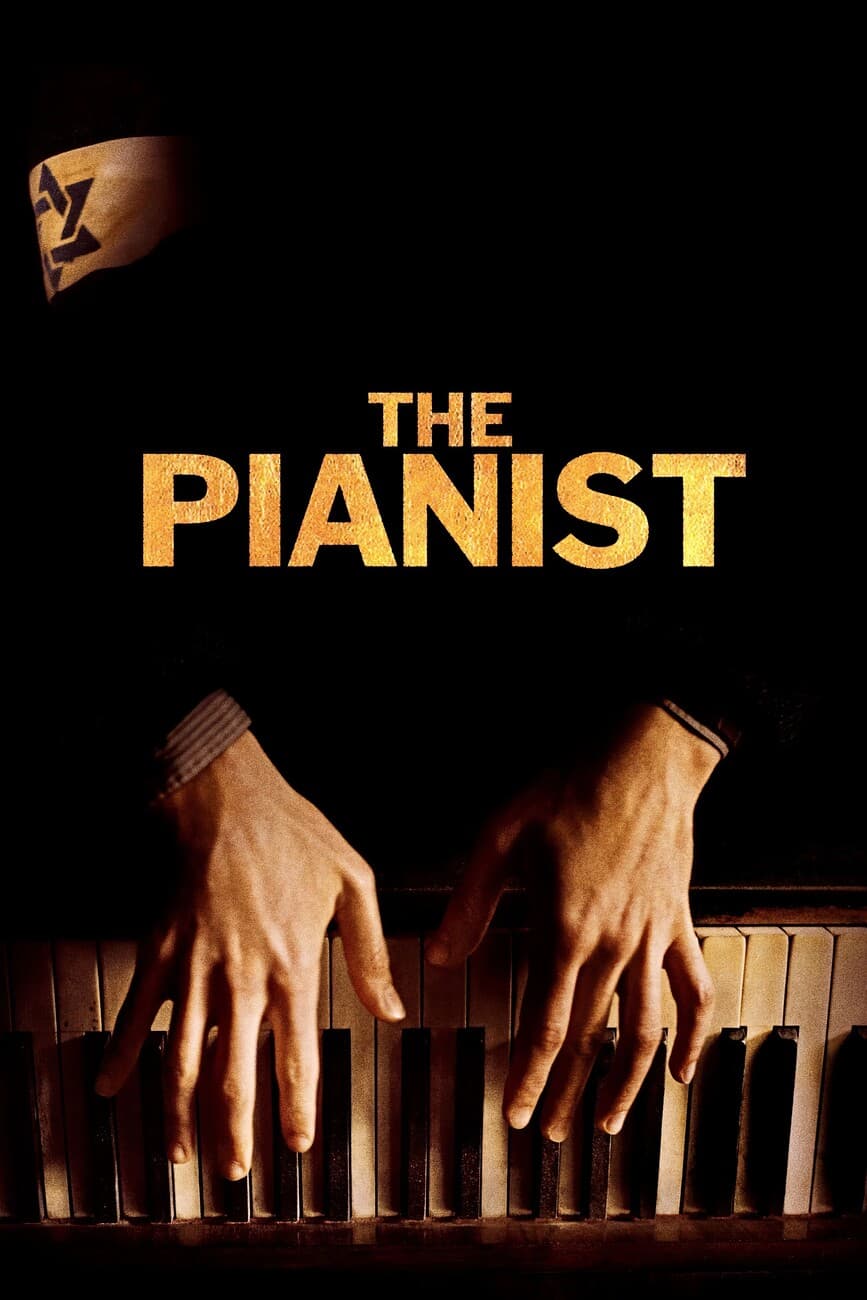
2002
The Pianist
A quiet life unmade by war — and a pianist who refuses to stop listening.
Read the retrospective
→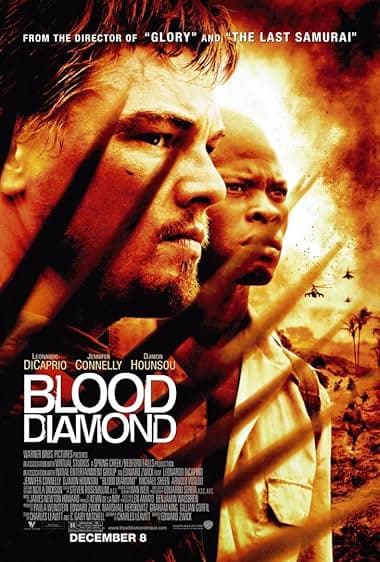
2006
Blood Diamond
A mercenary, a fisherman and a pink diamond — and a film that still asks who pays for our jewellery.
Read the retrospective
→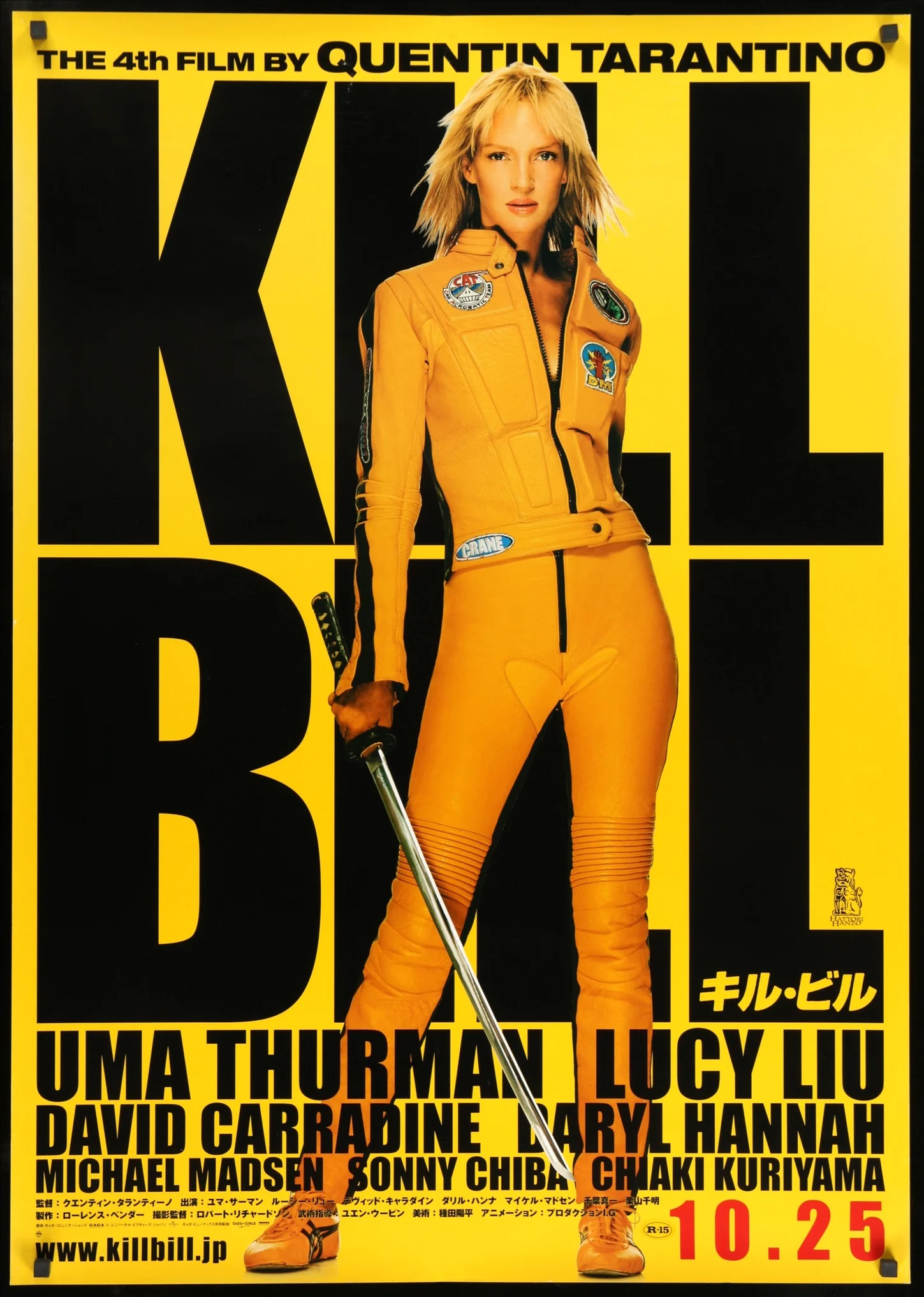
2003
Kill Bill: Volume 1
A yellow jumpsuit, a long list of enemies and one woman who refuses to be finished.
Read the retrospective
→