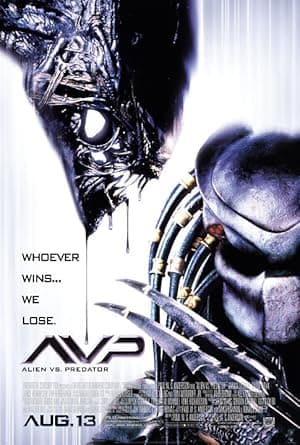
Feature presentation
There are big ideas shoved into a very loud genre movie — ancient rites, corporate pride and a pyramid buried beneath Antarctic ice — but what keeps Alien vs. Predator pulling you along is a single, practical truth: it's built around someone who can survive it. Paul W. S. Anderson made a noisy, crowd-pleasing 2004 mash‑up, and Sanaa Lathan's Lex is the reason you actually care who makes it out.
THE MOVIE
Alexa "Lex" Woods is still the reason this movie works
Say what you like about crossovers; the set-piece you remember first from Alien vs. Predator is not a logo or a poster, it's the moment a satellite spots a rogue heat bloom and a human expedition finds a sealed, automated pyramid under Antarctic ice. It's a deliciously blunt premise: modern science stumbles into an old, mechanical ritual and everything that follows has to deal with that collision.
The team below the ice does what teams in thrillers do — poke around, trip switches, and accidentally wake something that ought to have stayed asleep — and an Alien Queen's eggs begin to hatch. The movie then functions as a ticking-clock survival story, with the pyramid's systems and two kinds of hunters turning control into an illusion.
That's where Paul W. S. Anderson's directorial shorthand comes in. He wrote and directed this 2004 feature and packed a tight 101-minute runtime with action, horror and crossover spectacle. But what keeps you invested through the explosions and the creature set-pieces is a proper human centre: Sanaa Lathan plays Alexa "Lex" Woods, the kind of guide who keeps the party moving when the map has gone very wrong.
THE SETUP
The idea that sets Alien vs. Predator in motion
At its simplest: a satellite spots heat where there should be none, an expedition digs, and beneath the ice is a machine-sized secret. That automated pyramid is the engine of the film — a found object that drags modern explorers into a very old test.
What the movie does with that set-up is twofold. On one level it's a survival picture: people trapped in an environment that changes around them, forced to improvise when the systems they rely on stop behaving like systems. On another level the pyramid acts like a theatre for ritual — the Predators' initiation hunting ground — so the human story becomes entangled with something older and organised.
Paul W. S. Anderson and his co-writers take the Dark Horse/Marvel crossover conceit — Aliens versus Predators — and transport it to Earth, using the pyramid as the logical place where those franchises can meet. The contrast between modern exploration and deliberate, ancient ritual gives the central conflict a clear shape without needing a lot of setup fuss.
THE CHARACTER
Why Alexa "Lex" Woods matters
Sanaa Lathan is the face the story gives you to hold on to. Casting her as Alexa 'Lex' Woods places a visible, human anchor at the chaotic centre of a monsters-versus-monsters story.
You can see how the filmmakers treated the role as significant: Lathan appears on the DVD commentary and in the making-of featurettes, which is a clear sign the production saw her as more than just a name on the call sheet. That attention makes Lex feel like the character the movie expects you to follow when the pyramid starts doing its thing.
Because the film's thrills depend on people making choices under pressure, having a named, present guide gives the audience an emotional ticket into the action. Lex is the one the extras circle back to when they talk about the shoot — which tells you everything you need to know about who matters in the chaos.
If Alien vs. Predator works at all on a human level, it’s because the production built the creature chaos around somebody the crew and the filmmakers kept returning to in conversation.
THE PERFORMANCE
Why Lance Henriksen's performance matters
Lance Henriksen turns up as Charles Bishop Weyland in a casting choice that was deliberately noticed before the cameras rolled. The film makes a small, knowing connection to the Alien lineage by echoing his earlier association with the franchise.
That echo matters because it gives Weyland an extra layer for fans to latch onto — he’s not just another industrialist, he’s a name that reads inside the wider family of films. It’s a choice that speaks in shorthand to the audience about lineage and corporate legacy.
The film's home-video extras underline how the production thought about those casting notes: Henriksen appears on the DVD commentary alongside the director and lead actor, and contemporary discussion often pointed out both his presence and how the film chose to use him.
Noticing those choices — the casting, the commentary and the way his role is talked about afterwards — is a useful way to understand the film's relationship with its own franchise history.
UNDER THE SURFACE
Alien vs. Predator has more on its mind than the plot suggests
On the surface it's a monster movie and a tournament between two fearsome species. Under that, the film keeps returning to survival — how quickly human plans unravel under extreme conditions and how thin the veneer of control is when systems and creatures outpace you.
There’s a ritual logic at work too. The Predators treat the pyramid as an initiation, a rite of passage staged with deadly rules. That structuring makes the aliens and Predators less like random threats and more like actors in a ceremony that happens to be lethal for bystanders.
The idea that myth can be technology runs through the set-up: an ancient, automated structure built to perform a function that modern explorers mistake for treasure or discovery. That link — myth as a machine — is the sort of concept that lets a creature picture pretend to be about ideas as well as about shocks.
And because the Weyland name and the figure of the industrialist are in the frame, corporate hubris and legacy hang quietly over the action: the human drive to lay claim, to profit, and to write your name into history feeds directly into how the catastrophe begins.
THE FILMMAKING
How Alien vs. Predator was put together
One of the movie's most decisive moves is its production design. The pyramid is not a static location; it’s an engineered environment that reconfigures itself. That concept — the labyrinth as machine — shapes most of the film's set pieces and provides the mechanical teeth to the plot.
Production designer Richard Bridgland used early concept art to guide the sets and props, so the pyramid feels like a single idea realised across many rooms. The interiors behaving like a device gives the film a visual rulebook to play within: when the walls and corridors start to move, tension follows by design.
Because Anderson brought his own concept sketches into the production, the look of the pyramid becomes a direct translation of a director’s imagination rather than a purely decorative backdrop. That creative through-line helps the film keep its hectic tone coherent.
In short: the way the pyramid is built and used is a filmmaking choice that keeps the story brisk and the danger tangible — it’s production design driving dramatic beats.
PRACTICAL EFFECTS
The effects work that gives Alien vs. Predator its physical personality
The movie’s creatures have a tangible, on-set presence because Amalgamated Dynamics were heavily involved. Their team supplied extensive practical creature effects and on-set creature performance, which anchors many of the film's up-close moments.
That practical ambition went as far as building a full-scale animatronic Alien Queen puppet for on-set use. It was an in-camera element that had to be augmented later in post-production — for example, digital legs were added for certain movements — which shows how the production mixed physical puppetry with digital finishing.
Smaller moments like facehuggers and baby Aliens also used hybrid techniques: prosthetics and physical plates provided real lighting references while photoreal CG huggers and hatchlings were composited into the live-action shots.
The result is a hybrid pipeline where practical material gives actors something to react to and the CG work extends that reality to the scale and motion the story demanded.
PURE 00s
Alien vs. Predator could not belong to any other decade
Alien vs. Predator is very much an early‑2000s product in the best sense: it's a cinematic realisation of a long-standing comic-book crossover idea that studios were keen to turn into spectacle. The movie answers a fan question with a big-screen yes, which was the business model of the moment.
Its VFX workflow is similarly of its time. The production exemplifies the era’s hybrid approach — heavy practical work supplemented and extended by CG, handled across multiple effects houses on tight schedules. That blend is textbook 00s genre filmmaking.
The decision to shoot largely at Barrandov Studios in Prague and to present the movie as an international co‑production also reflects early‑2000s patterns: large genre shoots headed to Central Europe to control costs while building elaborate sets.
Released in 2004, Alien vs. Predator sits in that particular moment where crossover appetite, transitional VFX techniques and international production logistics met to produce exactly this kind of loud, watchable spectacle.
THE LEGACY
Why Alien vs. Predator still matters
The film’s afterlife is unspectacular but noteworthy: it was followed by a direct sequel in 2007, which makes it more than a one-off experiment. Commercially it did the job — grossing in the high hundreds of millions worldwide — and that financial reality explains why the studio pursued more.
Beyond the box office, the production’s practical-effects choices have a clear legacy. Amalgamated Dynamics’ involvement is regularly cited in discussions about the period’s hybrid practical/CG pipelines, so the film often comes up in technical conversations among effects folk and fans.
And while the film didn’t universally charm critics on release, it has gathered a strand of cult interest among genre circles: a movie people return to when they want a big creature confrontation dressed up as an archaeological mystery.
Put simply: AVP matters less because it changed cinema and more because it exemplifies a particular, showy approach to franchise crossover filmmaking in the early 00s — and because it left practical work that effects teams still talk about.
THE VERDICT
Does Alien vs. Predator still hold up?
If you watch it as a creature mash-up with a human centre, it does what it sets out to do. The setup is clear — an expedition finds an automated pyramid under Antarctic ice, they descend, systems are triggered and an Alien Queen's eggs begin to hatch — and the film keeps the stakes immediate by treating those discoveries as a practical problem to survive.
The Predators arrive to run their initiation rite — the film even frames the pyramid as a hunting ground for that ritual — and humans find themselves squeezed between two organised lethal forces while the pyramid periodically reconfigures, which creates a constant sense of urgency.
What makes it worthwhile now is a mixture of elements we’ve already discussed: Sanaa Lathan's central role gives the chaos a human route through the story, the production design makes the pyramid an active participant, and Amalgamated Dynamics’ practical work provides tangible moments that hold up as on-set contact points. The DVD extras underline that these choices were intentional — the commentary features the director and principal players reflecting on the shoot.
So should you watch it today? Yes — if you want a compact, noisy crossover that mixes survival and ritual, and you enjoy seeing practical creature work extended by 00s VFX pipelines. If you prefer quieter, subtler science fiction, this isn't that film. But as a specimen of early‑2000s genre filmmaking — ambitious, a little brash, and anchored by a human who refuses to be an afterthought — Alien vs. Predator still has teeth.
Share this movie
Keep watching
More movies from the 00s

2002
The Pianist
A quiet life unmade by war — and a pianist who refuses to stop listening.
Read the retrospective
→
2006
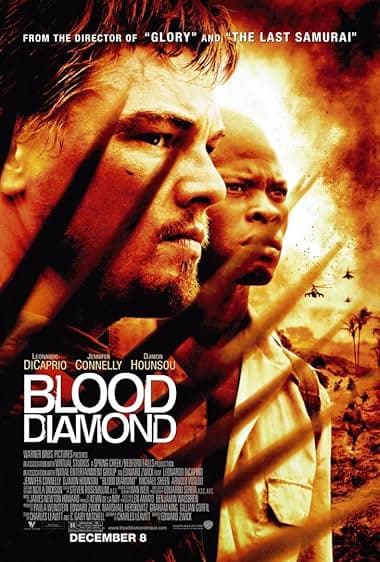
Blood Diamond
A mercenary, a fisherman and a pink diamond — and a film that still asks who pays for our jewellery.
Read the retrospective
→
2003
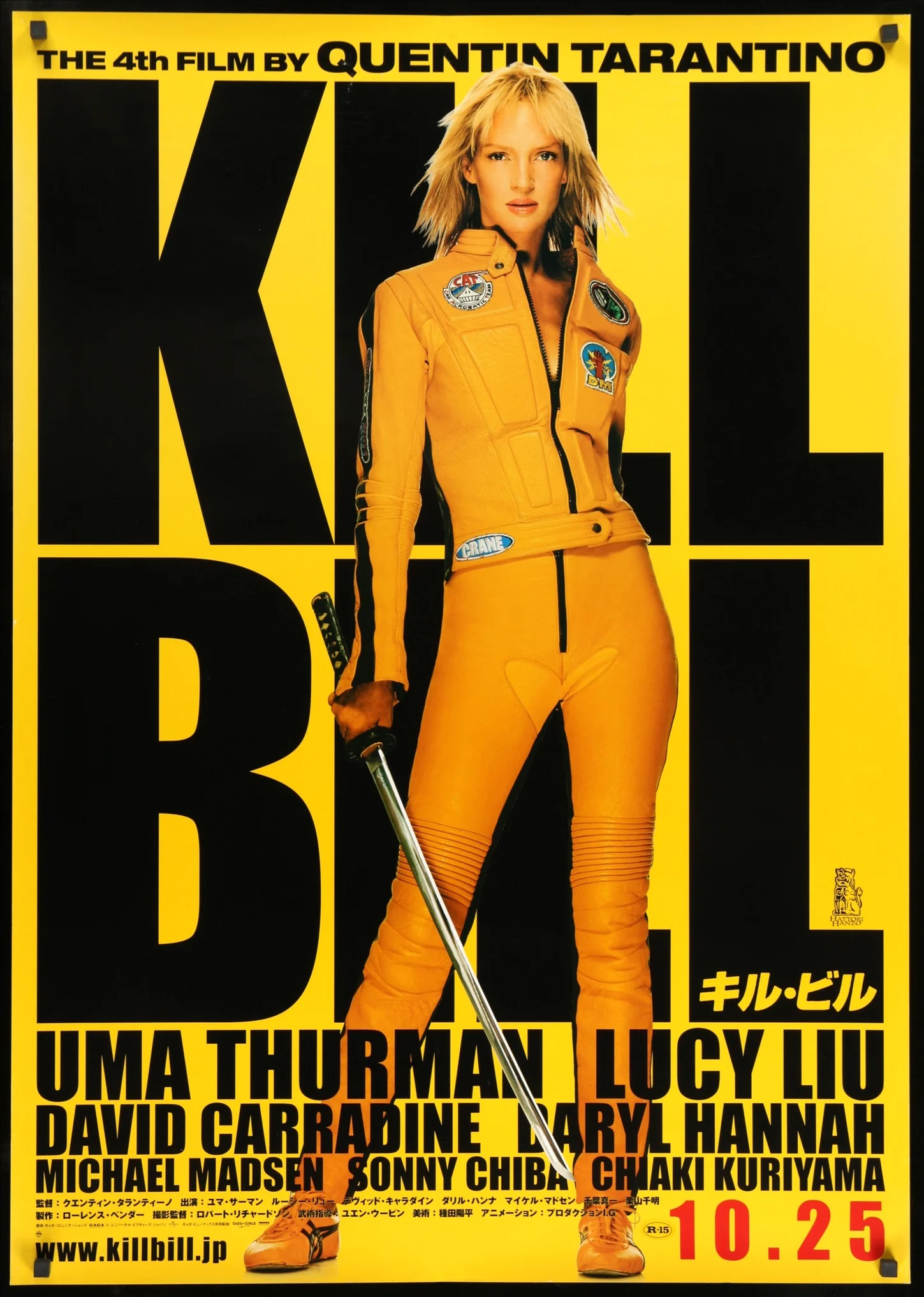
Kill Bill: Volume 1
A yellow jumpsuit, a long list of enemies and one woman who refuses to be finished.
Read the retrospective
→