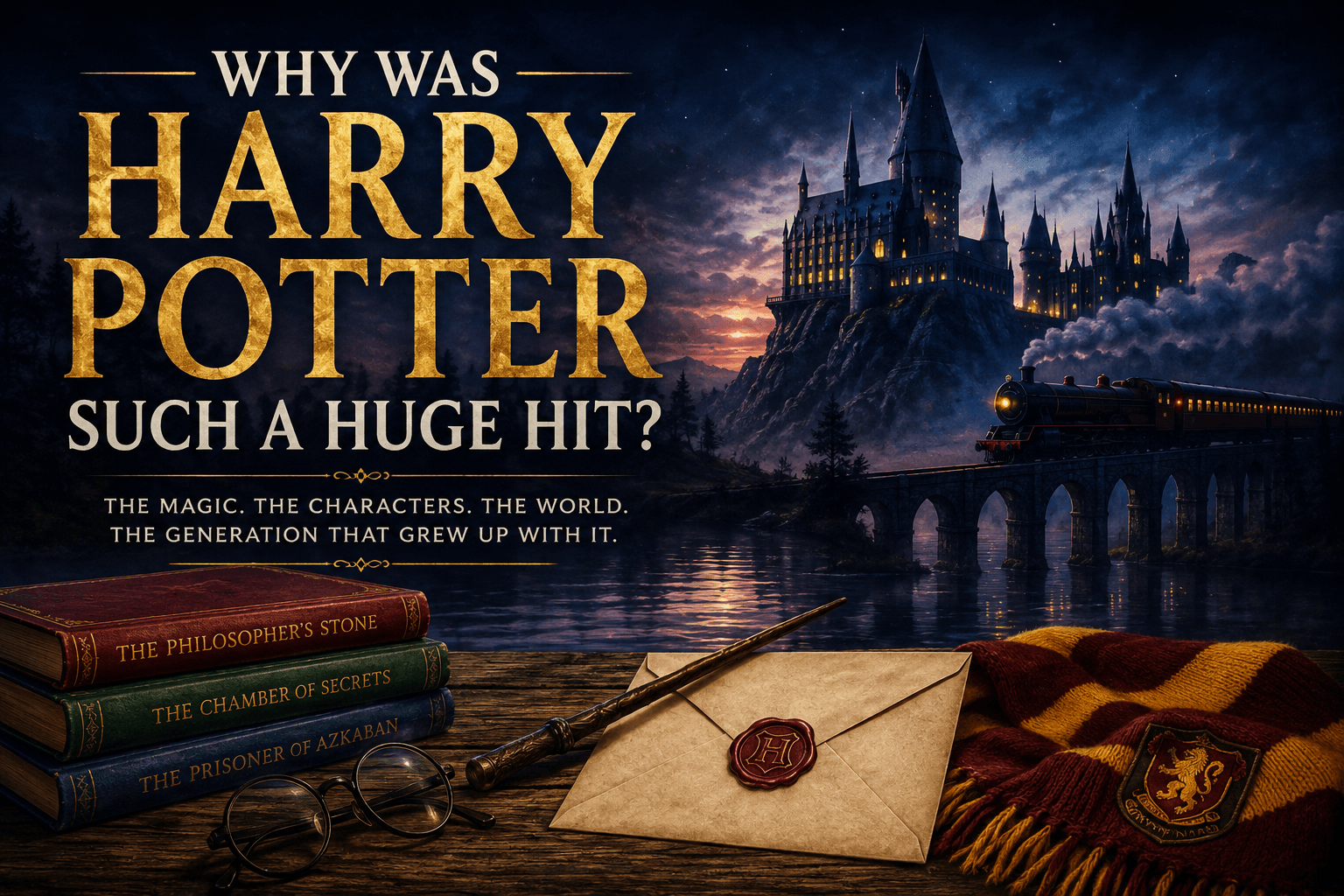
Why Was Harry Potter Such a Huge Hit?
Eight films, a generation growing up alongside its characters and a world audiences never seemed ready to leave. How did Harry Potter become the defining movie phenomenon of the 2000s?
THE PHENOMENON
Harry Potter arrived at exactly the right moment
When Harry Potter and the Philosopher's Stone reached cinemas in 2001, it did not arrive as an unknown fantasy hoping somebody might notice. The books had already created an enormous audience, and the first film had the unusual job of turning places millions of readers had imagined into something they could finally see.
That anticipation mattered, but anticipation alone does not create a decade-long movie phenomenon. The film had to make Hogwarts feel convincing, the friendships worth following and the magical world big enough that audiences would happily return year after year.
It managed all three. For a generation of moviegoers, Harry Potter did not simply become another franchise. It became part of the calendar.
WELCOME TO HOGWARTS
Hogwarts felt like somewhere you could actually go
The great achievement of the early films is how tangible the magical world feels. Hogwarts has corridors, staircases, classrooms, common rooms, ghosts, portraits and rules. Diagon Alley feels crowded rather than pristine. The Great Hall looks impressive, but it also feels like a place hundreds of children genuinely eat breakfast.
That detail turned the setting into more than production design. Audiences learned the geography. They knew what it meant to enter the Great Hall, catch the Hogwarts Express or walk into Hagrid's hut.
Plenty of fantasy films show us extraordinary places. Harry Potter made viewers want a school letter telling them they belonged there.
THE TRIO
Finding the right Harry, Ron and Hermione changed everything
A franchise built around children had one enormous risk: those children needed to carry the story for years. Daniel Radcliffe, Rupert Grint and Emma Watson were not polished adult stars dropped into school uniforms. In the earliest film especially, they actually feel young, awkward and slightly overwhelmed by the world around them.
That became an advantage. Their performances developed as the characters developed, and the audience became familiar with their rhythms together. Ron's humour, Hermione's certainty and Harry's mixture of curiosity and unease created a friendship sturdy enough to hold increasingly dark stories.
By the later films, viewers were not merely following characters. Many had effectively grown up alongside the actors playing them.
VERY BRITISH MAGIC
The films never sanded away their British identity
Harry Potter became a global phenomenon without pretending its world could have happened anywhere. The boarding-school traditions, stone corridors, damp landscapes, eccentric teachers and dry humour gave the films a recognisably British character from the beginning.
The supporting cast helped enormously. Across the series, some of Britain's most recognisable actors appeared as teachers, parents, villains and Ministry officials, giving even relatively small roles weight and personality.
That specificity made the world stronger. Hogwarts became internationally familiar precisely because the films did not try to make it culturally anonymous.
A FEW NOTES
John Williams gave the series a musical identity instantly
You can talk about sets, costumes and casting all day, but Harry Potter also had one of the most useful things a franchise can possess: music you recognise almost immediately.
John Williams' themes for the first films gave the magical world wonder with just enough mystery underneath it. Those opening notes became a shortcut back to Hogwarts, surviving changes in director, tone and composer because the musical identity had already been planted so firmly.
The best franchise music does not merely accompany the logo. It makes the audience feel that the door to the world has opened again.
GROWING UP
The movies were allowed to get darker with their audience
One reason the series avoided feeling frozen in place is that the films changed. Philosopher's Stone has the warmth and discovery of a children's adventure. By Prisoner of Azkaban the visual language is moodier and stranger. Later entries increasingly deal with death, fear, authoritarianism and the consequences of choices made years earlier.
That tonal shift mirrored the characters getting older, but it also mirrored the audience. Someone who entered Hogwarts as a child in 2001 could reach the later films as a teenager or young adult without feeling that the series was still speaking only to the person they had been at the beginning.
The magic remained. The innocence did not — and that was exactly the point.
THE FILMS EVOLVED
Changing directors stopped the series becoming visually stale
Keeping the same cast and world did not mean every Harry Potter film had to look identical. Chris Columbus established Hogwarts with warmth and clarity, while Alfonso Cuarón pushed Prisoner of Azkaban towards something looser, moodier and more visually expressive. Mike Newell and David Yates then took the series through increasingly dangerous territory.
The changes were sometimes obvious, but they gave the franchise room to evolve instead of endlessly reproducing the first film's tone.
That flexibility became increasingly important as the material moved away from discovering magical sweets and towards a genuine war inside the wizarding world.
SEE YOU NEXT YEAR
Every new Harry Potter movie felt like an event
Before streaming made enormous franchises feel permanently available, a new Harry Potter film meant going back to the cinema. Posters appeared, trailers were analysed, cast interviews filled magazines and television, and audiences knew another chapter was approaching.
The relatively regular releases created momentum. There was rarely enough time for the series to disappear from popular culture before the next film was on its way.
That rhythm helped Harry Potter dominate the 2000s in a way few franchises could match. Hogwarts kept reopening its doors, and millions of people kept turning up.
TWO PHENOMENA AT ONCE
The books and movies kept feeding each other's excitement
Harry Potter had another advantage most movie franchises could only dream about: the source material was itself an ongoing cultural event. New books and new films overlapped through much of the decade, meaning excitement around one could immediately spill into excitement around the other.
Readers debated what would be kept, changed or removed. Movie-only audiences wondered what came next. Book launches and film releases became separate pieces of the same enormous conversation.
That constant movement made the wizarding world feel unusually alive throughout the decade rather than like a property that resurfaced only when a sequel needed promoting.
THE VERDICT
So why was Harry Potter such a huge hit?
Because almost every part of the machine reinforced every other part. The books supplied anticipation. The films gave that imagination a physical world. The casting gave audiences people they wanted to follow. The music made the world instantly recognisable. Regular releases kept the excitement alive, while the increasingly mature stories allowed the franchise to grow rather than stand still.
But underneath all of that is something simpler: audiences wanted to go back to Hogwarts.
Plenty of 2000s franchises were enormous. Harry Potter was different because an entire generation seemed to grow up inside it. That makes it more than one of the decade's biggest successes. It makes the series one of the defining movie experiences of the 00s.
Up next
More special features
More deep dives, arguments and trips back through 2000s cinema.
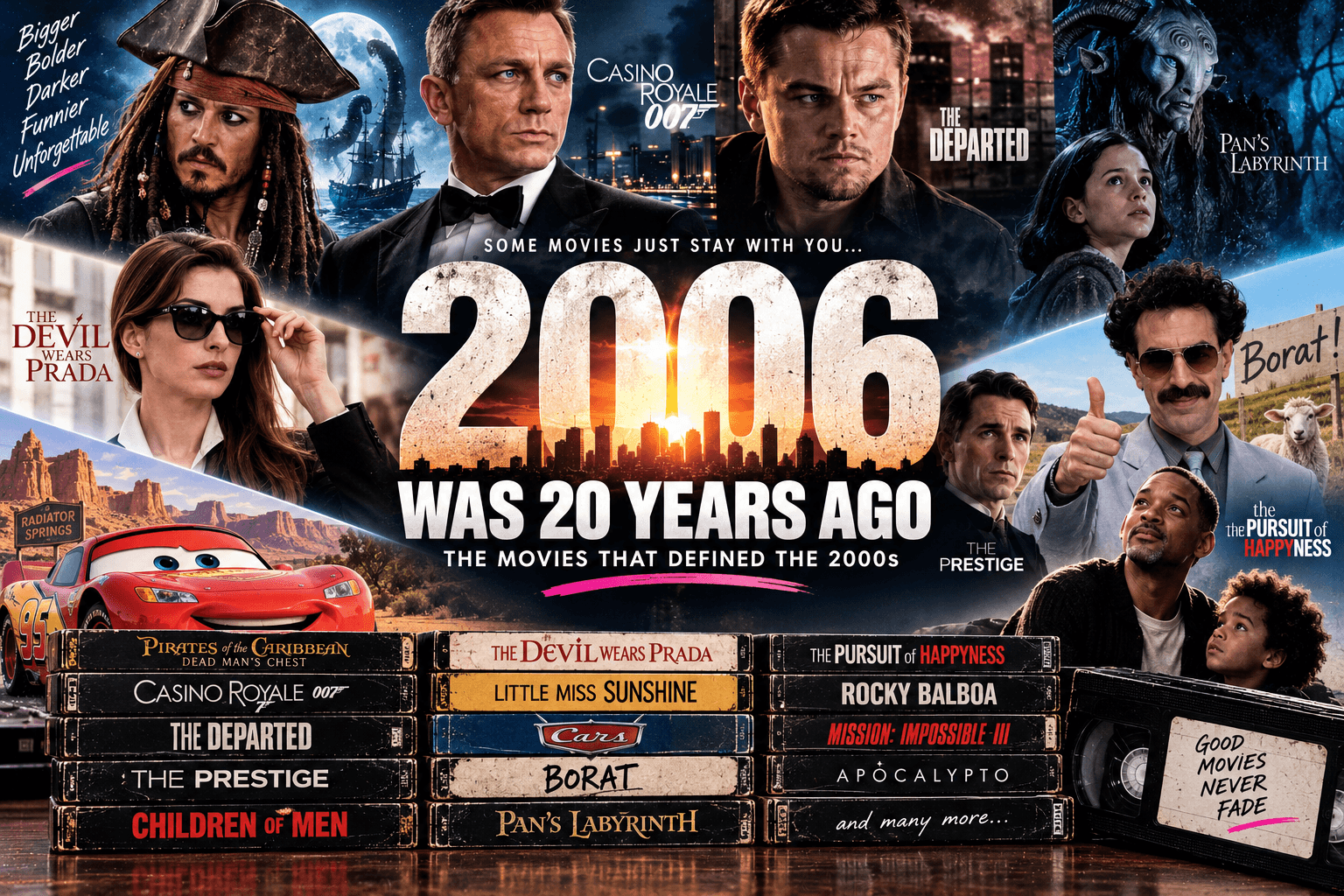
2006 Was 20 Years Ago — The Movies That Defined the 2000s
Casino Royale. The Departed. The Prestige. Pirates of the Caribbean. The Devil Wears Prada. Twenty years later, 2006 looks like one of the defining movie years of the 2000s.
Play feature →
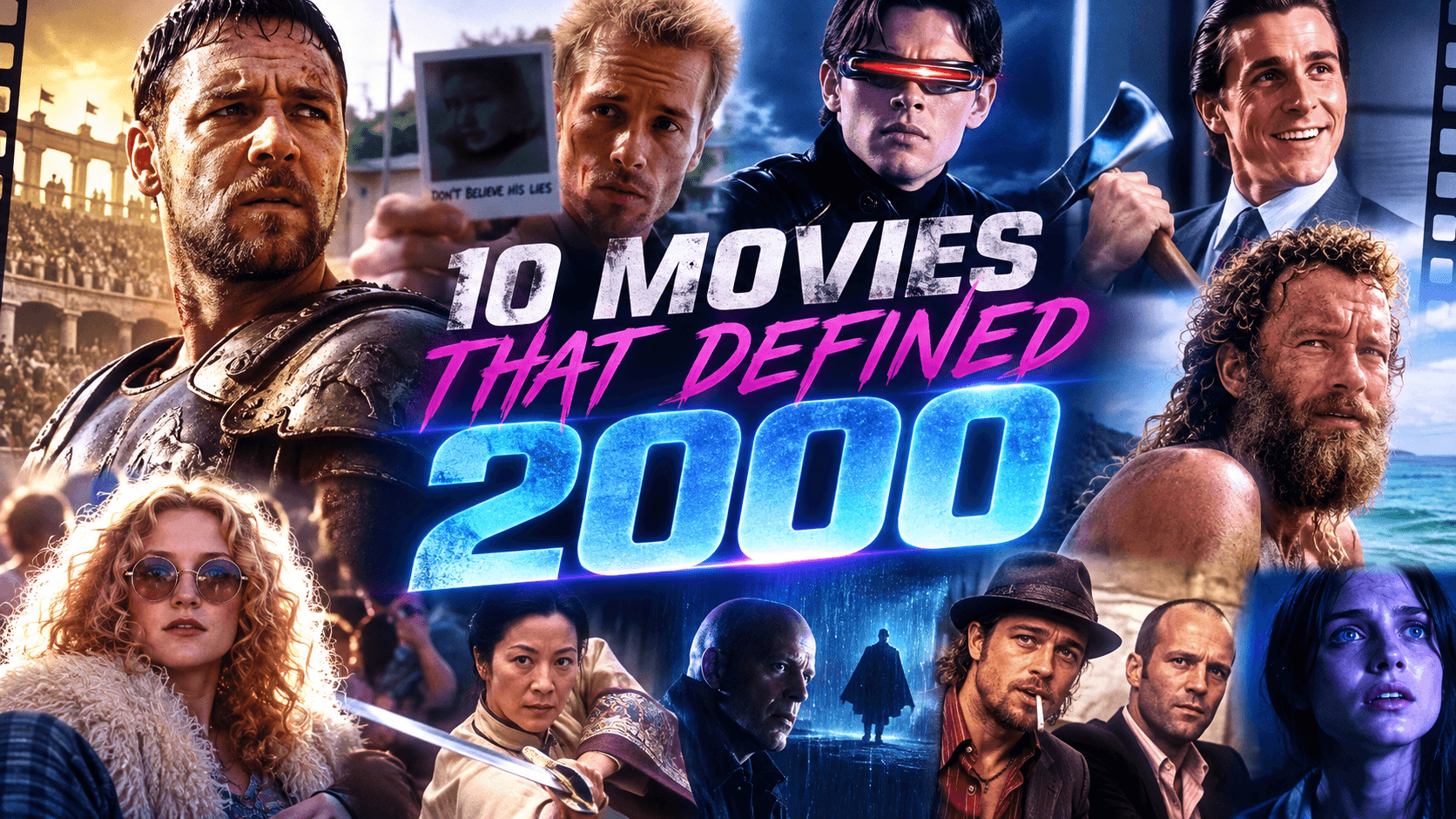
10 Movies That Defined 2000
The year that opened a new decade gave us Roman epics, fractured thrillers, superheroes, serial killers and some genuinely fearless filmmaking.
Play feature →