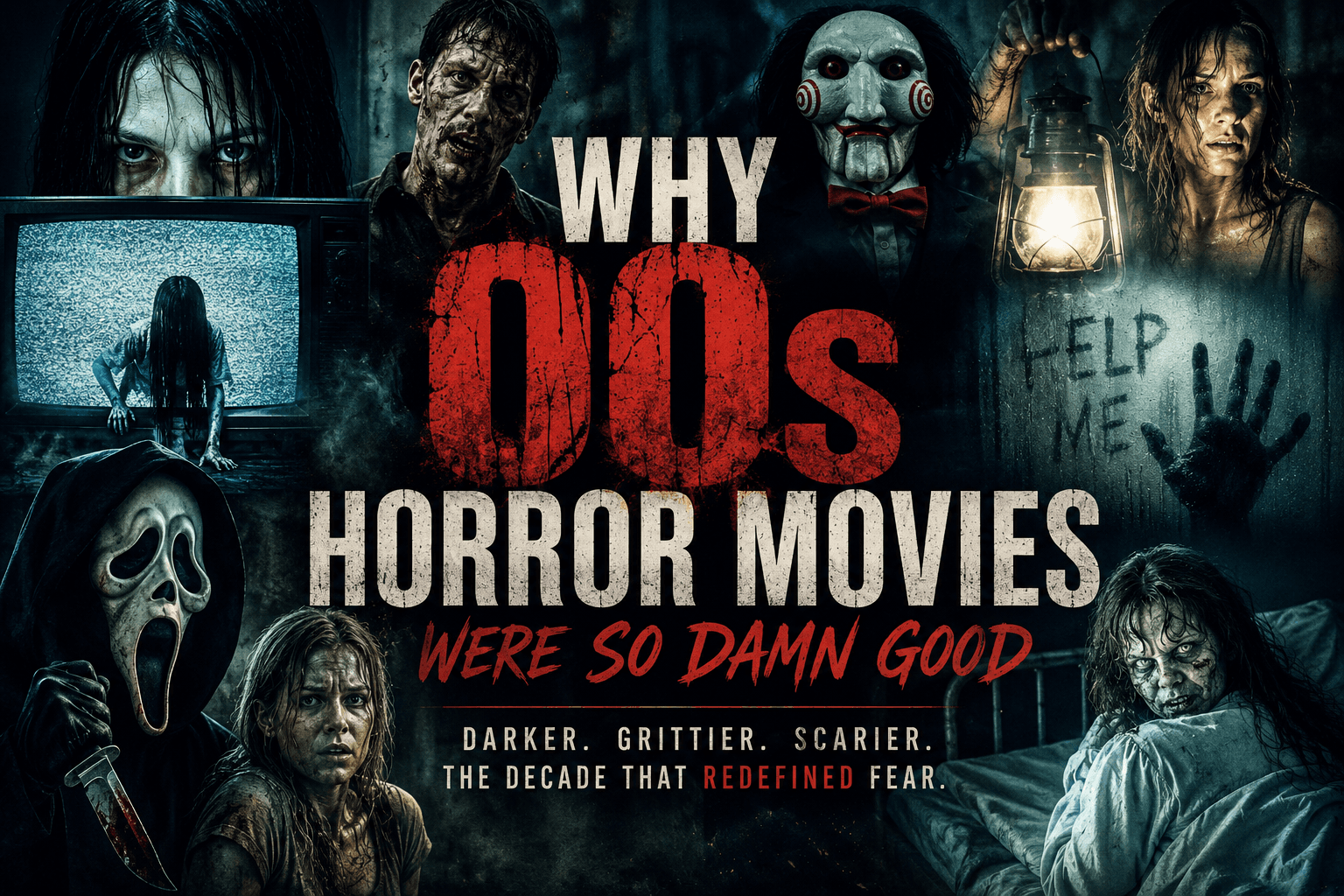
Why 00s Horror Movies Were So Damn Good
Zombies ran, ghosts crossed oceans, traps got nastier and horror stopped obeying one set of rules. The 2000s were gloriously all over the place.
THE DECADE
00s horror refused to have one identity
Trying to reduce 2000s horror to one movement is where the trouble starts. This was a decade capable of giving us elegant ghost stories, filthy survival horror, vicious home invasions, zombie reinventions, studio remakes, found footage, horror comedy and films so nasty you needed a minute before deciding whether you actually liked them.
That variety is exactly why the decade remains so much fun to revisit. Horror was commercially healthy enough for studios to chase trends, but restless enough for filmmakers around the world to keep pushing in completely different directions.
Some of it has aged brilliantly. Some of it has aged like a forgotten energy drink behind a radiator. But boring? The 00s were very rarely boring.
DEATH HAS A PLAN
Final Destination made everyday life suspicious
Final Destination found a beautifully simple way around the slasher problem: what if the killer was death itself? No mask. No knife. No villain waiting in the cupboard. Just the horrible feeling that the universe has noticed you escaped your appointment.
That idea turned ordinary objects into threats. A loose wire, a bathroom floor, something left near the stairs — suddenly the audience was scanning every frame because the film trained us to expect a chain reaction.
The sequels would push the elaborate deaths further, but the original's great achievement was making paranoia part of the entertainment. For a while after watching one of these films, driving behind a badly loaded vehicle could feel like tempting fate.
GHOST STORIES
The Others proved quiet horror could still fill a cinema
While plenty of 00s horror was getting louder, The Others went the other way. Alejandro Amenábar built tension from curtains, locked doors, whispered conversations and the unnerving possibility that somebody else was moving through the house.
Nicole Kidman's performance gives the film its emotional centre because Grace's fear is tangled up with control. She has rules for the house, rules for the children and rules for the light. Horror arrives by making those rules increasingly difficult to trust.
It is a useful reminder that the decade's horror revival was not dependent on gore. Sometimes a door opening by itself was plenty.
RUN
28 Days Later made the infected terrifyingly fast
Whether you want to call them zombies or infected, 28 Days Later changed the energy of outbreak horror. These things did not shuffle towards you. They came sprinting.
Danny Boyle's empty London remains one of the defining horror images of the decade: familiar streets stripped of people, shot with a rough digital texture that makes the world feel immediate rather than polished. Then the infected arrive and any strange calm disappears instantly.
The film also understands that surviving the outbreak is only part of the problem. Once normal society collapses, the people left behind get to decide what replaces it. That question gives the film a nastier edge than speed alone ever could.
SEVEN DAYS
The Ring made a videotape frightening again
The Ring is a perfect little time capsule of early-00s horror because its central threat is tied to a physical videotape at the exact moment home entertainment was moving rapidly towards DVD.
Gore Verbinski's remake of Ringu does not rush to explain away its unease. The images on the tape feel disconnected and wrong, the colour palette seems permanently drained, and Samara becomes frightening long before the film needs to show everything she can do.
It also helped open the floodgates for Hollywood remakes of Asian horror. The results would vary wildly, but the influence of Japanese horror on the decade became impossible to miss.
I WANT TO PLAY A GAME
Saw turned a tiny room into a horror empire
It is easy to remember Saw through the increasingly elaborate machinery of the sequels, but the first film is far more contained. Two men wake chained in a filthy room with a body between them and very little idea why they are there.
James Wan and Leigh Whannell built a mystery around punishment, desperation and the awful possibility that every clue has been arranged by somebody several moves ahead. The roughness of the production actually helps; the film feels grubby enough that you almost want to wash your hands afterwards.
Then came that ending, that music and an annual franchise that became practically part of the Halloween calendar. Whatever anyone thinks of the label 'torture porn', Saw's impact on 00s horror is impossible to ignore.
HORROR CAN BE FUNNY
Shaun of the Dead loved zombie movies enough to take them seriously
Shaun of the Dead works because the comedy never requires the horror to stop mattering. Edgar Wright and Simon Pegg can make a trip to the shop hilarious, then let the same world become genuinely upsetting once people Shaun loves are in danger.
The film understands zombie rules, zombie history and the pleasures of the genre, but it does not simply point at those things and wait for applause. Shaun has an actual emotional problem before the dead rise: he is drifting through his own life.
The apocalypse merely makes procrastination considerably less practical. That mixture of affection, jokes and real stakes helped make Shaun of the Dead one of the decade's most rewatchable horror films.
DON'T LOOK DOWN
The Descent knew the cave was frightening before anything lived in it
Neil Marshall could have made The Descent without monsters and still produced a fairly effective nightmare. Tight passages, darkness, uncertain routes and the simple knowledge that tonnes of rock are sitting above you do a lot of work before the crawlers properly enter the equation.
What makes the film hit harder is the tension already inside the group. Grief, resentment and mistrust travel underground with them, meaning the danger is never purely external.
When the creatures finally take over, the film becomes brutally physical. But the claustrophobia is what sticks. The Descent found horror in a place where running away is sometimes physically impossible.
KEEP THE CAMERA RUNNING
REC made found footage feel dangerously immediate
REC takes a television reporter and cameraman into an apartment building and then removes the exit. That is essentially all the film needs before panic starts doing the rest.
The camera is not an excuse for shaky images; it belongs inside the story. We see what the cameraman can see, lose information when he loses information, and become increasingly desperate for the frame to show us what is waiting beyond the light.
By the final stretch, the format and the horror are inseparable. REC is short, vicious and a great example of the 00s discovering that cheap digital technology could create a different kind of cinematic fear rather than merely imitate expensive filmmaking.
A DIFFERENT VAMPIRE
Let the Right One In made the vampire lonely again
By 2008, audiences had seen vampires dressed up in almost every possible way. Let the Right One In found something fresh by making the story quiet, cold and painfully lonely.
The relationship between Oskar and Eli gives the film tenderness without pretending the situation is harmless. Eli can be vulnerable and frightening within the same story, while Oskar's isolation makes the connection understandable even when we know there is something deeply dangerous about it.
It is horror built around companionship as much as blood. That emotional ambiguity is exactly why the film lingers.
THE WORLD GOT SMALLER
00s horror was borrowing ideas from everywhere
One of the defining features of the decade was how international horror became increasingly visible to mainstream audiences. Japanese films inspired Hollywood remakes, Spanish-language horror travelled, French extremity gained notoriety and ideas crossed borders faster than many viewers had experienced before.
The remake boom produced both interesting reinterpretations and plenty of films nobody was desperate to revisit. But even the weaker examples tell us something about the period: studios had realised audiences were hungry for horror concepts that did not necessarily originate in Hollywood.
At the same time, DVD culture and the growing internet made recommendations easier to chase. A horror fan could hear about a film from another country and actually have a chance of finding the thing.
THE VERDICT
So why were 00s horror movies so damn good?
Because the decade never settled on one answer to what horror should be. Every successful idea produced imitators, but another filmmaker always seemed ready to head in the opposite direction.
You could have the precision of The Others, the velocity of 28 Days Later, the machinery of Saw, the humour of Shaun of the Dead, the claustrophobia of The Descent and the digital panic of REC without any of them feeling like the same flavour of horror.
The 2000s were messy, excessive, experimental and occasionally ridiculous. Horror tends to thrive under exactly those conditions.
Up next
More special features
More deep dives, arguments and trips back through 2000s cinema.
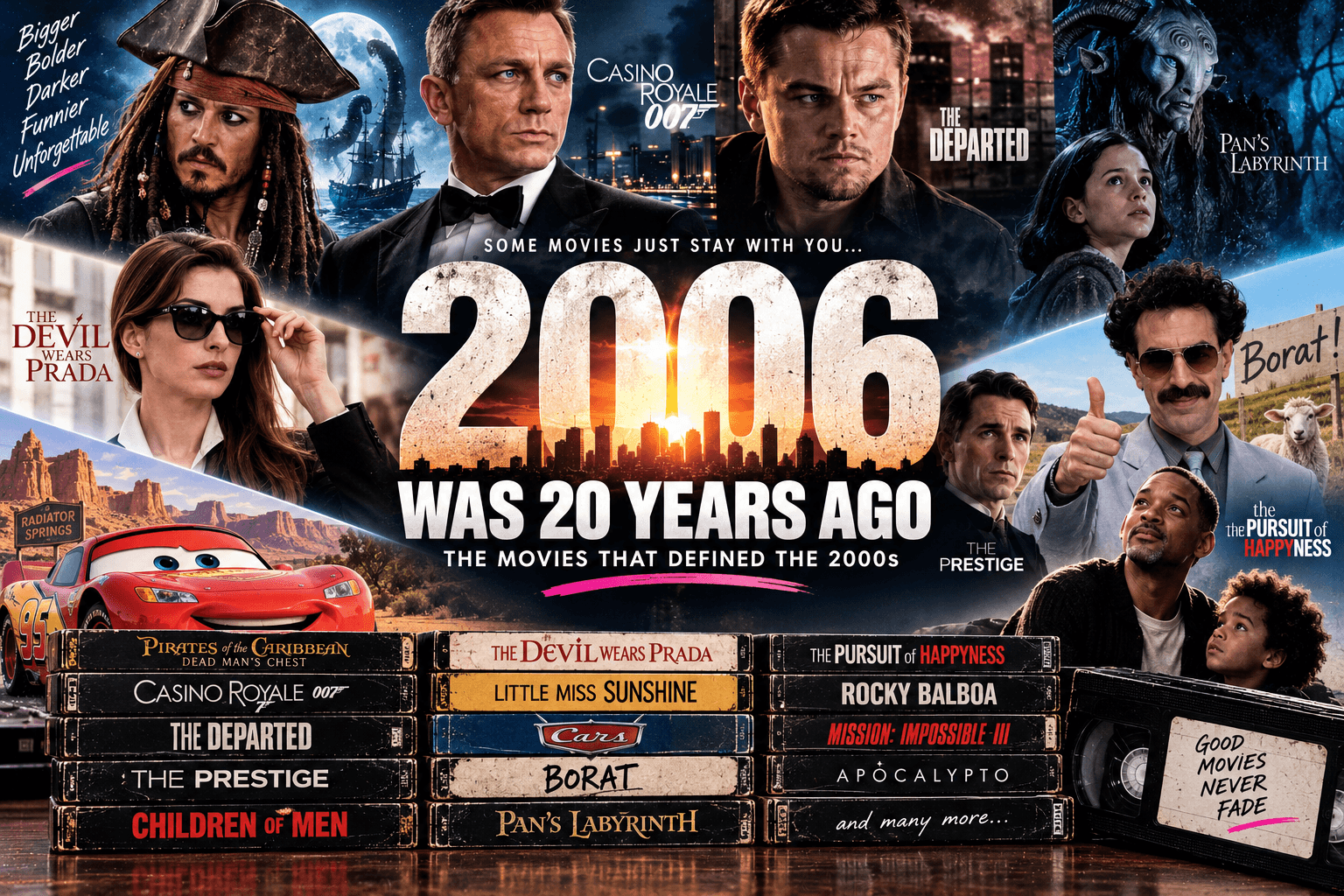
2006 Was 20 Years Ago — The Movies That Defined the 2000s
Casino Royale. The Departed. The Prestige. Pirates of the Caribbean. The Devil Wears Prada. Twenty years later, 2006 looks like one of the defining movie years of the 2000s.
Play feature →
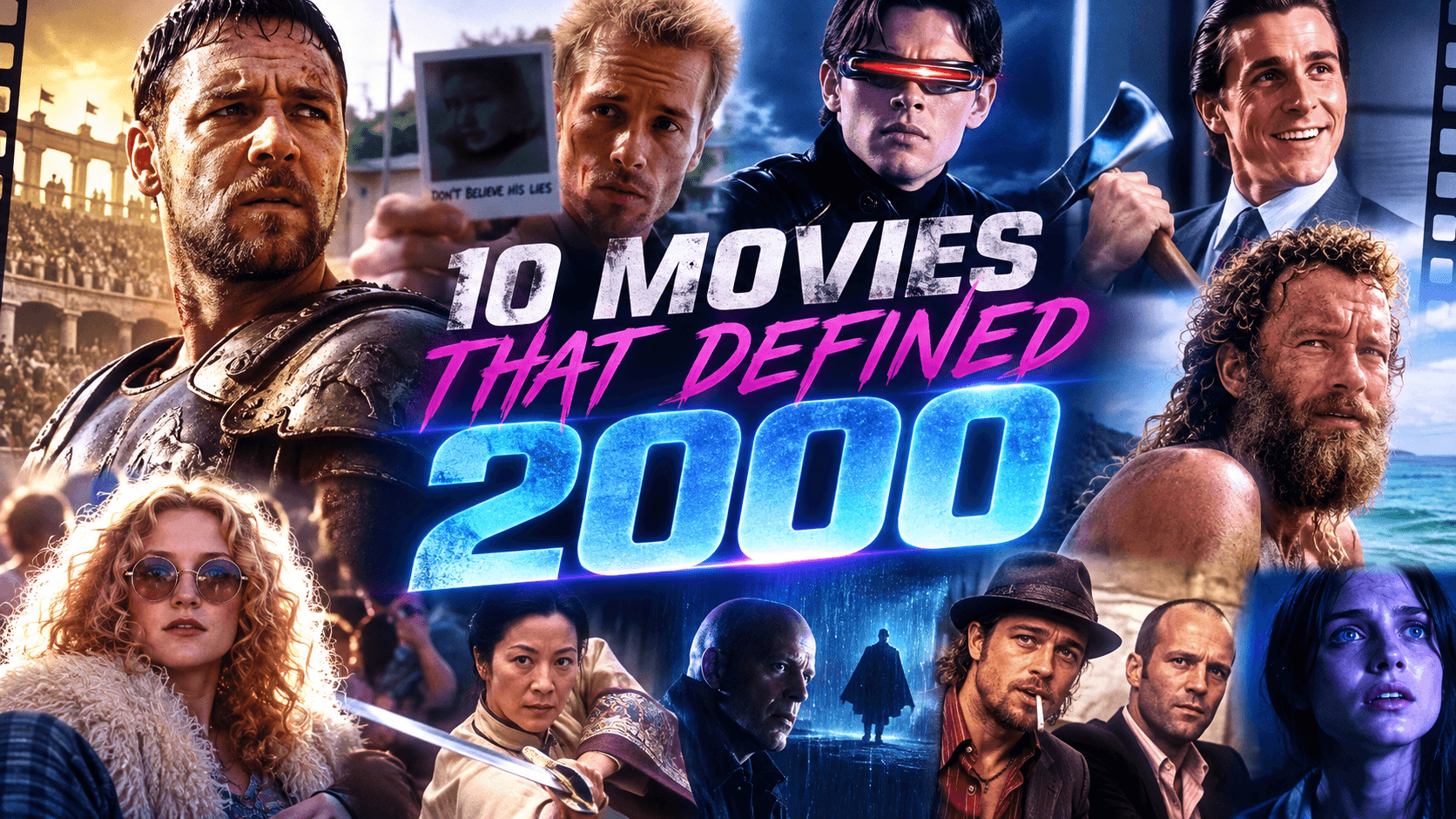
10 Movies That Defined 2000
The year that opened a new decade gave us Roman epics, fractured thrillers, superheroes, serial killers and some genuinely fearless filmmaking.
Play feature →