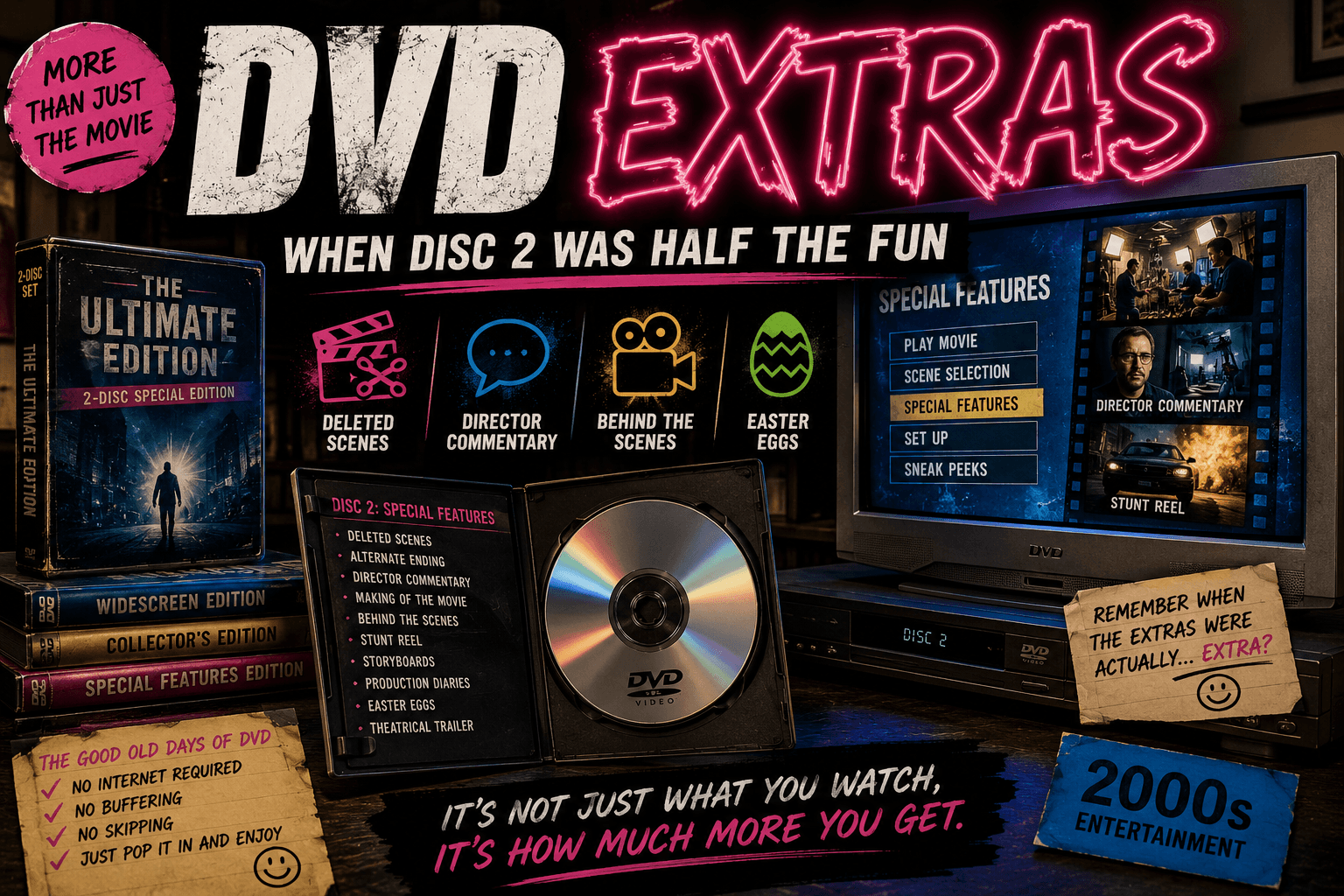
Why DVD Extras Were the Best Part
Deleted scenes, commentaries, bloopers and making-of documentaries turned every disc into a tiny film school.
Disc one / disc two
The words 'Special Edition' had dangerous power
DVD arrived at exactly the right moment for studios to discover that movie fans would happily buy the same film again if the new version looked sufficiently important. Add a second disc, a shiny sleeve and several hours of extras and suddenly the ordinary release felt inadequate.
Collectors loved it because the package promised depth. This was not merely a copy of the movie. It was an archive. You were getting the film plus the story of the film, and that made even familiar titles feel worth exploring again.

Press play again
Commentaries changed how we rewatched movies
A commentary track was one of DVD's strangest and best inventions. You deliberately watched a movie with the original soundtrack turned down while somebody involved in making it talked over the entire thing. On paper, it sounds like a terrible way to watch a film. In practice, it could be fascinating.
Directors could explain choices. Actors could remember disasters. Writers could point out ideas that changed along the way. Some commentaries were serious, some technical and some descended into people laughing at stories from the shoot. The best ones made an immediate rewatch feel completely different.

What might have been
Deleted scenes made the finished movie feel less permanent
Before DVD, most viewers had little reason to think about how much material never reached the final cut. Extras made that process visible. Suddenly you could watch alternate openings, abandoned jokes, extended conversations and entire scenes that had been removed.
It taught audiences something useful: films are built through decisions. A scene could be perfectly good and still make the movie worse by slowing it down or explaining too much. Seeing what was removed often made the finished version easier to appreciate.
Behind the curtain
Making-of documentaries created a generation of movie obsessives
The best DVD documentaries went far beyond promotional fluff. They showed sets being built, effects being tested, actors rehearsing, editors shaping scenes and whole departments doing jobs most viewers barely knew existed.
For young movie fans especially, this stuff could be transformative. A film stopped looking like something that simply appeared on a screen and became the product of hundreds of creative and technical decisions. Plenty of future filmmakers probably started by spending far too long on Disc 2.

Maximum 00s
We genuinely spent evenings watching the extras
That is perhaps the most 2000s part of all. You could finish a two-hour movie and then voluntarily spend another hour watching interviews, deleted scenes and a documentary about how a particular sequence was put together.
The disc menu became its own little world. There were hidden Easter eggs, awkward animated transitions and enough bonus material to turn a straightforward movie night into a minor archaeological expedition.
Bring back Disc 2
Streaming gave us convenience. DVD extras gave us context.
Modern streaming services make watching the movie easier than ever, but the surrounding material often feels strangely absent. The film is there, perhaps a trailer too, and then the platform immediately wants to move you onto something else.
DVD encouraged the opposite behaviour. Stay with this movie. Watch it again. Learn how it was made. See what changed. Listen to the people who built it. For movie fans, that was not filler. It was part of the fun.
Share this movie
Keep watching
More movies from the 00s
If Why DVD Extras Were the Best Part is your kind of movie, there's plenty more from the decade worth revisiting.
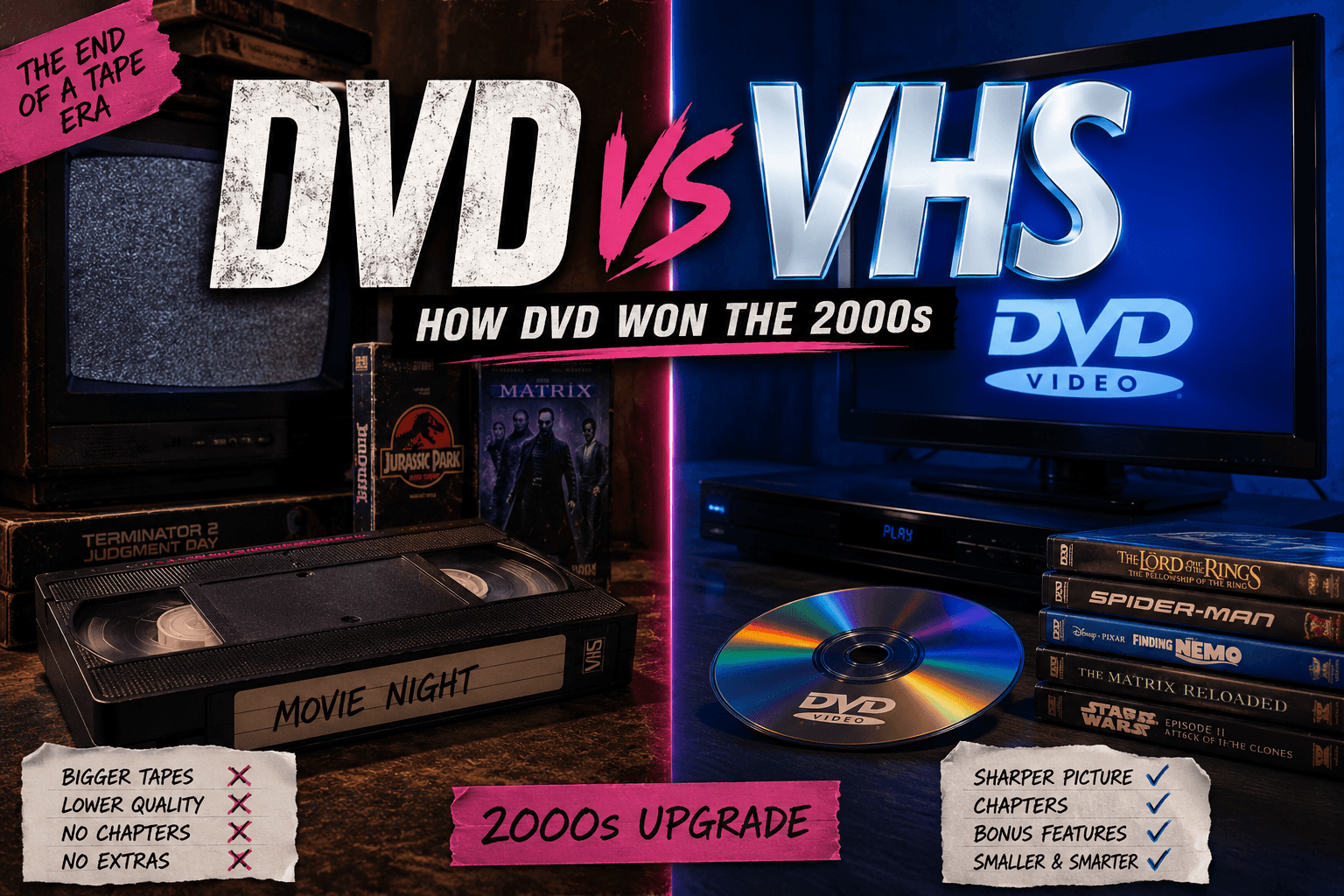
2000
When DVD Took Over From VHS
The rewind button disappeared, the picture got sharper and suddenly every movie came with a menu.
Read the retrospective
→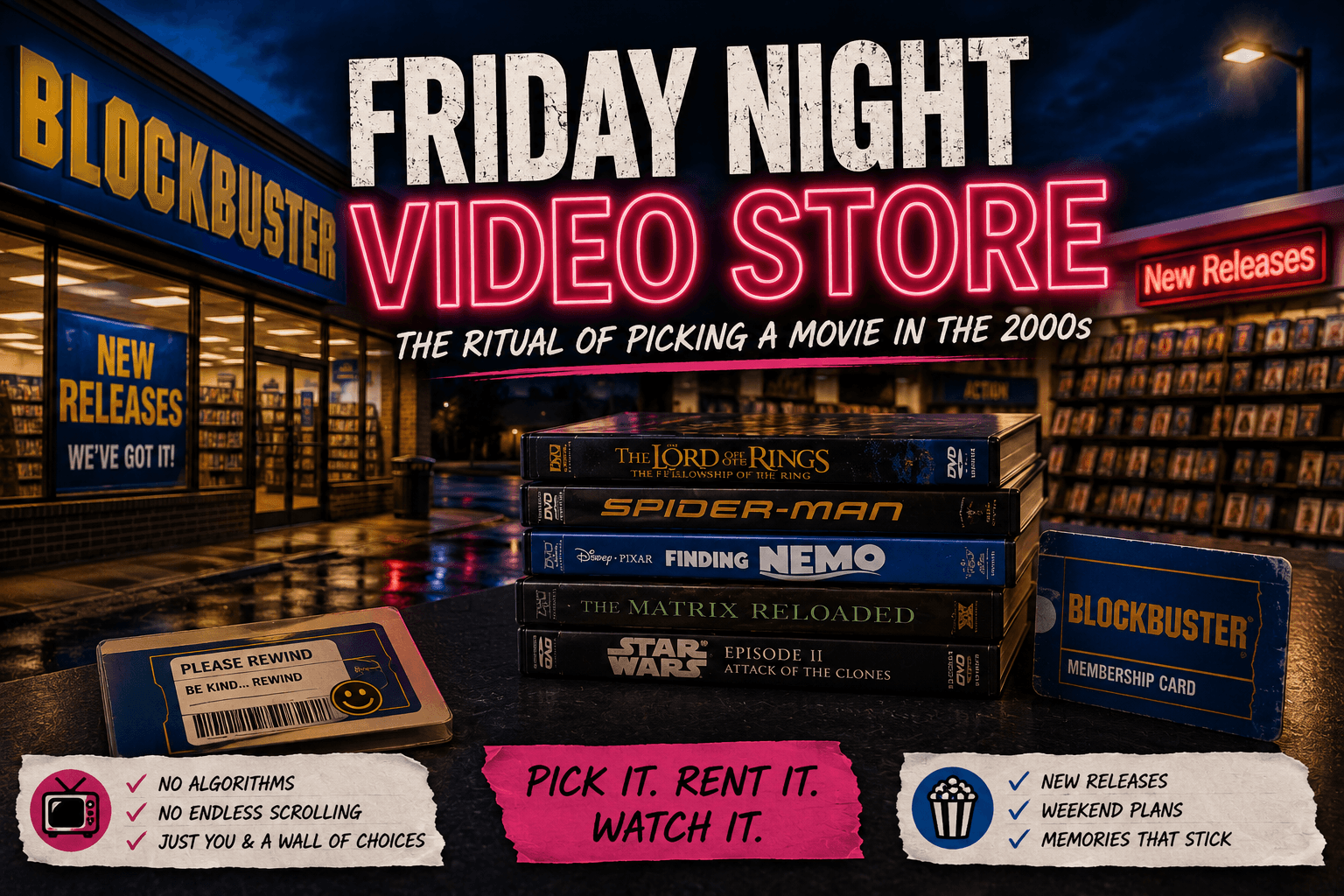
2003
The Friday Night Video Store
Before algorithms chose for us, Friday night meant walking the aisles and arguing over the last copy.
Read the retrospective
→