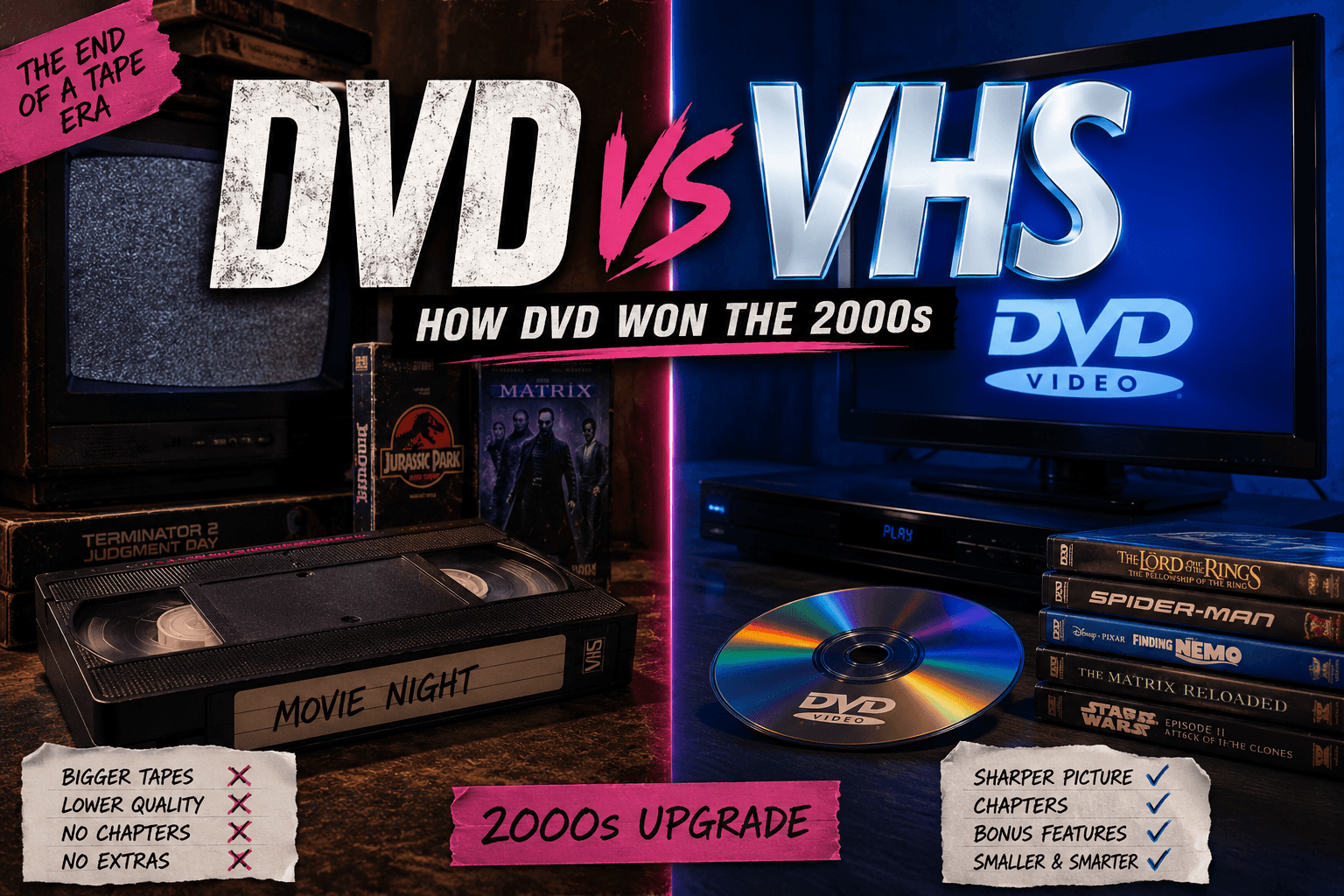
When DVD Took Over From VHS
The rewind button disappeared, the picture got sharper and suddenly every movie came with a menu.
The big switch
The decade when the tape finally lost
At the beginning of the 2000s, VHS was still completely normal. The chunky plastic cases were everywhere, rewinding was part of the ritual and a home movie collection took up half a wall if you got carried away. Then DVD started looking less like an expensive new toy and more like the obvious future.
The difference felt enormous. No rewinding. No tracking lines. No tape slowly becoming fuzzier after years of use. You put the disc in, jumped straight to a chapter and got a picture that looked cleaner than anything most of us had been used to at home. Once prices dropped and DVD players became ordinary living-room equipment, the switch happened remarkably quickly.

New toy energy
DVD made the same movie feel new again
The clever thing about DVD was that it made people want to buy movies they already owned. A favourite film on VHS could suddenly be sold again with a better transfer, proper widescreen presentation, multiple audio tracks, subtitles and a shiny animated menu that somehow felt exciting in its own right.
That was a huge change in the psychology of movie collecting. VHS had been about owning the film. DVD was about owning the edition. Special editions, director's cuts, two-disc sets and elaborate box sets made the packaging and extras part of the experience.

Behind the movie
Bonus features turned viewers into amateur film students
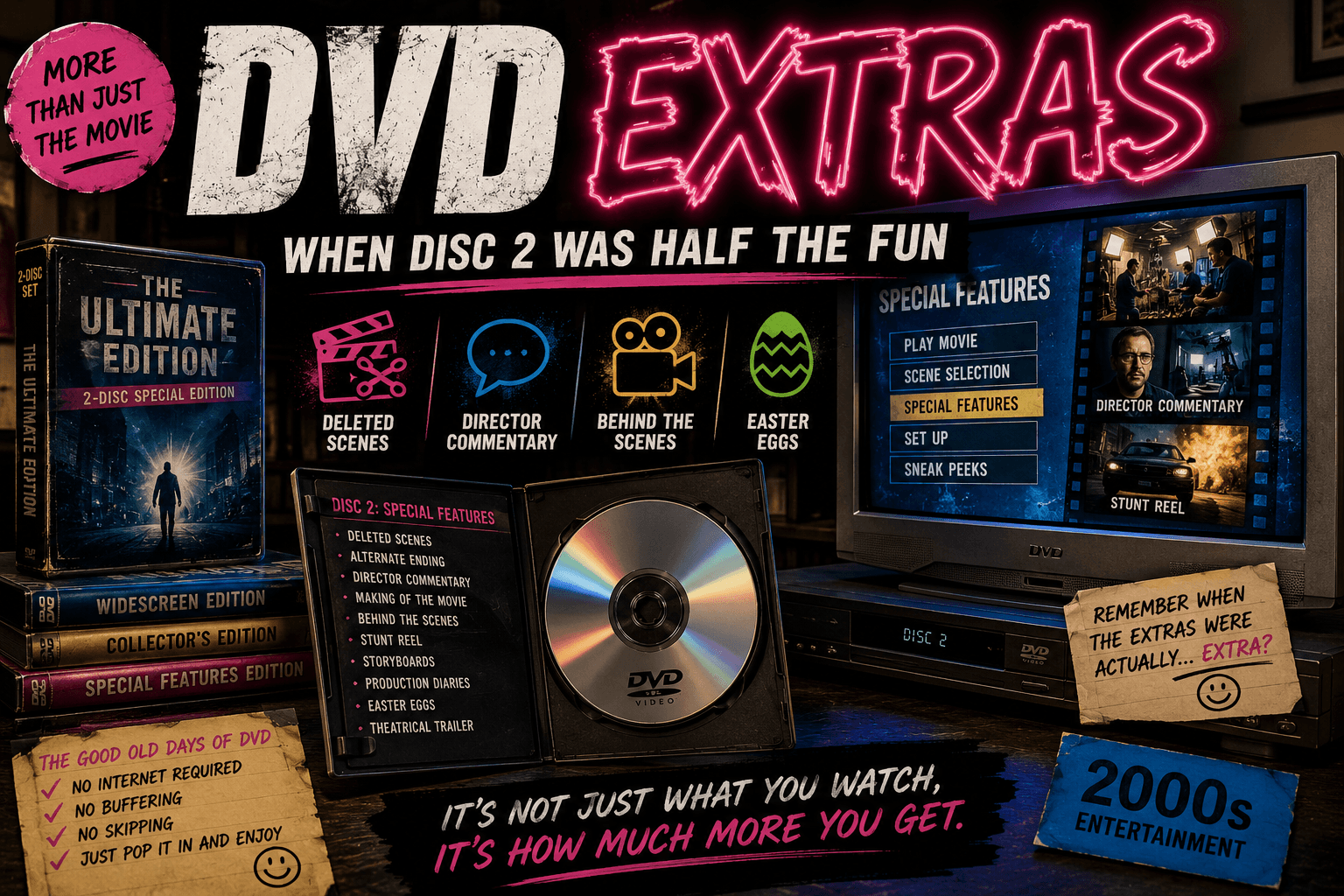
DVD extras were a rabbit hole. Commentaries, deleted scenes, storyboards, documentaries, bloopers, trailers and effects breakdowns could keep you on the sofa long after the credits had finished. For a generation of movie fans, that was the first time the process of making a film became easily accessible at home.
You could watch the movie on Friday night and spend Saturday afternoon discovering how it was made. That changed the relationship between audiences and filmmakers. Directors, editors, effects artists and production designers suddenly had voices on the same disc as the stars.
Be kind, please rewind
DVD was better — but VHS had something it couldn't copy
Technically, DVD won almost every argument. It was smaller, sharper, easier to navigate and much harder to accidentally destroy by leaving it paused in the wrong machine. Yet the death of VHS also took away a particular kind of physical movie-night ritual.
There was something wonderfully tangible about choosing a huge cassette from a shelf, pushing it into the machine and hearing the mechanism clunk into action. DVD made movies cleaner and more convenient. VHS made them feel mechanical, slightly temperamental and oddly alive.

Maximum 00s
Nothing says 2000s movie night quite like a DVD menu
The early 2000s had an unmistakable home-cinema rhythm: tray opens, disc goes in, studio logos roll, an animated menu eventually appears and somebody grabs the remote before the same twenty seconds of menu music loops for the sixth time.
It sounds trivial now, but that interface became part of the memory of the movie itself. For a while, putting on a DVD felt like entering a tiny private cinema where you could choose the version, inspect the extras and decide exactly how you wanted to watch.
Looking back
DVD won the format war — and gave movie fans a golden age of ownership
The move from VHS to DVD was one of the defining changes in 2000s movie culture. It improved the basic experience of watching films at home while also encouraging people to collect, explore and learn more about the movies they loved.
Streaming would eventually make everything even easier. But for a while, the little silver disc offered the perfect middle ground: modern convenience with something physical still sitting proudly on the shelf.
Share this movie
Keep watching
More movies from the 00s
If When DVD Took Over From VHS is your kind of movie, there's plenty more from the decade worth revisiting.
2003
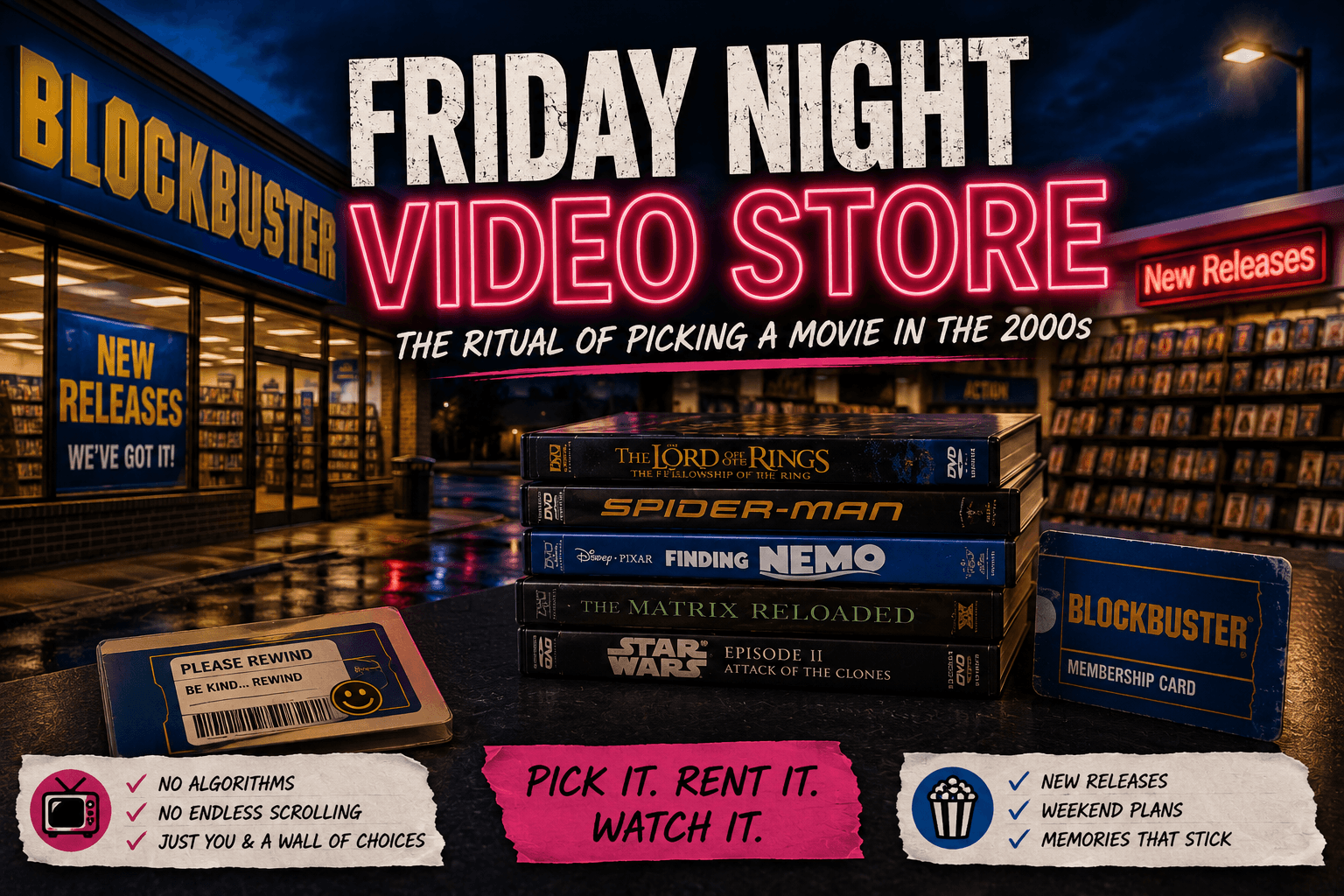
The Friday Night Video Store
Before algorithms chose for us, Friday night meant walking the aisles and arguing over the last copy.
Read the retrospective
→
2004
Why DVD Extras Were the Best Part
Deleted scenes, commentaries, bloopers and making-of documentaries turned every disc into a tiny film school.
Read the retrospective
→